
how much can I save in Ireland per month 2026? Tech Salary vs Dublin Living Costs
Editorial Transparency: Content compiled from official government sources by the GlobalMobilityAI Research Team. For personalized legal or immigration advice, consult a licensed immigration consultant or lawyer.
(Last Updated: 2026-05-30)
Determining how much can I save in Ireland per month 2026 is essential for any professional planning a move to Dublin. Ireland has established itself as the premier European technology headquarters, hosting global giants like Google, Meta, Apple, and Microsoft. However, the consolidation of corporate hubs in Dublin has driven a severe rental housing shortage and high consumer inflation. According to the Central Bank of Ireland Q1 2026 Economic Bulletin, Ireland's domestic economy remains strong with Modified Domestic Demand (MDD) projected to grow by 2.7% in 2026, illustrating a robust but highly competitive market for expat workers.
Utilizing the interactive tools on GlobalMobilityAI.xyz, professionals can model their relocation costs and project their savings potential. This comprehensive comparison details official Irish tax brackets, monthly Dublin rental rates, utilities, groceries, and net savings projections across various income levels for 2026.
A data-backed comparative analysis of average monthly living costs, housing rents, taxes, and net savings in Ireland in 2026.

Table of Contents
1. Why Ireland in 2026? — The Strategic Case
1.1 Economic Landscape & Opportunity
When analyzing how much can I save in Ireland per month 2026, expats must offset Dublin's high cost of living against high tech salaries. The Republic of Ireland continues to be the fastest-growing technology corridor in the European Union. Its economic landscape is highly unique, dominated by the European headquarters of over 1,000 multinational corporations. While global export demand in the pharmaceutical and semiconductor fields experienced volatility in 2025, Ireland's domestic economy has stabilized.
According to the Central Bank of Ireland, high employment rates and robust capital investments are driving domestic market strength. (Source: Central Bank of Ireland, 2026). This growth is supported by Ireland's status as the sole English-speaking member of the European Union with direct access to the single market. Personal tax credits and tax bands have been adjusted in the 2026 budget to alleviate the tax burden on middle-income earners, raising the standard 20% tax band ceiling to €44,000, making it more attractive for skilled foreign professionals. (Source: Revenue Commissioners Ireland, 2026) [https://www.revenue.ie/].
1.2 Why Professionals Are Targeting This Destination
Skilled professionals are increasingly looking at Ireland due to its direct, non-competitive work permit pathways. Unlike points-based frameworks that require high competitive thresholds, Ireland operates an employer-led system. Landing a qualifying job offer on the Critical Skills Occupations List (CSOL) translates directly into a visa grant.
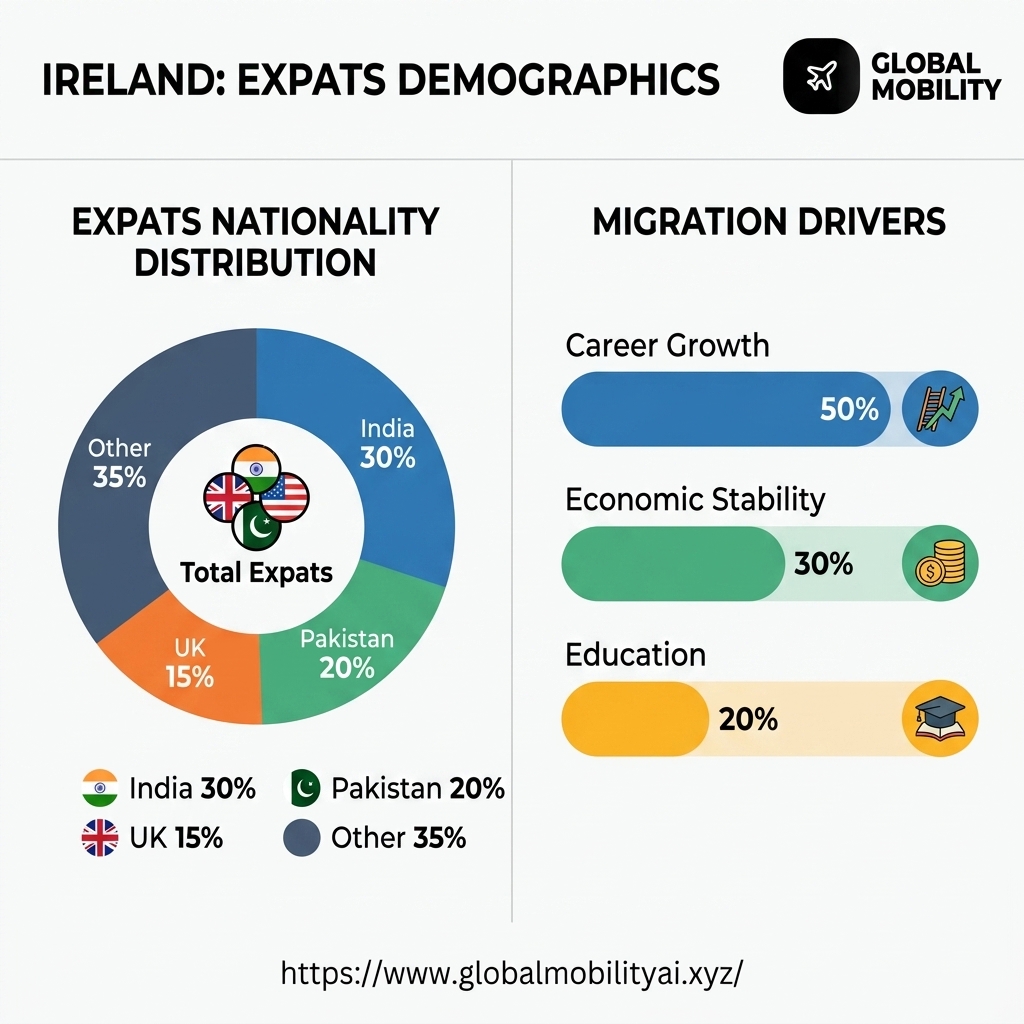
DEMO-INFOGRAPHIC-01: Expat Profile
Projected demographic breakdown and primary migration drivers for South Asian professionals relocating to Ireland in 2026.
According to data compiled in our relocation database, Ireland is highly favored for family migration. The Critical Skills permit offers immediate spousal work rights (Stamp 1G) and bypasses the lengthy Labour Market Needs Test, making it a faster gateway than other European visa pathways. Furthermore, the transition to Stamp 4 residency is fast-tracked to just 21 months, compared to the standard 3–5 year timelines of other EU jurisdictions.
2. Deep-Dive Analysis: Legal & Financial Framework
2.1 Legal Requirements & Visa Categories
Understanding how much can I save in Ireland per month 2026 requires reviewing the Irish immigration and work permit framework. The Department of Enterprise, Trade and Employment (DETE) manages employment permits under strict regulatory parameters:
2.2 Eligibility Criteria & Qualification Scoring
Irish work permits do not use a points-based calculator. Approval is binary and systematically guaranteed if the applicant meets the following criteria:
Applications must be submitted online through the Employment Permits Online System (EPOS) operated by DETE. (Source: DETE EPOS Portal, 2026) [https://epos.enterprise.gov.ie/].
2.3 Required Documentation & Official Checklists
To avoid administrative delays on the EPOS portal, candidates must submit a complete, digital document portfolio:
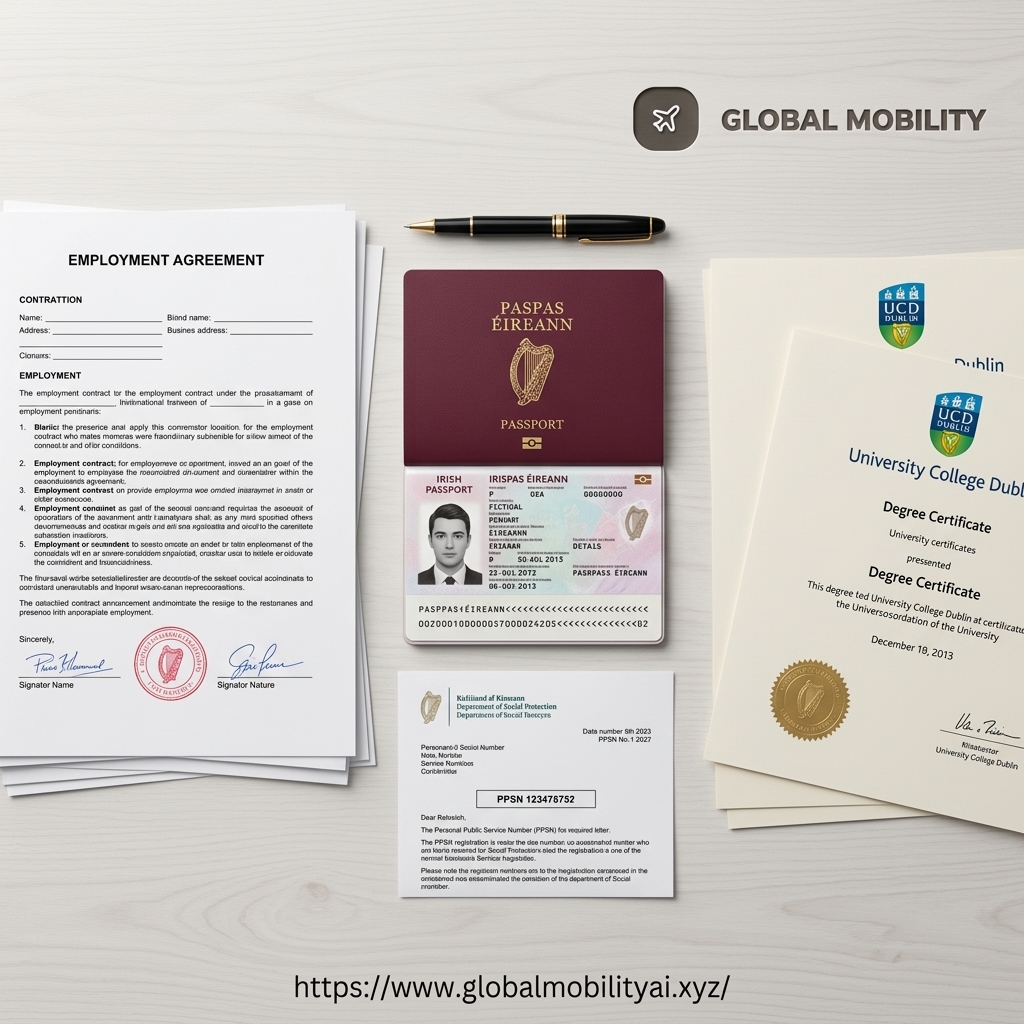
IMG-03: Legal Visa Documents
A pristine document layout showing essential visa application items: passport, employment contract, tax registrations, and attested degrees.
3. City Guide — Where to Live in Ireland in 2026
3.1 Top Cities for Expats: Rankings & Analysis
A major variable in calculating how much can I save in Ireland per month 2026 is the specific city where you reside. Dublin commands the highest rental prices, whereas regional technology hubs offer significant rent savings and high safety indices:
1. Dublin
Dublin is the economic capital and the focus of the technology sector, housing the famous "Silicon Docks" corporate campuses. While it offers the highest density of tech roles and network opportunities, it is subject to severe housing shortages. Rent for a central 1-bedroom flat averages €2,520 per month, and daily services are highly priced.
2. Cork
Cork is the pharmaceutical and life sciences hub, home to huge operations for Apple, Pfizer, and Johnson & Johnson. It offers a rich cultural community and a coastal lifestyle. Rent is approximately 10-15% cheaper than Dublin, with a 1-bedroom flat costing €2,250 per month, making it a highly attractive destination for skilled engineers.
3. Limerick
Limerick is a fast-growing advanced manufacturing and software development center located in the Mid-West. It offers excellent value for money, with rent for a central 1-bedroom flat averaging €1,375 per month. It is popular among expat families seeking lower property costs and shorter commutes.
4. Galway
Galway is a leading medical device engineering hub (housing Boston Scientific and Medtronic). It offers a vibrant arts culture and scenic coastal landscapes. Rent for a 1-bedroom flat averages €2,210 per month, though availability is highly restricted during the student term.

IMG-04: Top Expat Cities Collage
A visual collage showcasing expat lifestyle, residential buildings, and tech business districts in Dublin, Cork, and Limerick.
3.2 City Comparison Table
The table below compares the key liveability metrics for a single professional in Ireland in 2026:
| City | Avg Rent 1BR (USD) | Monthly Cost Ex-Rent (USD) | Job Market Density | Safety Index (0-100) | Expat Rating |
|---|---|---|---|---|---|
| **Dublin** | $2,720 | $1,130 | Elite (IT/Finance) | 52.4 | 8.8/10 |
| **Cork** | $2,430 | $1,050 | High (Pharma/Tech) | 68.5 | 8.5/10 |
| **Galway** | $2,380 | $1,030 | High (MedTech) | 71.2 | 8.4/10 |
| **Limerick** | $1,480 | $950 | Medium (ICT/Mfg) | 60.8 | 8.0/10 |
| **Waterford** | $1,350 | $880 | Medium (Tech/Services) | 74.8 | 7.8/10 |
(Source: Numbeo Cost of Living Index - Ireland 2026)
4. Cost of Living — Complete 2026 Breakdown
4.1 Monthly Budget Calculator Breakdown
To calculate how much can I save in Ireland per month 2026, let's build an itemized expat budget. The following budgets reflect a single professional living in a central 1-bedroom apartment (converted to USD):
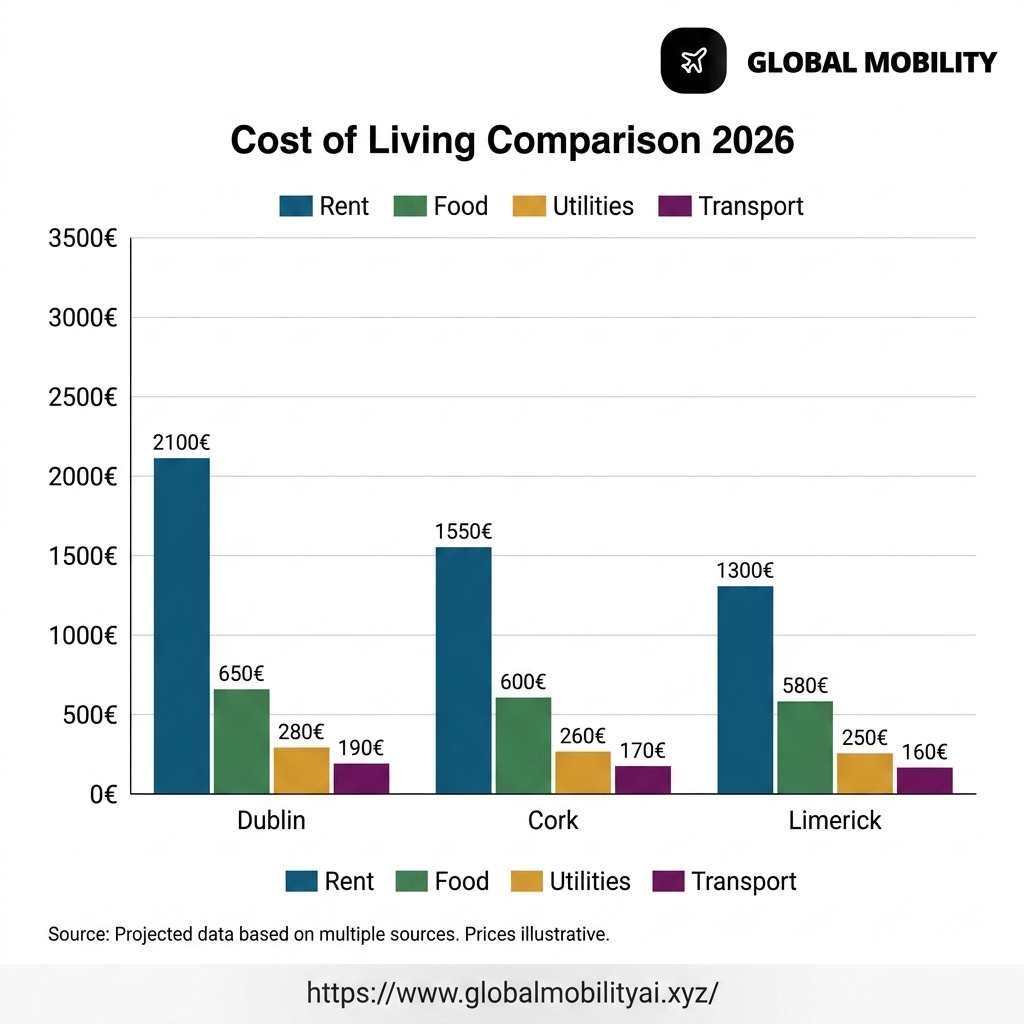
CHART-1: Cost of Living Comparison
Grouped bar chart comparing standard monthly expenses (rent, utilities, groceries, transport) across Dublin, Cork, and Limerick in 2026.
4.2 Cost of Living vs. Salary: What You'll Actually Save
The most reliable way to answer how much can I save in Ireland per month 2026 is to run detailed net income simulations. Irish income tax (PAYE) operates under a progressive rate: 20% on the standard band up to €44,000, and 40% on the remaining balance. USC ranges from 0.5% to 8.0%, and PRSI stands at 4.2%. (Source: Revenue Commissioners Ireland, 2026) [https://www.revenue.ie/].
Let's simulate three income scenarios for single tech professionals in Dublin and Cork:
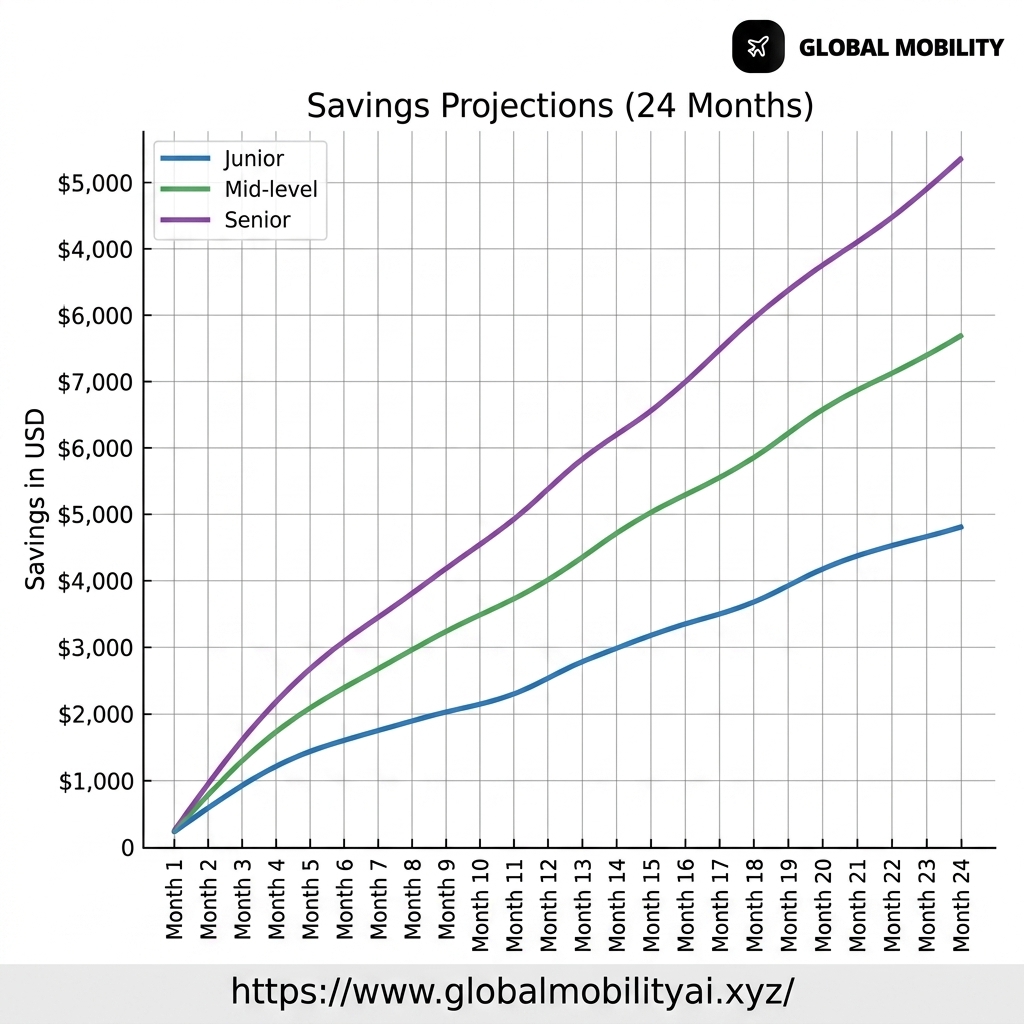
CHART-2: Savings Projection Line Chart
Cumulative savings projection over 24 months across three distinct professional income tiers in Ireland.
Using the GlobalMobilityAI cost of living calculator, candidates can customize these savings models, accounting for tax credit variations, spousal income, and localized rent allowances.
4.3 Cost of Living Index vs. Home Countries
The comparative table below outlines the price variance between Dublin, London, and South Asian cities (base index London = 100.0):
| Cost Category Index | Dublin, Ireland | Karachi, Pakistan | Mumbai, India | London, UK |
|---|---|---|---|---|
| **Rent Index** | 95.4 | 4.8 | 15.2 | 100.0 |
| **Groceries Index** | 82.5 | 17.6 | 25.4 | 86.8 |
| **Restaurant Prices** | 88.6 | 13.3 | 22.8 | 92.4 |
| **Local Purchasing Power** | 98.4 | 16.5 | 39.8 | 100.0 |
(Source: Numbeo Country Comparison Database 2026)
5. Salary Data & Job Market Intelligence
5.1 Average Salaries by Industry (2026 Data)
Salary floors are strictly monitored by DETE. The table below outlines median salaries for key CSOL sectors in Ireland for the 2026 recruitment cycle:
| Industry Sector | Entry Level (0-2 Yrs) | Mid-Level (3-6 Yrs) | Senior (7+ Yrs) | Currency |
|---|---|---|---|---|
| **Software Engineering** | €48,000 | €68,000 | €98,000 | EUR / year |
| **Cloud Infrastructure (DevOps)** | €50,000 | €72,000 | €105,000 | EUR / year |
| **Data Science & AI** | €52,000 | €76,000 | €112,000 | EUR / year |
| **Civil Engineering** | €44,000 | €62,000 | €88,000 | EUR / year |
| **Biochemistry (Pharma)** | €45,000 | €65,000 | €92,000 | EUR / year |
(Sources: Morgan McKinley Ireland Salary Guide 2026 | Cpl Recruitment Ireland Report 2026)
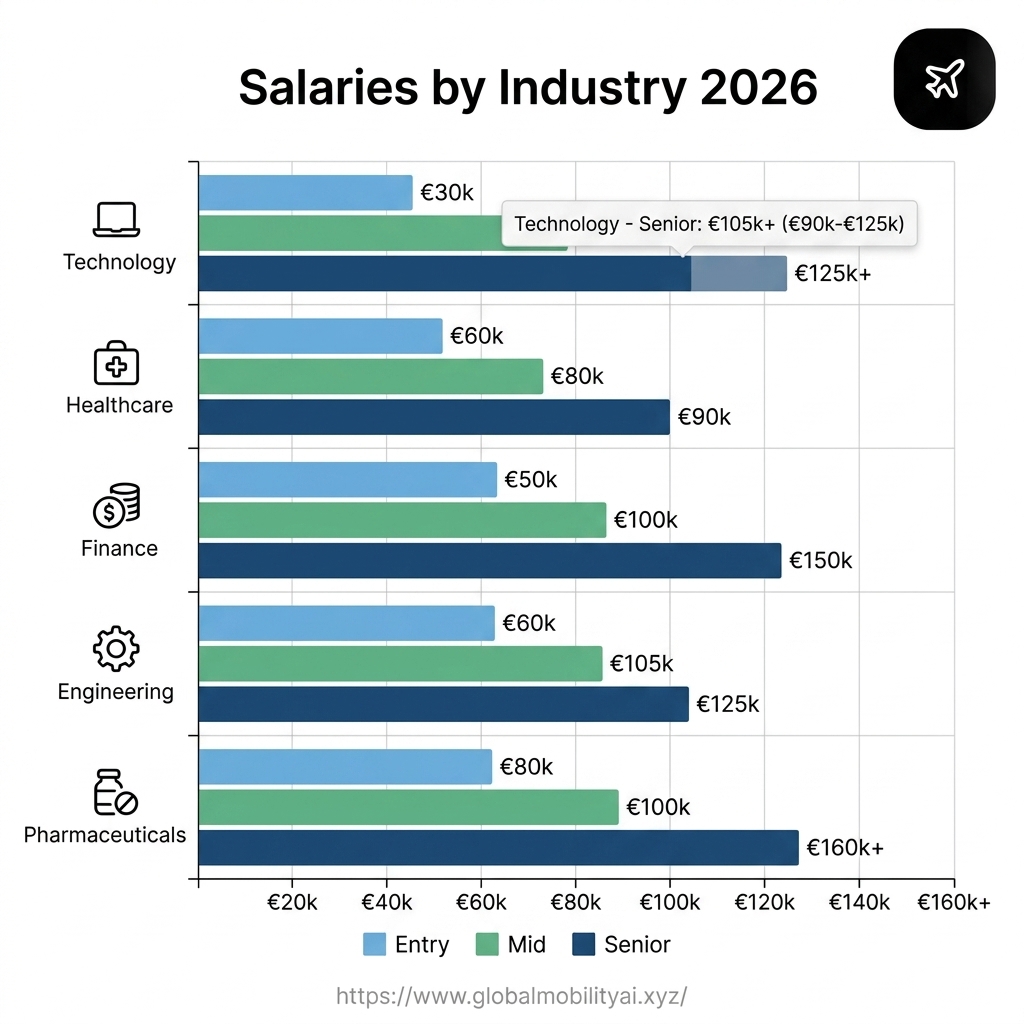
IMG-06: Industry Salaries Chart
A horizontal bar chart comparing standard mid-level salaries across different high-demand sectors in Ireland in 2026.
5.2 In-Demand Skills & Sectors in 2026
Irish technology firms are actively recruiting for cloud computing, cybersecurity, and data architecture professionals. The expansion of data center infrastructures has driven a shortage of power systems engineers and construction managers. In the pharmaceutical sector, process engineers and quality assurance specialists are in high demand in Cork and Limerick, benefiting from streamlined EPOS processing and fast-tracked Stamp 4 pathways.
5.3 Benchmarking Salaries
Our GlobalMobilityAI salary comparison tool allows candidates to check their basic salary offers against current market averages. The tool extracts data from Glassdoor Ireland, Cpl, and the Central Statistics Office (CSO) database, allowing you to verify if your contract salary meets the €40,904 or €68,911 thresholds before submitting your EPOS application.
6. CV Formatting — Ireland-Style Resume Guide
6.1 Irish CV Format Requirements
Irish recruiters maintain specific formatting guidelines to ensure CVs are readable and comply with equality legislation. The structural requirements are outlined below:
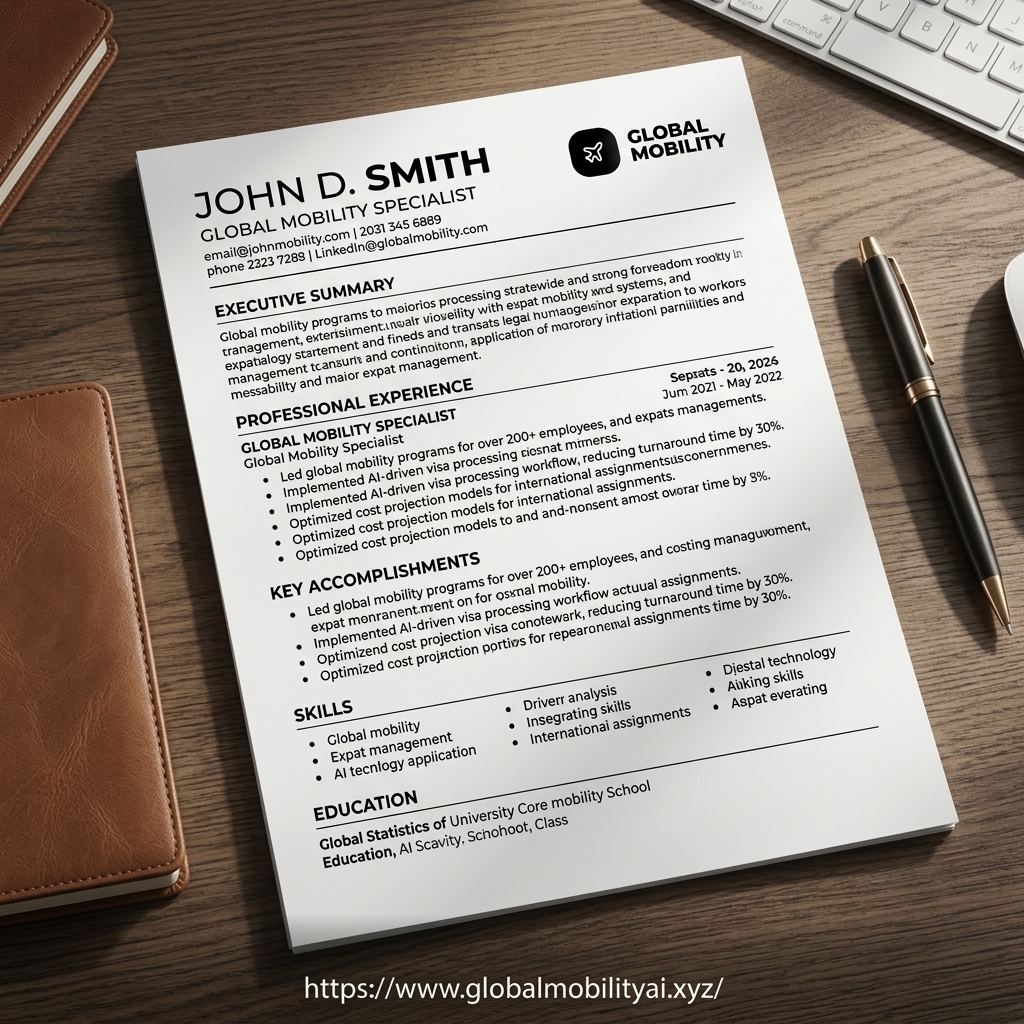
IMG-07: CV Layout Mockup
A layout mockup illustrating the clean typography, structure, and spacing required for an Irish CV.
6.2 Common CV Mistakes That Get Applications Rejected
6.3 ATS Optimization for Irish Job Portals
The primary job boards in Ireland are IrishJobs.ie, LinkedIn, and Indeed Ireland. Technical recruiters utilize ATS systems like Workday and Taleo. To ensure your CV passes, use standard headings and integrate exact keywords from the job description (e.g., "Python," "AWS DevOps," "Agile Scrum"). Save your document as a text-readable PDF.
7. Interview Tips for the Ireland Job Market
7.1 Cultural Interview Norms & Expectations
Interviews in Ireland are conversational but technically structured. Irish corporate culture values modesty, team integration, and clear communication. Over-promoting yourself or displaying arrogance is viewed negatively. Recruiters place a high emphasis on behavioral fit and your ability to work in multicultural teams. Interviews typically begin with brief informal talk to build rapport.

IMG-08: Interview Culture Visual
A professional interview panel assessing an expat candidate, demonstrating structured communication and professional etiquette.
7.2 Common Interview Questions & Answer Frameworks
Use the STAR framework (Situation, Task, Action, Result) to answer these standard questions:
7.3 Dress Code, Punctuality & Professional Etiquette
7.4 Post-Interview Follow-Up Etiquette
8. 2026 Policy Updates & Market Predictions
8.1 Key Policy Changes Effective 2026
Immigration parameters have experienced updates as of March 1, 2026:
8.2 Immigration Trend Predictions (Data-Backed)
Due to domestic demographic changes, Ireland continues to prioritize high-skilled migration. Processing times are predicted to remain stable at 4–6 weeks through 2026. The government's focus is on attracting tech, engineering, and medical professionals. Naturalization processing backlogs are projected to decrease, making the 5-year pathway to citizenship highly reliable.
8.3 How These Changes Affect Your Application in 2026
For professionals wondering how much can I save in Ireland per month 2026, recent policy updates have increased financial requirements. Employers must adjust their base contracts to meet the new €40,904 minimum. Before paying non-refundable fees, candidates should simulate their profile eligibility on the GlobalMobilityAI visa probability calculator tool to ensure their job offer and credentials align with DETE requirements.
9. Tactical Comparison Matrix
The table below benchmarks the primary Irish employment visa pathways:
| Visa Program | Eligibility | Min. Income Requirement | Processing Time | Local Gov. Fees | Est. Approval Rate* | Path to PR |
|---|---|---|---|---|---|---|
| **Critical Skills (CSOL)** | Job on CSOL + degree | €40,904/year salary | 4–6 Weeks | €1,000 | Platform Est.* | Yes (Stamp 4 in 21 months) |
| **Critical Skills (Non-CSOL)** | Non-ineligible job + degree | €68,911/year salary | 4–6 Weeks | €1,000 | Platform Est.* | Yes (Stamp 4 in 21 months) |
| **General Work Permit** | Job not ineligible + test | €34,000/year salary | 6–8 Weeks | €1,000 | Platform Est.* | Yes (after 5 years) |
| **Intra-Company Transfer** | Transfer of existing employee | €46,000/year salary | 4–6 Weeks | €1,000 | Platform Est.* | No (temporary stay) |
| **Working Holiday Visa** | Under 30/35 years old | N/A | 4–8 Weeks | €300 | Platform Est.* | No (temporary 1-year) |
| **General Visitor Visa** | Tourism/Business visit | N/A | 2–6 Weeks | €60–€100 | Platform Est.* | No (non-work stay) |
\Internal platform estimate. Official approval rates are not publicly aggregated by DETE. Monitor updates on: DETE Employment Permits Portal.*
10. Execution Roadmap: Phase-by-Phase
The execution roadmap to determine how much can I save in Ireland per month 2026 is structured into four relocation phases.

CHART-3: Visa Processing Timeline Gantt Chart
A Gantt chart mapping the relocation phases, covering preparation, submission, arrival, and Stamp 4 settlement.
Phase 1 — Preparation & Verification (Months 1–2):
Focus on validating your academic credentials to ensure EPOS compliance.
Phase 2 — EPOS Consular Submission (Months 3–4):
Submit your complete file to the DETE online portal.
Phase 3 — Arrival & Local Biometrics (Months 5–6):
Register with immigration within 90 days of landing.
Phase 4 — Tax Setup & Stamp 4 Transition (Month 12+):
Secure your Stamp 4 residency status after 21 months of work.
11. Critical Risk Factors & Common Pitfalls
Relocating to high-cost Dublin requires strict compliance with immigration and tax regulations, where minor filing errors result in visa rejections or high tax deductions.

IMG-11: Visa Rejection Risks
Vector checklist illustration displaying the primary administrative pitfalls and document audit failures in Ireland.
12. FAQ — People Also Ask
Q: how much can I save in Ireland per month 2026?
A: how much can I save in Ireland per month 2026 depends on your location and accommodation style. A single professional earning a tech salary of €65,000 takes home €3,965 net monthly. If renting a private city-center apartment in Dublin (€2,520) and adding basic expenses (€1,500), savings are minimal. However, by sharing accommodation or living in a secondary city like Limerick, savings can reach €1,100 to €1,500 monthly.
Q: Is it cheaper to live in Dublin or Cork in 2026?
A: Cork is cheaper to live in than Dublin, with average rental costs approximately 10-15% lower. A 1-bedroom apartment in Cork center averages €2,250 monthly, compared to €2,520 in Dublin. Utilities, groceries, and dining expenses are also slightly cheaper in Cork, allowing for a higher net savings potential.
Q: Can my spouse work in Ireland if I hold a Critical Skills permit?
A: Yes, spouses and de facto partners of Critical Skills permit holders are granted immediate access to the local labor market. Upon arrival, they can apply for a Stamp 1G residency permit, allowing them to work for any employer without needing a separate sponsored permit.
Q: What is the Universal Social Charge (USC) rate in Ireland for 2026?
A: The Universal Social Charge (USC) in 2026 is a progressive tax: 0.5% on income up to €12,012, 2% up to €25,760, 4% up to €70,044, and 8% on the remaining balance. These deductions are automated on your monthly payslips.
Q: What is the processing time for Ireland's EPOS permit system?
A: Processing times through the updated EPOS portal average between 4 and 6 weeks, provided that all documents (including degree attestation and employer tax clearance details) are submitted correctly without generating RFIs.
Q: Can I use stock options to satisfy the Critical Skills salary floor?
A: No, DETE does not accept stock options, bonuses, health insurance contributions, or car allowances to satisfy the salary floor. You must demonstrate a basic annual salary of at least €40,904 or €68,911.
Q: What happens if I am made redundant while holding a Critical Skills visa?
A: If you face redundancy, you must notify DETE within 14 days. You are granted a 6-month grace period to remain in Ireland and secure another qualifying job, during which you can apply for a new permit without leaving the country.
Q: Is Ireland more expensive than the UK in 2026?
A: Yes, Dublin is currently more expensive than secondary UK cities like Manchester, primarily due to higher housing costs. While grocery and utility indices are comparable, rent in Dublin is up to 45% higher than in Manchester, which reduces your net monthly savings potential unless your salary is adjusted accordingly. Therefore, any projection on how much can I save in Ireland per month 2026 must take into account these regional tax brackets.
13. Conclusion: The Bottom Line
In summary, understanding how much can I save in Ireland per month 2026 is vital to securing your financial independence in Europe. Relocating under the Irish Critical Skills pathway represents a strategic opportunity: while living expenses in Dublin are high, the tech salaries are competitive, and the Stamp 4 permanent residency timeline is among the fastest in Europe. By targeting secondary cities like Cork or Limerick and utilizing shared housing initially, you can optimize your savings rate while building a global career in a dynamic tech ecosystem.

IMG-12: App Screenshot Mockup
Our relocation platform provides interactive comparison dashboards, visa probability calculators, and savings projectors.
Do not let financial planning errors or document inconsistencies delay your career transition. Small errors in tax class registration or blocked fund calculations are the difference between a successful move and a painful rejection. We strongly recommend that you utilize the interactive tools on the GlobalMobilityAI platform. Simulate your points profile on the GlobalMobilityAI visa probability calculator to confirm your eligibility, check the salary comparison tool, and map your cost of living calculator budget before submitting your consular files. Align your resources, secure your documentation, and make your global career transition a success.
Predict your mobility score.
Use our AI engine to get your personalized visa pathway, salary prediction, and relocation roadmap.
More Insights

Germany Opportunity Card 2026: Points, How to Apply & Fastest Jobs

The Ultimate Golden Visa Masterclass 2026: The Strategic Wealth & Mobility Blueprint