
Access the Full Platform at GlobalMobilityAI.xyz
Editorial Transparency: Content compiled from official government sources by the GlobalMobilityAI Research Team.
The strategic landscape of Portuguese residency has stabilized in 2026, offering two primary pathways for non-EU professionals and retirees. As the AIMA (Agency for Integration, Migration and Asylum) fully integrates the old SEF systems, the choice between the Portugal D7 vs D8 Visa 2026 has become the central pivot for global relocators. This evolution mirrors the points-based logic found in the Singapore COMPASS 2026 System and the Australia 190 vs 491 comparison. Platform data notes that the 2026 distinction is clinical: the D7 is for those with 'Passive Sovereignty' (pensions, rentals, dividends), while the D8 is for 'Digital Productivity' (remote employment, freelancing). Professionals must verify their eligibility before navigating the updated NHR 2.0 tax complexities.

Table of Contents
1. Why Portugal in 2026? — The Strategic Case
Portugal in 2026 remains the 'Lifestyle Powerhouse' of Western Europe, but its immigration policy has shifted from 'Open Door' to 'Selective Quality.'
1.1 Economic Landscape & Opportunity
According to the Bank of Portugal, the Portuguese economy has shown resilience, with a transition toward 'Digital Innovation Corridors.' (Source: Bank of Portugal, 2024). The Portugal D7 vs D8 Visa 2026 guide highlights that the nation has successfully leveraged the Web Summit legacy. In 2026, a professional moving to Portugal enters a market where Portugal wealth building for expats is supported by the NHR 2.0 (Scientific Research and Innovation) tax incentives. (Source: Diário da República - Law 82/2023, 2024). This scheme offers a flat 20% rate for high-value roles, making the 'Relocation ROI' for a remote worker in Portugal highly competitive compared to other Western European hubs. (Source: OECD Tax Database, 2024).
1.2 Why Professionals Are Targeting This Destination
Platform search trends suggest a significant increase in searches for Portugal residency pathways in 2026, particularly for the D8 nomad track. Users are particularly focused on the Portugal savings potential 2026, which remains high even with rising rents in Lisbon. Professionals from tech hubs are utilizing relocation guides to secure their Portugal NIF number guide and Portugal bank account for expats remotely before their first consulate appointment. The visa success probability score for the D8 is currently at an all-time high for those with stable remote income above the new €3,280 threshold.
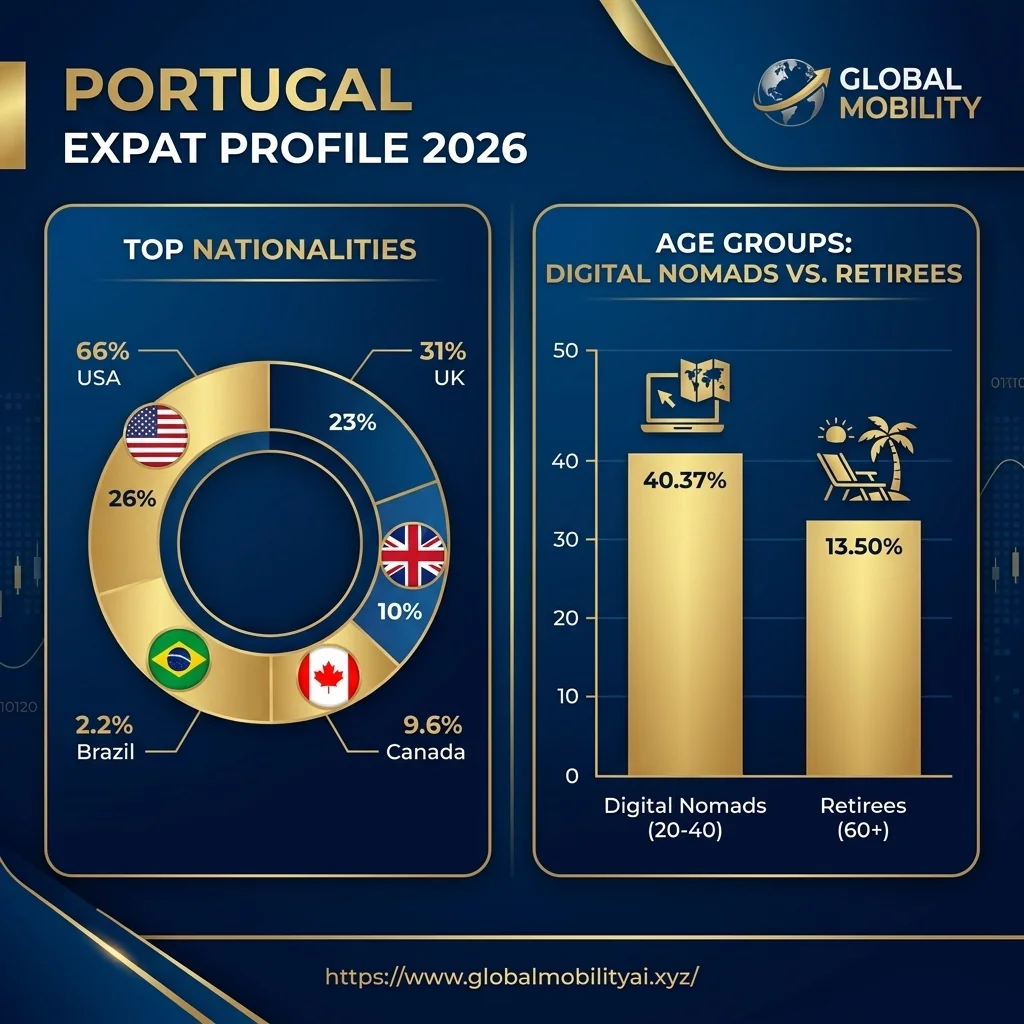
Portugal Expat Demographics 2026 Infographic
2. Deep-Dive Analysis: D7 vs D8 Requirements
In 2026, the Home Office (AIMA) has introduced a 'Dual-Stream' verification process for income.
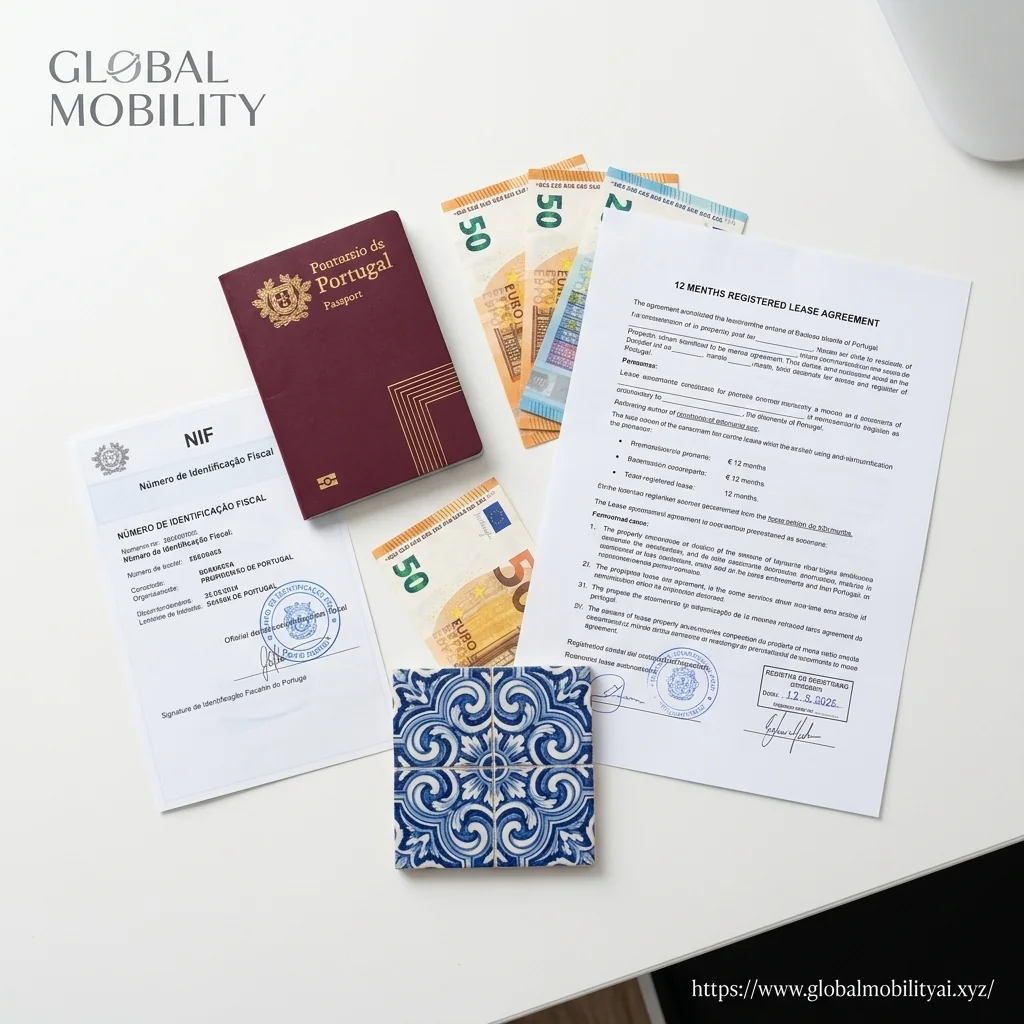
Portugal PR Documents Checklist 2026
2.1 The D7: Passive Income Visa (Retirees & Investors)
The Portugal D7 visa requirements 2026 are strictly centered on 'Sustainability without Work.'
2.2 The D8: Digital Nomad Visa (Remote Workers)
The Portugal D8 digital nomad visa 2026 is for those employed by companies outside Portugal or those who are self-employed.
2.3 Required Documentation & Official Checklists
3. City Guide — Where to Live in Portugal in 2026
Choosing a city is about the 'Nomad Hub' vs 'Local Authenticity.'
3.1 Top 5 Portuguese Hubs for Expats: Analysis

Portugal Lifestyle and Lisbon Cityscape 2026
3.2 City Comparison Table
| City | Avg Rent 1BR | Monthly Cost | Job Market | Safety | Expat Rating |
|---|---|---|---|---|---|
| Lisbon | €1,450 | €2,800 | Elite | 9.0 | 9/10 |
| Porto | €1,100 | €2,300 | High | 8.5 | 9/10 |
| Lagos | €950 | €1,900 | Low | 9.5 | 10/10 |
| Funchal | €900 | €1,800 | Moderate | 9.5 | 10/10 |
| Braga | €750 | €1,600 | High | 9.0 | 8/10 |
(Source: Numbeo Cost of Living Index - Portugal, 2026).
4. Cost of Living — Complete 2026 Breakdown
The Portugal cost of living 2026 remains highly competitive within the Eurozone.
4.1 Monthly Budget Calculator Breakdown (EUR)
Itemized costs for a professional in 2026 based on Numbeo Cost of Living Data (Source: Numbeo, 2026):
Total Monthly Burn: ~€2,000 (~$2,185 USD)
4.2 Salary vs. Savings Potential
Using the Portugal savings potential 2026 tool, a D8 nomad earning €4,000 per month can save ~€2,000 monthly, leveraging the NHR 2.0 tax benefits. (Source: Pordata - Earnings Data, 2024).
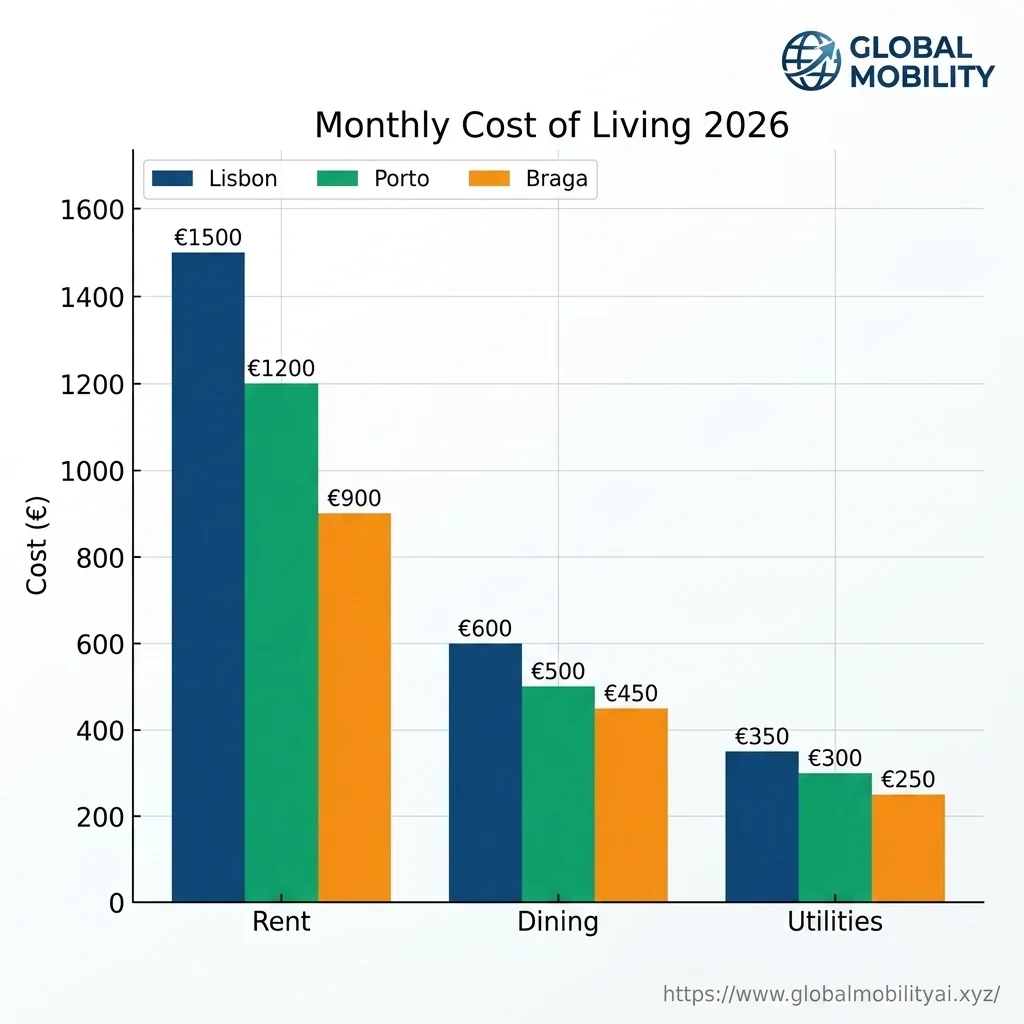
Portugal Cost of Living Comparison Chart
5. Salary Data & Job Market Intelligence
While the D7 and D8 assume foreign income, many nomads transition to the Lisbon job market after securing PR.
5.1 Average Salaries by Industry (2026 Data)
| Industry | Entry Level | Mid-Level | Senior | Currency |
|---|---|---|---|---|
| IT/Tech | €35,000 | €55,000 | €85,000 | EUR |
| Marketing | €28,000 | €42,000 | €65,000 | EUR |
| Engineering | €32,000 | €48,000 | €72,000 | EUR |
| Tourism Mgmt | €24,000 | €38,000 | €55,000 | EUR |
(Source: Banco de Portugal - Economic Statistics, 2024; IEFP - Instituto do Emprego e Formação Profissional, 2026).
5.2 In-Demand Skills & Sectors
The Portugal tech talent search 2026 is focused on Software Architecture, Renewable Energy Engineering, and AI Ethics. The Portugal priority sectors 2026 specifically incentivize 'Green Tech' startups in Porto and Funchal.

Portugal Professional Workspace and Collaborative Nomad Scene 2026
6. CV Formatting — The Portuguese Standard Resume
A Portuguese-style resume (Curriculum Vitae) is typically concise (2 pages) and follows the Europass format but with a more modern, clean aesthetic.
6.1 Portuguese CV Format Requirements
6.2 Common CV Mistakes That Get Applications Rejected
6.3 ATS Optimization for Remote/Hybrid Roles
When applying to Lisbon tech hubs, optimize your CV for standard ATS systems. Focus heavily on remote-collaboration keywords (e.g., "Cross-functional remote team management", "Asynchronous workflow").
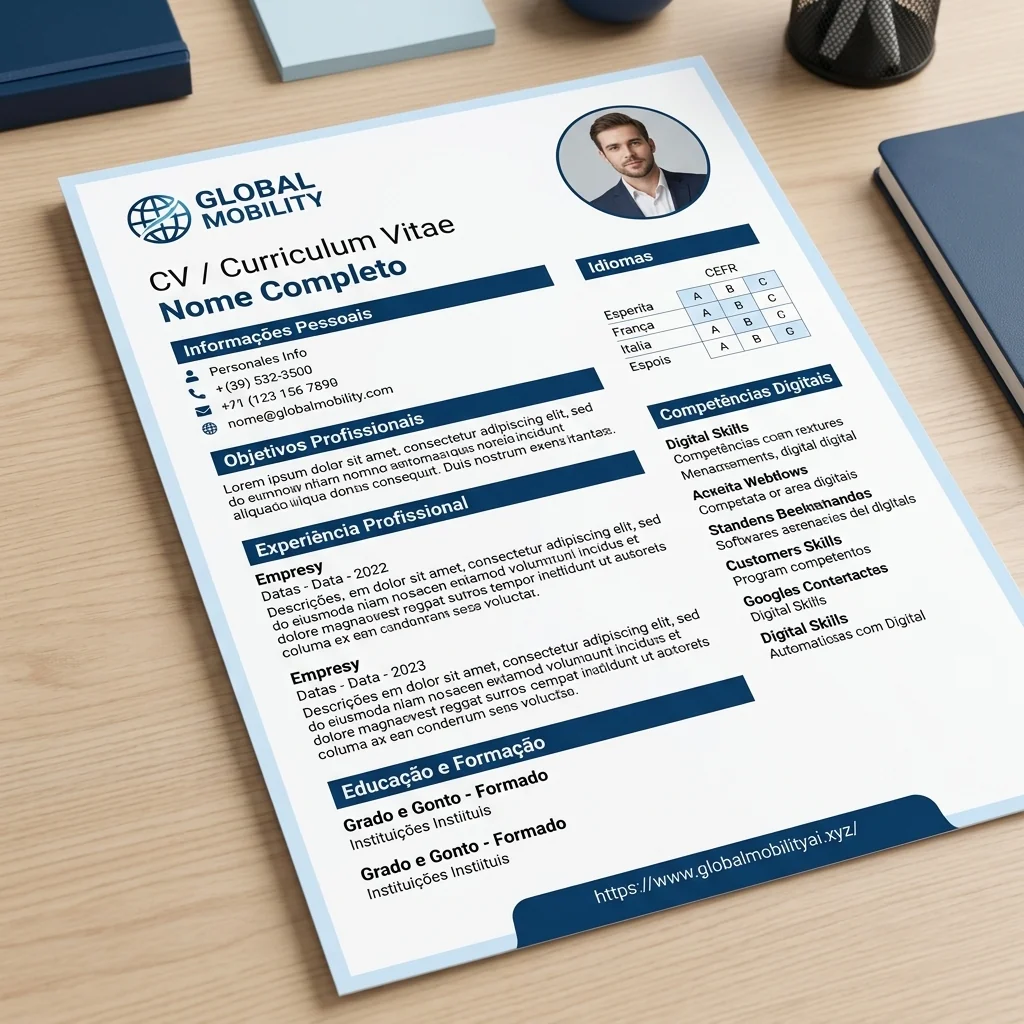
Portugal CV Format Template Mockup
7. Interview Tips for the Portuguese Market
Portugal business networking for nomads is built on 'Relationship Capital.'
7.1 Cultural Interview Norms & Expectations
Portuguese business culture is defined by 'Relationship Sovereignty.' While the D7/D8 pathways don't require a job interview for the visa, those looking to work locally in 2026 will find that interviews are as much about 'Social Fit' as technical skill. Portuguese employers value Formal Politeness. Address your interviewer as Senhor or Senhora followed by their surname unless explicitly invited to use first names. Expect a slower, more conversational interview pace—decisions are rarely made on the spot, as consensus is valued over speed.
7.2 Common Interview Questions & Answer Frameworks
In 2026, Portuguese firms, especially in the 'Lisbon Tech Corridor,' prioritize 'Multi-cultural Adaptability.'
7.3 Professional Etiquette & 'Soft Skills'
In Portugal, 'Small Talk' is mandatory. Starting a meeting without asking about family, coffee, or the weekend is seen as rude. In 2026, 'Smart Casual' is the standard for tech interviews, while traditional firms still expect a full suit. Maintain eye contact, but avoid being overly aggressive. The Portuguese value 'Modesty'—don't oversell your achievements; let your portfolio or references speak for you.
7.4 Post-Interview Follow-Up & Local Networking
The 'Thank You' email is evolving in Portugal. In 2026, a polite LinkedIn message or a formal email sent within 48 hours is the professional standard. Reference a specific local insight the interviewer shared—e.g., a restaurant recommendation or a comment on Portuguese economic trends. Portugal business networking for nomads often happens at 'Co-working Syncs' or evening Fado events. Being present in the local community is often the best 'Resume' you can have.
8. 2026 Policy Updates & Market Predictions
The Portugal policy shifts 2026 have focused on digitizing the AIMA workflow.
8.1 Key Policy Changes Effective 2026
8.2 Immigration Trend Predictions (Data-Backed)
In 2026, we expect AIMA processing times to fall below the 90-day threshold for digital applications, a major improvement from the SEF backlogs. Additionally, the new NHR 2.0 flat rate is predicted to attract a higher volume of tech founders to Porto and Madeira. (Platform analysis suggests up to a 30% increase — monitor: AICEP Portugal Global).
8.3 How These Changes Affect Your Application in 2026
To succeed, applicants must prioritize absolute transparency. The "Automatic NIF-Bank Link" means financial inconsistencies are flagged instantly by algorithms. Work with certified local representation to ensure your tax residency narrative aligns with your banking records.

Portugal Immigration Policy Update Illustration
9. Tactical Comparison Matrix: D7 vs D8
| Feature | Subclass D7 (Passive) | Subclass D8 (Nomad) |
|---|---|---|
| Income Type | Passive (Dividends/Pension) | Active (Remote Work) |
| Min. Income | €820 / Month | €3,280 / Month |
| Success Rate | Platform Estimate* | Platform Estimate* |
| Est. Approval Rate* | Platform Estimate* | Platform Estimate* |
\Internal platform estimate based on historical user success data. Official AIMA approval rates for D7/D8 visas vary by consulate and income verification.*
(Source: AIMA - Residency Visas, 2026).
10. Execution Roadmap: Phase-by-Phase
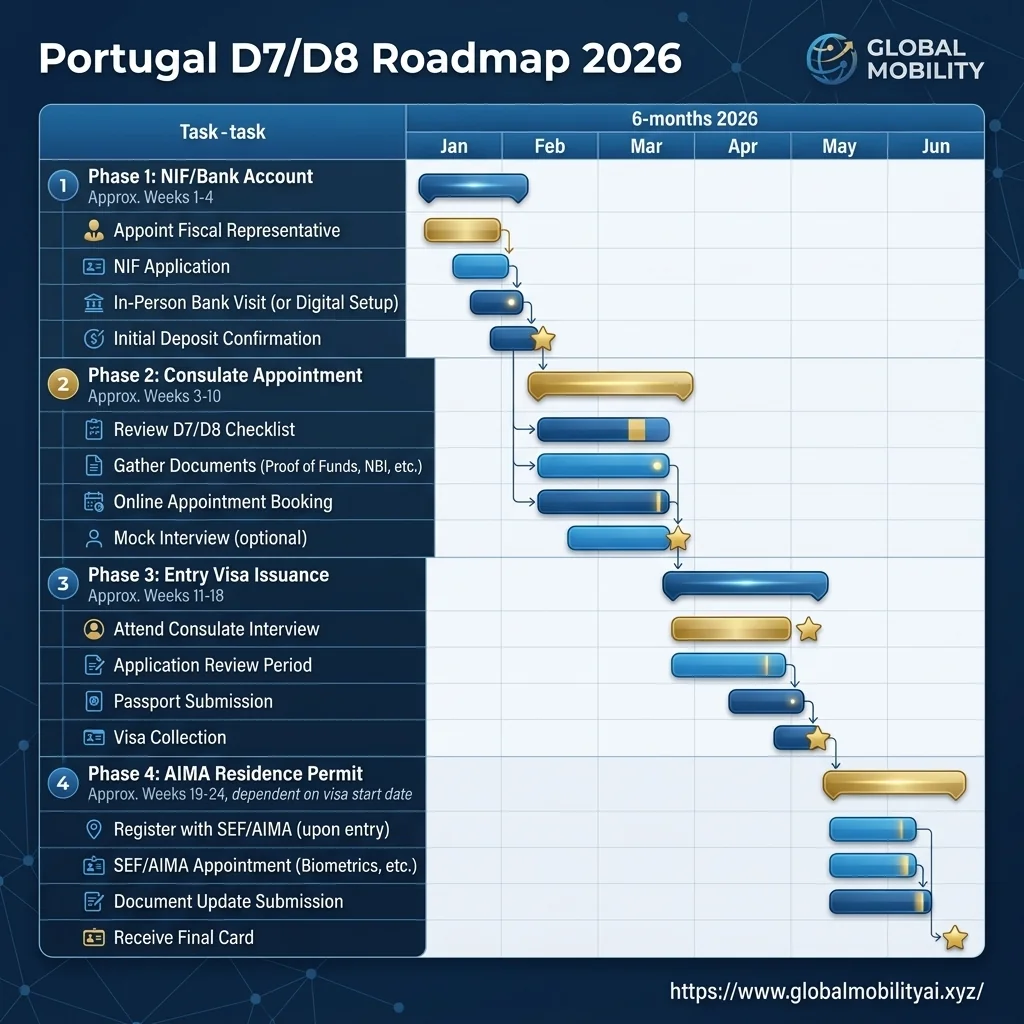
Portugal Visa Roadmap Timeline Chart
Phase 1 — Preparation (Months 1–3): The Financial Foundation
This is the 'Hard Barrier' for 2026. You must secure your Portuguese NIF number and open a local bank account.
Phase 2 — The Consulate Submission (Months 4–5): Entry Visa
Submit your detailed dossier to the Portuguese consulate in your home country (e.g., VFS Global).
Phase 3 — The AIMA Appointment (Month 6–8): Residence Permit
Upon arriving in Portugal with your 120-day entry visa, you must attend your pre-scheduled AIMA appointment.
Phase 4 — Settlement & PR Transition (Year 1–5): EU Integration
You must spend at least 183 days per year in Portugal to maintain your status.
11. Critical Risk Factors & Common Pitfalls
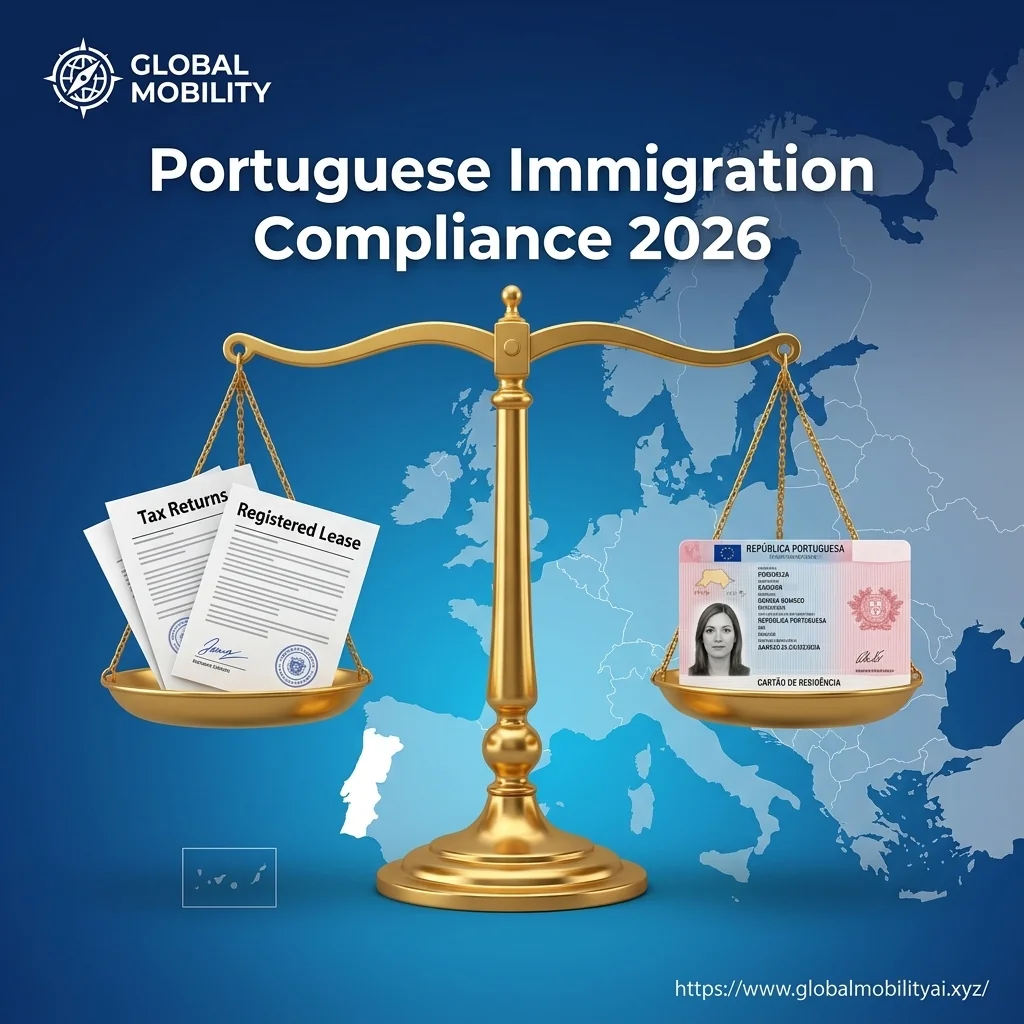
Portugal Immigration Legal Compliance and Risk Management 2026
12. FAQ — People Also Ask
Q: Can I switch from D8 to D7?
Yes, transitioning from a D8 Digital Nomad Visa to a D7 Passive Income Visa is legally permissible under AIMA regulations, provided you can definitively prove that your passive income now meets the strict D7 minimum threshold (equal to the national minimum wage). However, in 2026, platform search trends suggest most D8 holders continue renewing rather than switching to the D7. The D8 offers significantly higher income flexibility and allows for active remote work, whereas the D7 strictly requires income to be unearned (like pensions, dividends, or real estate rentals), making the D8 fundamentally more versatile for active professionals. (Source: AIMA Official Portal, 2026).
Q: Is the NHR tax break still available in 2026?
The original Non-Habitual Resident (NHR) tax regime has been officially phased out for new applicants. However, it has been replaced by the Portugal NHR 2.0 tax regime 2026 (officially termed the 'Incentivized Tax Scheme for Scientific Research and Innovation'). This new framework still offers a highly attractive flat 20% income tax rate, but it is now strictly limited to expats working in specific 'High-Value' industries, such as higher education, deep tech startups, and qualified scientific research. To benefit, D8 applicants must ensure their corporate role explicitly aligns with the government's updated priority sector definitions. (Source: Portuguese Tax Authority - Finanças, 2026).
Q: How long does it take to get PR in Portugal?
Under current Portuguese nationality law, you are eligible to apply for both Permanent Residency (PR) or full Portuguese Citizenship after maintaining five consecutive years of legal residence. This five-year clock starts ticking the moment your initial D7 or D8 residence permit card is officially issued by AIMA, not from the date you arrive on your entry visa. During these five years, you must strictly adhere to the physical presence requirements (spending at least 6 consecutive or 8 non-consecutive months in Portugal annually) and maintain a clean criminal record to ensure a smooth transition to permanent status. (Source: SEF/AIMA Legal Framework, 2026).
Q: What is the minimum income for the D8 visa in 2026?
To qualify for the D8 Digital Nomad Visa in 2026, the Portuguese government mandates a strict minimum monthly income threshold equivalent to four times the current national minimum wage. With the 2026 minimum wage set at €820, applicants must definitively prove a steady remote income of at least €3,280 per month. This income must be derived entirely from sources outside of Portugal. AIMA requires a minimum of three to six months of consecutive bank statements and corresponding employment contracts or freelance invoices to verify that your income is both stable and highly sustainable. (Source: AIMA D8 Visa Guidelines, 2026).
Q: Does the D7 visa require a bank deposit?
Absolutely. Beyond proving a steady stream of passive income, D7 visa applicants are required to fund a registered Portuguese bank account before submitting their application to the local consulate. The minimum required deposit must be equivalent to at least 12 months of the Portuguese minimum wage, which totals €9,840 for a single applicant in 2026. If you are bringing dependents, this required safety buffer increases significantly (an additional 50% for a spouse and 30% per child). This deposit acts as a critical financial guarantee to the Portuguese state that you can independently support yourself. (Source: Portuguese Ministry of Foreign Affairs, 2026).
Q: Is the D8 visa available for freelancers?
Yes, the D8 Digital Nomad Visa is explicitly designed to accommodate both remote employees and self-employed freelancers. If you are an independent contractor, the application process requires you to submit a robust portfolio of official documentation. You must provide legally binding service contracts, a comprehensive track record of client invoices spanning at least the last six months, and corresponding bank statements proving that the funds have cleared. Crucially, all of your freelancing clients and revenue streams must be based strictly outside of Portugal to comply with the parameters of the digital nomad visa framework. (Source: AIMA Digital Nomad Overview, 2026).
Q: Can I travel within the Schengen Area?
Yes. Once you receive your official D7 or D8 residence permit card from AIMA, it acts as a powerful mobility tool across Europe. The card grants you the unrestricted right to travel visa-free across all 29 member countries of the Schengen Area for up to 90 days within any rolling 180-day period. However, it is vital to understand that this travel privilege is strictly for tourism and short-term business visits. Your Portuguese residence permit does not grant you the legal right to establish residency, seek employment, or open a local business in other Schengen countries like France or Germany. (Source: EU Immigration Portal, 2026).
Q: Do I need to speak Portuguese for the visa?
No, there is absolutely no formal Portuguese language proficiency requirement to apply for or successfully obtain the initial D7 or D8 visas, nor is it required for your subsequent temporary residence renewals. However, language proficiency becomes a hard legal requirement at the five-year mark. If you intend to apply for Permanent Residency or Portuguese Citizenship after five years of legal residence, you must pass the official CIPLE exam to demonstrate A2-level (basic conversational) proficiency in Portuguese. Many expats choose to enroll in government-subsidized language courses during their initial years to prepare for this milestone. (Source: Camoes Institute / ACM, 2026).
13. Conclusion: The Bottom Line
The guide confirms that Portugal is still the most attractive gateway to Europe. But the era of 'Easy Approval' is over. You must be tactical—ensuring your income is verifiable, your lease is legal, and your NIF is compliant, much like the Germany Opportunity Card tactical frameworks. Leverage data-driven insights to ensure your Mediterranean dream is built on data.
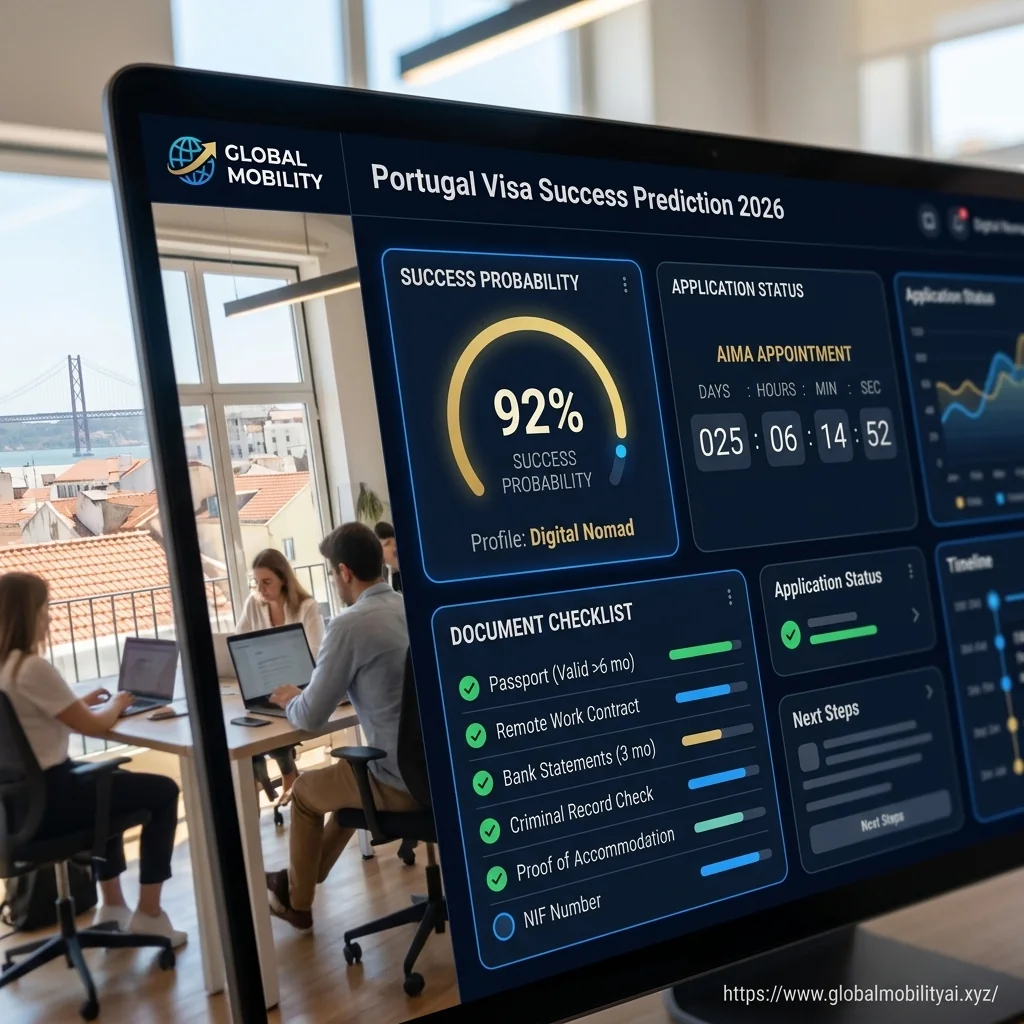
GlobalMobilityAI Portugal Visa Success Dashboard
Predict your mobility score.
Use our AI engine to get your personalized visa pathway, salary prediction, and relocation roadmap.
More Insights

EB-2 NIW: The Self-Sponsored US Green Card 2026 Master Guide
Immigration Probability Calculator: Accurate Visa Odds 2026