Poland Work Permit 2026: EU Blue Card, Biometric Residence & Pathway to PR
Editorial Transparency: Content compiled from official government sources by the GlobalMobilityAI Research Team. For personalized legal or immigration advice, consult a licensed immigration consultant or lawyer. (Last Updated: 2026-05-27)
In 2026, securing a Poland work permit 2026 remains one of the most highly sought-after gateways into the European Union. With the Polish economy defying regional slowdowns and boasting a GDP growth of nearly 3.2% (Source: World Bank, 2025) [https://www.worldbank.org/en/country/poland/overview], the demand for international talent across tech, engineering, and healthcare has reached unprecedented levels. At GlobalMobilityAI.xyz, our research team has meticulously analyzed the latest immigration policies to map out the exact procedural changes implemented this year. The transition to a fully digitized application system via the praca.gov.pl portal has fundamentally shifted how candidates must prepare their portfolios. Understanding these nuances—whether you are aiming for a standard Type A permit or the lucrative EU Blue Card—is no longer a luxury; it is a critical necessity. This comprehensive guide provides you with a tactical blueprint to navigate the Polish immigration framework flawlessly, ensuring your relocation strategy transforms from an application into an arrival.
A comprehensive visual overview of the Polish immigration landscape and tech hubs for 2026.
Table of Contents
1. Why Poland in 2026? — The Strategic Case
The strategic case for choosing Poland as your relocation destination has never been stronger. As Western European economies grapple with stagnation, Poland has established itself as the economic powerhouse of Central and Eastern Europe (CEE). Navigating the Poland work permit 2026 process gives you direct access to this booming market.

Historic Polish architecture juxtaposed with modern corporate buildings.
1.1 Economic Landscape & Opportunity
Poland's economic trajectory in 2026 is driven by massive foreign direct investment (FDI) in information technology, manufacturing, and renewable energy. The nation’s GDP continues to expand steadily at 3.2% annually (Source: World Bank, 2025) [https://www.worldbank.org/en/country/poland/overview], significantly outpacing the EU average. Furthermore, the unemployment rate remains remarkably low, hovering around 5.0%, creating a persistent labor shortage in highly skilled sectors. This demographic and economic gap has forced the Polish government to streamline its immigration processes to attract global talent. The tech ecosystem in Warsaw and Kraków has matured into a global hub, hosting massive engineering centers for Fortune 500 companies. This creates a highly favorable environment for expatriates seeking rapid career acceleration and competitive compensation packages within the European single market.
1.2 Why Professionals Are Targeting This Destination
Platform search trends suggest that professionals from South Asia, the Middle East, and the Americas are increasingly prioritizing Poland over traditional hubs like Germany or the UK. The primary driver is the attractive balance between high net salaries in the tech sector and a comparatively low cost of living. Additionally, the Polish EU Blue Card pathway offers an expedited route to permanent residency and subsequent EU citizenship. Unlike other nations with opaque points systems, Poland’s requirements are strictly contractual—if you secure a qualifying job offer, the permit is highly attainable. This pathway is conceptually similar to the one we outlined in our Germany Opportunity Card 2026 guide, but often features lower initial financial barriers for corporate roles.

DEMO-INFOGRAPHIC-01: Expat Community Profile
A detailed breakdown of the international professional community operating in Poland's major hubs.
2. Deep-Dive Analysis: Legal & Financial Framework
Securing a Poland work permit 2026 requires a surgical understanding of the local voivodeship (provincial) administrative procedures. The legal framework is heavily reliant on employer sponsorship and strict adherence to documentation protocols.
2.1 Legal Requirements & Visa Categories
The Polish immigration system operates on a dual-track model for employment: the standard work permit and the single temporary residence and work permit (Karta Pobytu).
2.2 Eligibility Criteria & Qualification Scoring
Unlike the UK or Australia, Poland does not use a points-based immigration system. Eligibility for a Poland work permit 2026 is entirely binary and employer-dependent:
2.3 Required Documentation & Official Checklists
The digitization of the Polish immigration system mandates flawless documentation uploaded via the official portal. Required documents include:
You must review the exact specifications via the Official Poland Office for Foreigners (UDSC) portal.
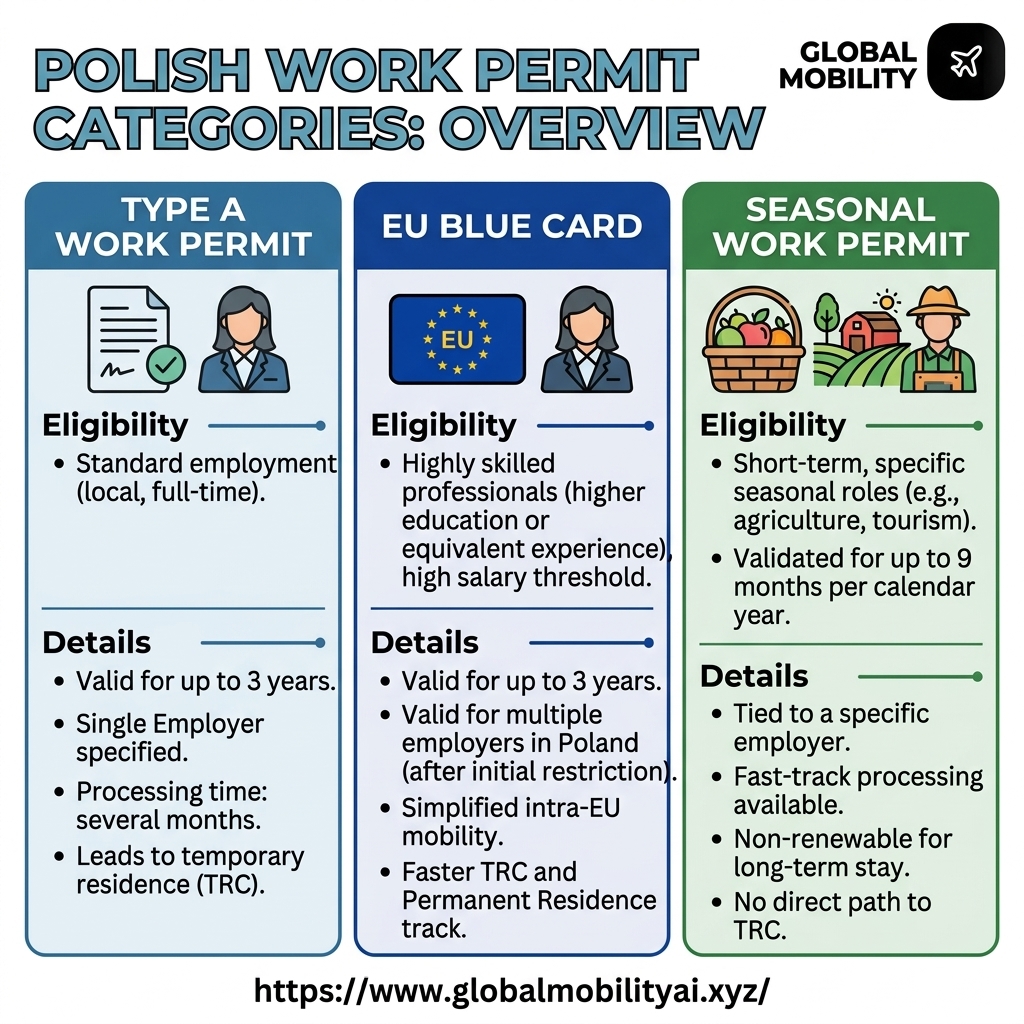
IMG-02: Work Permit Categories
Visual classification of Poland's primary employment authorization routes for international candidates.
3. City Guide — Where to Live in Poland in 2026
When evaluating your Poland work permit 2026 strategy, your destination city dictates your quality of life, savings rate, and professional networking opportunities. Poland is highly regionalized.
3.1 Top 5 Cities for Expats: Rankings & Analysis
3.2 City Comparison Table
| City | Avg Rent 1BR | Monthly Cost | Job Market | Safety | Expat Rating |
|---|---|---|---|---|---|
| Warsaw | PLN 4,500 | PLN 7,500 | Elite | High | 9.0/10 |
| Kraków | PLN 3,800 | PLN 6,200 | Strong | Very High | 9.2/10 |
| Wrocław | PLN 3,500 | PLN 5,800 | Strong | High | 8.8/10 |
| Gdańsk | PLN 3,600 | PLN 6,000 | Medium | Very High | 8.9/10 |
| Poznań | PLN 2,900 | PLN 4,900 | Medium | High | 8.4/10 |
(Source: Numbeo Poland 2026, 2026)
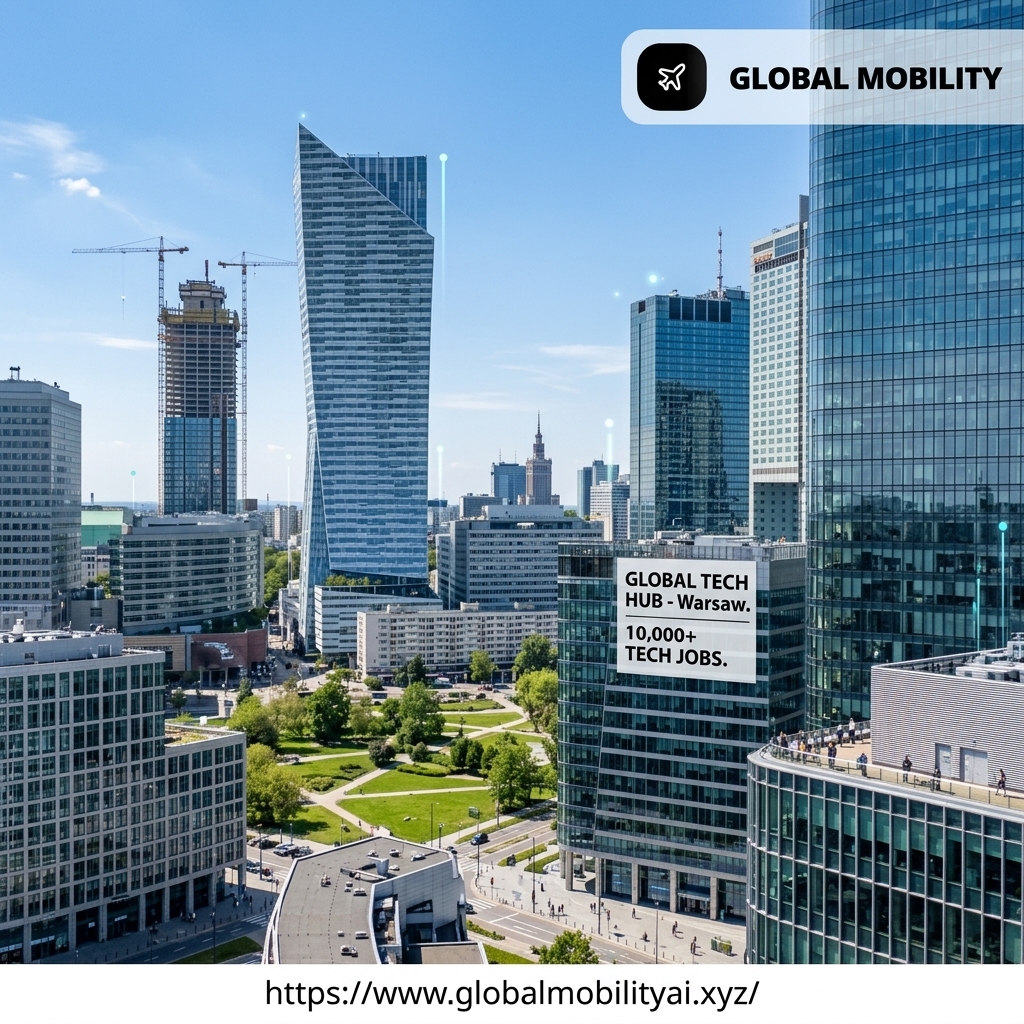
IMG-03: Warsaw Tech Skyline
The modern skyline of Warsaw, representing Poland's rapid economic and infrastructural growth.
4. Cost of Living — Complete 2026 Breakdown
Understanding the exact financial requirements is crucial when leveraging your Poland work permit 2026. While Poland is no longer the "budget destination" it was a decade ago, it remains highly competitive within the EU.
4.1 Monthly Budget Calculator Breakdown
For a single professional residing in a tier-1 city like Kraków:

Expats dining outdoors in a vibrant Polish city square.
(Source: Numbeo Cost of Living Survey, 2026) [https://www.numbeo.com/cost-of-living/in/Krakow-Cracow]
4.2 Cost of Living vs. Salary: What You'll Actually Save
The true value of relocating lies in your net savings trajectory. Based on the 2026 Polish tax brackets (including the standard 12% lower bracket and 32% upper bracket, plus ZUS contributions):
We highly recommend utilizing our GlobalMobilityAI savings calculator to model your exact tax obligations and discretionary income before accepting an offer. Data derived from official Polish enterprise sector reports ensures maximum accuracy.

CHART-1: Cost of Living Comparison Bar Chart
Comparative analysis of living expenses between Poland, the UK, India, and Pakistan for 2026.

CHART-2: Salary vs. Savings Potential Line Chart
Projected 24-month savings trajectory for international professionals operating in the Polish market.
4.3 Cost of Living Index vs. Home Countries
(Note: Poland = Index 100. All values relative to the Polish baseline.)
| Category | Poland | Pakistan | India | UK |
|---|---|---|---|---|
| Groceries Index | 100 | 58.4 | 62.1 | 185.2 |
| Rent Index | 100 | 18.2 | 22.5 | 240.5 |
| Local Purchasing Power | 100 | 25.5 | 34.2 | 115.1 |
(Source: Numbeo Cost of Living Comparison, 2026) [https://www.numbeo.com/cost-of-living/compare_countries.jsp]
5. Salary Data & Job Market Intelligence
To maximize the potential of your Poland work permit 2026, you must align your expectations with accurate corporate salary scales. The Polish market generously rewards STEM expertise.
5.1 Average Salaries by Industry (2026 Data)
| Industry | Entry Level | Mid-Level | Senior | Currency |
|---|---|---|---|---|
| Information Technology | PLN 10,000 | PLN 16,000 | PLN 28,000 | PLN |
| Finance & Banking | PLN 8,500 | PLN 13,500 | PLN 22,000 | PLN |
| Engineering (Civil/Mech) | PLN 7,500 | PLN 12,000 | PLN 18,000 | PLN |
| Healthcare & MedTech | PLN 8,000 | PLN 12,500 | PLN 20,000 | PLN |
| Logistics & Supply Chain | PLN 6,500 | PLN 9,500 | PLN 15,000 | PLN |
(Source: Pracuj.pl Salary Report, 2026) [https://zarobki.pracuj.pl/]
5.2 In-Demand Skills & Sectors in 2026
The Polish Ministry of Family, Labour and Social Policy routinely updates its shortage occupation list. In 2026, critical deficits exist in cloud architecture, full-stack development, automated manufacturing engineering, and specialized accounting (Source: Polish Ministry of Labour, 2026) [https://www.gov.pl/web/rodzina]. Professionals possessing AWS certifications, SAP expertise, or native fluency in Nordic languages combined with corporate finance experience are heavily targeted by recruiters, practically guaranteeing visa sponsorship.
5.3 How to Use GlobalMobilityAI Salary Comparison Tool
Before signing a contract, you must verify that your offer aligns with current market realities. The GlobalMobilityAI salary comparison tool allows you to instantly cross-reference your specific job title, city, and years of experience against real-time Polish corporate data, ensuring you never accept an undervalued offer.
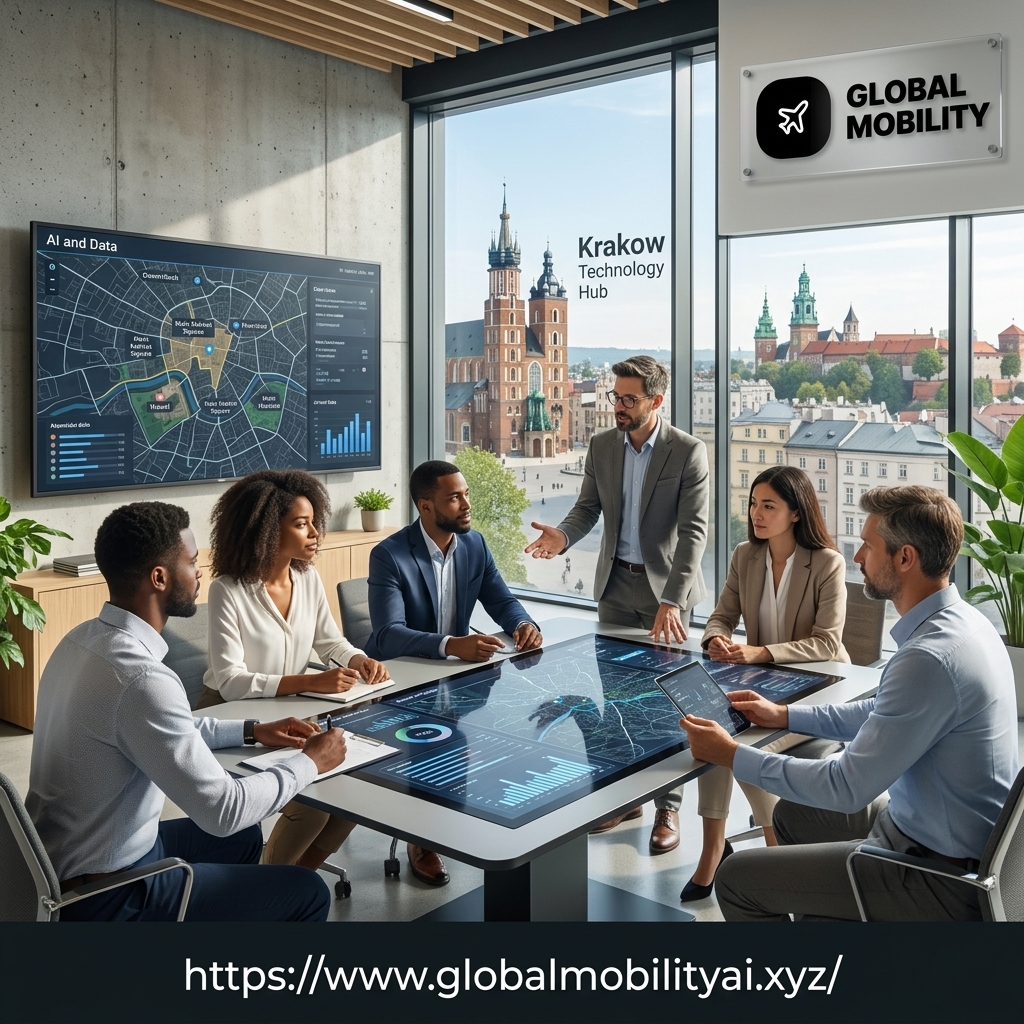
IMG-04: Polish Corporate Hub
International teams collaborating inside a modern tech park in Kraków.
6. CV Formatting — Poland-Style Resume Guide
Your strategy to obtain a Poland work permit 2026 begins with a flawless, localized CV. Polish recruiters utilize highly specific formatting expectations.
6.1 Poland CV Format Requirements
6.2 Common CV Mistakes That Get Applications Rejected
6.3 ATS Optimization for Polish Job Portals
The recruitment landscape in Poland is heavily dominated by Pracuj.pl, LinkedIn Poland, and JustJoin.it (for the IT sector). These platforms rely on strict Applicant Tracking Systems (ATS) that parse text directly. To optimize for the Polish ATS, your job titles must exactly mirror the nomenclature used in the job description. If a Polish firm advertises for a "Mid-Level Frontend Developer," do not write "Web UI Specialist" on your CV. Ensure all standard headings (Doświadczenie/Experience, Wykształcenie/Education) are clearly isolated with standard spacing so algorithmic bots can correctly structure your profile.
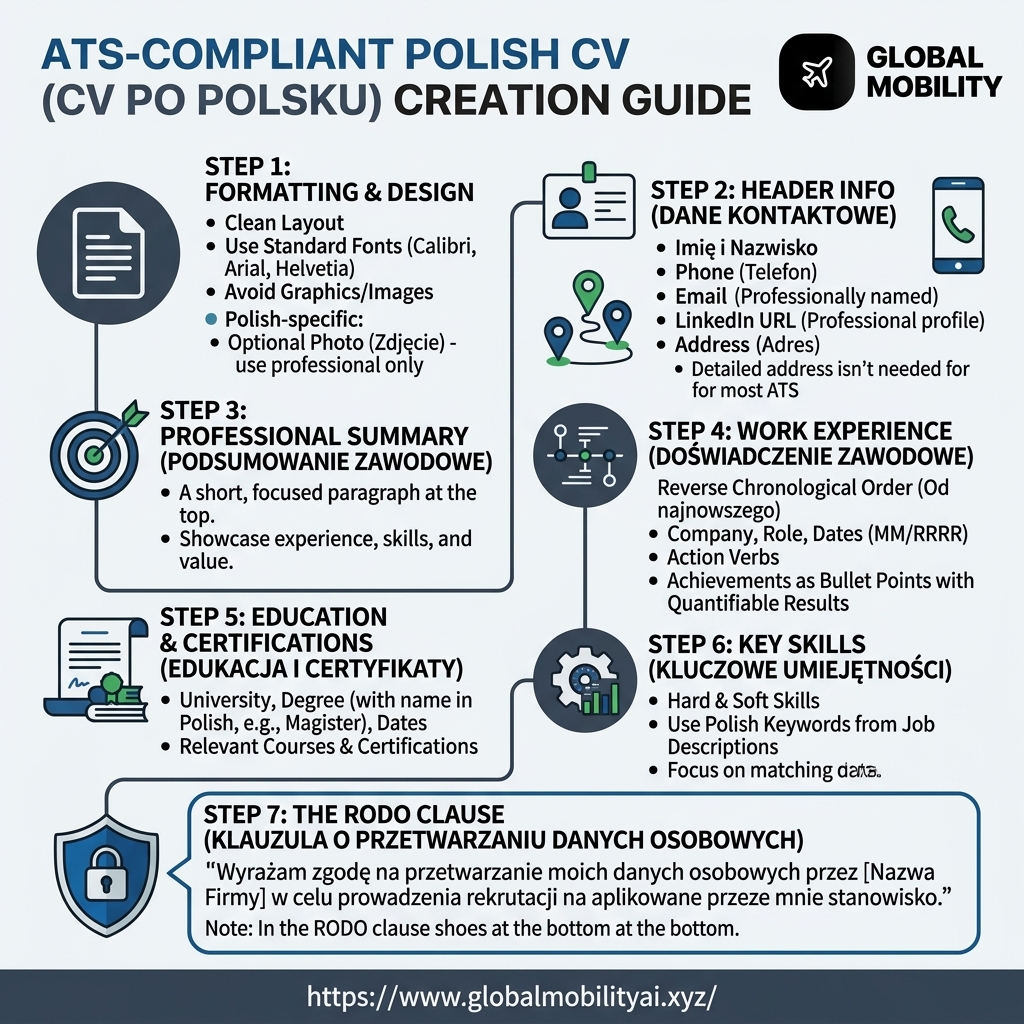
IMG-05: CV Optimization Process
A visual guide to structuring a high-converting, ATS-compliant Polish resume.
7. Interview Tips for the Polish Job Market
Securing an offer that triggers the Poland work permit 2026 process demands mastering the local interview etiquette.
7.1 Cultural Interview Norms & Expectations
Polish corporate culture sits firmly between Western European directness and Eastern European formality. Interviews are highly structured and competency-based. Punctuality is an absolute sign of respect; arriving late is often a non-recoverable error. In initial rounds, expect a formal tone—use titles (Pan/Pani) if speaking in Polish, though first names are standard in English-speaking tech environments. Technical assessments are rigorous and usually administered before the final behavioral interview.
7.2 Common Interview Questions & Answer Frameworks
7.3 Dress Code, Punctuality & Professional Etiquette
"Business Professional" remains the standard for banking, law, and corporate services. For IT, engineering, and startups, "Smart Casual" (a blazer with dark jeans) is preferred. Always test your internet connection and microphone 15 minutes prior to Microsoft Teams or Zoom interviews, which dominate the Polish hiring process.
7.4 Post-Interview Follow-Up Etiquette
Send a concise, professional "Thank You" email within 24 hours of the interview. Do not send multiple follow-ups. If the recruiter states they will respond in two weeks, wait exactly 14 days before sending a single polite status inquiry.
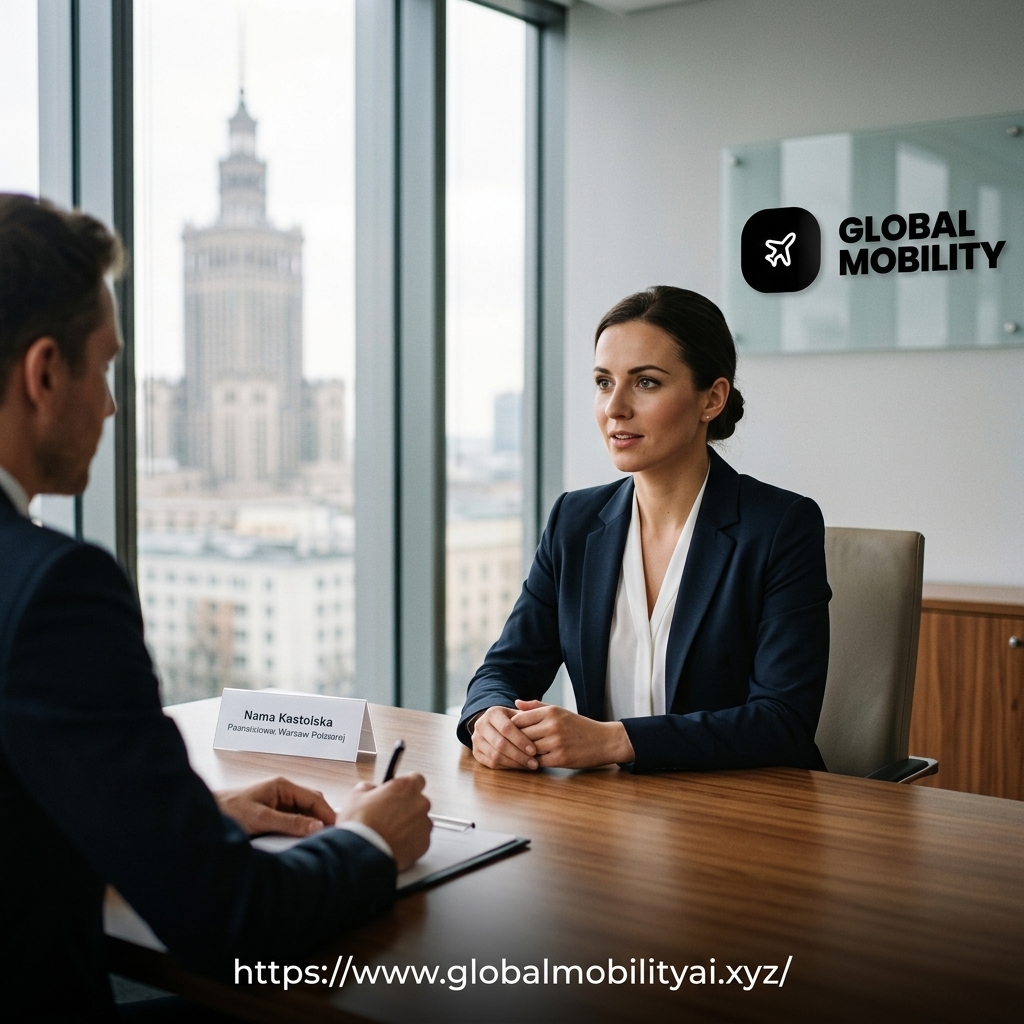
IMG-06: Corporate Interview Setup
Professional etiquette in a modern Polish corporate environment.
8. 2026 Policy Updates & Market Predictions
To master the Poland work permit 2026 landscape, you must align your strategy with the latest legal realities dictated by the Voivodeship offices.
8.1 Key Policy Changes Effective 2026
Effective late 2025 into 2026, the Polish government fully digitized the work permit application system via the praca.gov.pl portal. Paper submissions are now systematically rejected. Additionally, the mandatory Labour Market Test (Opinia Starosty) has been officially abolished for a vastly expanded list of high-skill occupations, significantly accelerating the initial sponsorship phase (Source: Polish Ministry of Family, Labour and Social Policy, 2026) [https://www.gov.pl/web/rodzina]. However, administrative deadlines for Voivodeship offices to process residence permits remain legally suspended through March 2026 (Source: Office for Foreigners, 2025) [https://www.udsc.gov.pl/en/]. This suspension means that while you can apply digitally, the government is not legally bound to issue a decision within the standard 30–60 day window, leading to volatile processing timelines in highly populated regions like Warsaw and Wrocław.

Digital interface of the Polish praca.gov.pl portal for work permits.
8.2 Immigration Trend Predictions (Data-Backed)
According to the OECD Migration Outlook, Poland continues to issue the highest absolute number of first residence permits for employment in the EU (Source: OECD Migration Outlook, 2025) [https://www.oecd.org/migration/oecd-migration-outlook-2025]. Throughout 2026, we project a severe tightening of compliance audits targeting employer payrolls to combat "shell company" sponsorships. Legitimate multinational tech and manufacturing firms will experience expedited processing through specialized "Business Harbour" style corridors, whereas small-cap businesses sponsoring low-skilled labor will face extensive delays and heightened scrutiny. The volume of EU Blue Card issuances is expected to surge by 15% year-over-year as salary thresholds naturally increase.
8.3 How These Changes Affect Your Application in 2026
These administrative shifts demand aggressive preemptive action. Because processing deadlines are legally suspended, you must secure your job offer and initiate your application 4 to 5 months before your intended start date. Do not rely on historical 30-day processing timelines. Furthermore, utilize our GlobalMobilityAI immigration probability score to evaluate if your prospective employer has the required compliance rating to shield your application from bureaucratic stagnation. Only accept offers from established entities with a proven track record of international hires.
9. Tactical Comparison Matrix
Comparing the primary routes is essential to your Poland work permit 2026 strategy.
| Visa Type | Eligibility | Min. Salary | Processing Time | Difficulty | Est. Approval Rate* | Gov. Fee |
|---|---|---|---|---|---|---|
| Type A Work Permit | Polish Contract | PLN 4,806 | 4–12 Weeks | Moderate | Platform Est.* | PLN 100 |
| EU Blue Card | Degree + Contract | PLN 13,200 | 12–24 Weeks | High | Platform Est.* | PLN 440 |
| Temporary Residence | In-Country App | PLN 4,806 | 16–36 Weeks | Moderate | Platform Est.* | PLN 440 |
| Business Harbour | Tech Talent (Select) | N/A | 2–6 Weeks | Low | Platform Est.* | Varies |
| Seasonal Work | Ag/Tourism | PLN 4,806 | 2–4 Weeks | Low | Platform Est.* | PLN 30 |
| Intra-Company | MNC Transfer | N/A | 8–16 Weeks | Moderate | Platform Est.* | PLN 440 |
*Internal platform estimate. Official approval rates not publicly published by the Polish Office for Foreigners. Monitor: [https://www.udsc.gov.pl/en/]
(Source: Office for Foreigners, 2026) [https://www.udsc.gov.pl/en/]

CHART-3: Visa Processing Timeline Gantt Chart
Realistic phase-by-phase timeline for securing your Polish work authorization and residency.
10. Execution Roadmap: Phase-by-Phase
A flawless relocation to Poland requires a strict 6-month operational timeline.
Phase 1 — Preparation (Months 1–2):
Your journey begins with securing a legally binding employment contract from a Polish entity. Once the offer is signed, your employer is legally obligated to initiate the Poland work permit 2026 process via the digital praca.gov.pl portal. You must provide them with flawless, high-resolution color scans of your entire passport (all pages, including blank ones). Concurrently, begin gathering your apostilled educational degrees if applying for the EU Blue Card. Do not resign from your current role until the Voivodeship officially issues the permit document to your employer.
Cost: PLN 100 (Usually paid by employer) | Link: Praca.gov.pl | Timeline: 4-8 weeks
Phase 2 — Application (Months 3–4):
Once the original work permit document is issued in Poland, the employer must courier the physical copy to you (or provide the authorized digital equivalent). With this permit, you must immediately book an appointment at the nearest Polish consulate or VFS Global center in your home country to apply for the D-Type National Visa for employment. You will submit your visa application form, travel insurance, proof of accommodation, and the work permit. Be prepared for interview questions regarding your exact job duties and the location of the employer.
Cost: EUR 135 (Visa Fee) | Link: E-Konsulat | Timeline: 2-4 weeks
Phase 3 — Arrival & Administration (Month 5–6):
Upon arriving in Poland, administrative speed is critical. Within your first 4 days, you must register your residential address (Zameldowanie) at the local city hall (Urząd Miasta). Concurrently, you must obtain your PESEL number (National Identification Number), which is required for opening a bank account, setting up utilities, and accessing healthcare. Your employer will register you with ZUS (Social Insurance Institution) within 7 days of your first working day, granting you immediate access to the NFZ public healthcare system.
Cost: Free | Link: Gov.pl PESEL Guide | Timeline: 7 Days
Phase 4 — Settlement & Permanent Residency (Month 12+):
To prevent visa expiration issues, you must apply for a Temporary Residence and Work Permit (Karta Pobytu) at your local Voivodeship office no later than the final day of your legal stay (your D-Visa expiration). This process will capture your biometrics and issue a plastic residence card. After accumulating 5 years of continuous, legal employment and residence in Poland—and passing a B1 Polish language exam—you become eligible to apply for an EU Long-Term Resident Permit, effectively securing your permanent status in the European Union.
Cost: PLN 440 | Link: UDSC Residence Info | Timeline: 5 Years
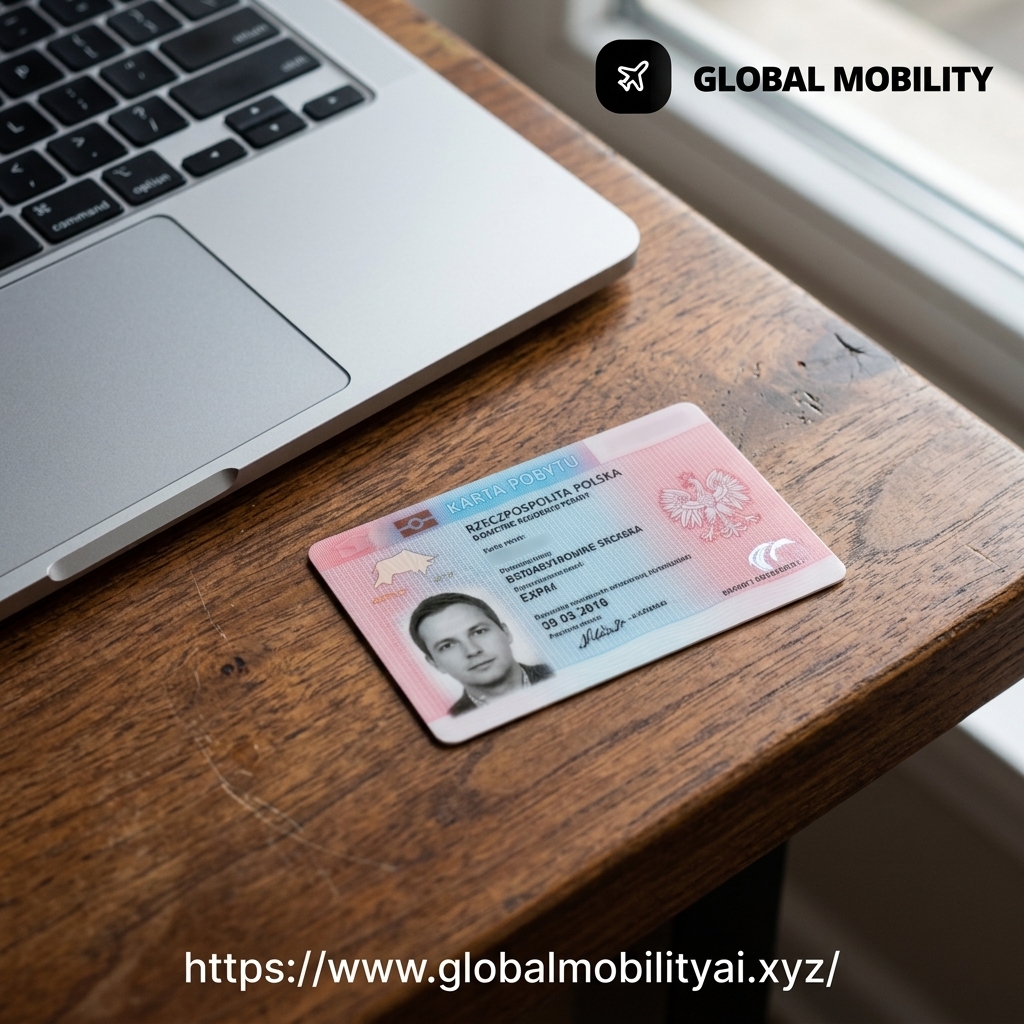
IMG-07: Polish Biometric ID
The highly sought-after Polish Biometric Residence Card (Karta Pobytu) required for long-term settlement.
11. Critical Risk Factors & Common Pitfalls
Failure in the Poland work permit 2026 process is rarely about qualifications; it is almost entirely administrative. Protect your application by avoiding these systemic risks:
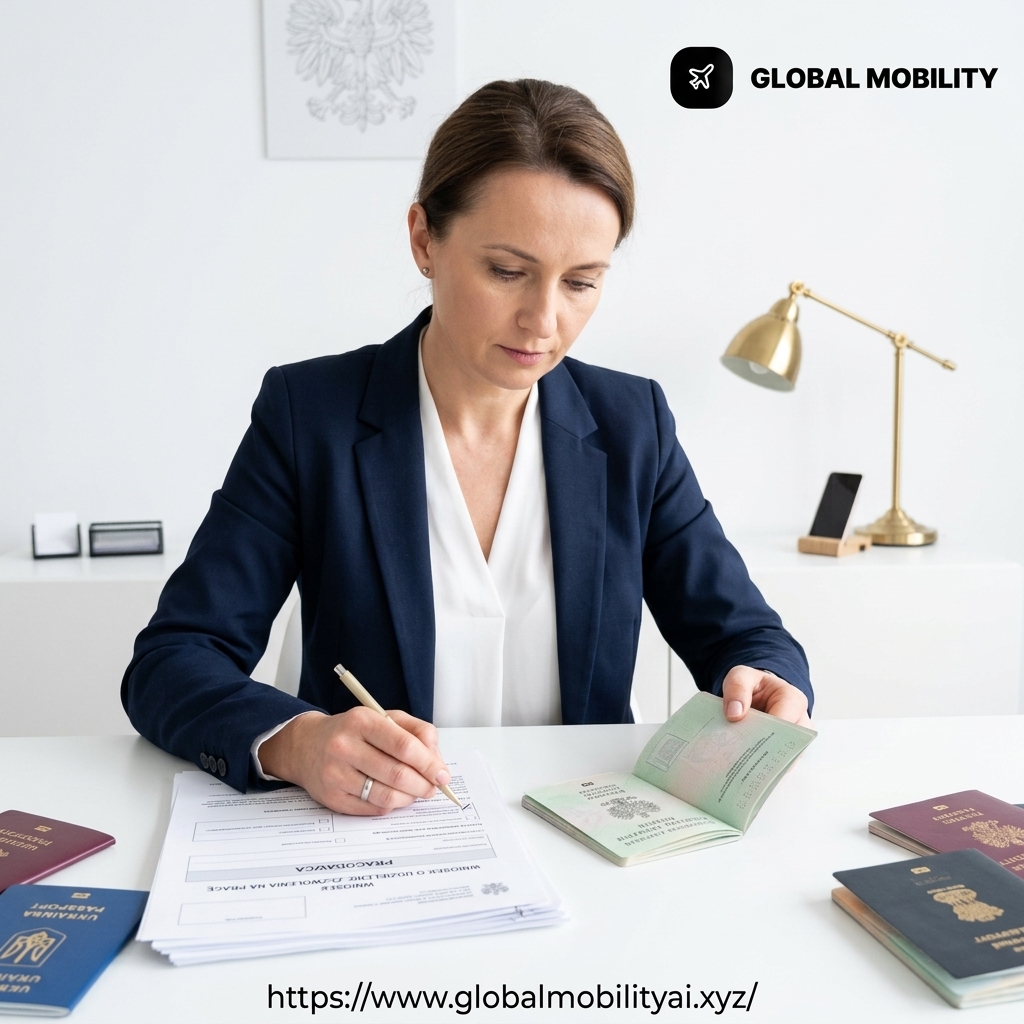
IMG-08: Document Compliance Audit
A meticulous review of immigration documents, emphasizing the strict nature of Polish administrative law.
12. FAQ — People Also Ask
Q: What is the Poland work permit processing time 2026?
The official statutory timeframe for issuing a standard work permit is 30 days, extending to 60 days for complex cases. However, due to high volumes and suspended administrative deadlines in 2026, real-world processing times average 8 to 12 weeks depending on the specific Voivodeship. Warsaw (Mazowieckie) traditionally experiences the longest backlogs, while smaller provinces may process applications closer to the 4-week mark.
Q: Can I apply for the Poland EU Blue Card 2026 without a degree?
Yes, but the barrier is high. Under the latest EU directives adapted by Poland, you can substitute a formal university degree with exactly five years of proven, verifiable professional experience relevant to the specific job offer. For IT professionals, this requirement is sometimes reduced to three years of high-level experience within the past seven years, though detailed employment certificates are mandatory.
Q: What is the minimum salary for a Poland work permit for Indians in 2026?
The minimum salary requirement is not dictated by nationality; it is a universal legal standard. In 2026, any foreigner, including Indian nationals, must be paid at least the national gross minimum wage of PLN 4,806 per month for full-time work on a standard permit. To qualify for the EU Blue Card, the salary must exceed 150% of the national average, requiring an offer above PLN 13,000 gross. You can utilize our salary comparison tool to verify exact regional benchmarks.
Q: How do I get a Poland biometric residence permit 2026?
The biometric residence permit (Karta Pobytu) is obtained by applying for a Temporary Residence and Work Permit from within Poland. You must submit your application, including your contract, housing proof, and health insurance, to your local Voivodeship office. During the process, you will be summoned to provide your fingerprints. Once approved, you will be issued the physical plastic card.
Q: Is it easy to switch employers on a Poland work permit?
Switching employers requires navigating bureaucratic friction. Because your standard permit or residence card is tied specifically to your current employer and job title, you cannot simply walk into a new job. You must notify the Voivodeship office of your job loss within 15 days, and your new employer must apply for a brand new work permit or an amendment to your residence card before you can legally commence work.
Q: What is the type A work permit Poland?
The Type A work permit is the most standard employment authorization in the country. It is issued to foreigners who have an employment contract with an entity that has its registered office, branch, or primary place of business located within the territory of Poland. It is the primary route for standard corporate hires and local employment contracts. Evaluate your eligibility for this specific route using the GlobalMobilityAI immigration probability score.
Q: Does a Poland work permit lead to PR and citizenship?
Yes. A standard pathway involves maintaining continuous legal residence and employment on temporary permits for five years. After this period, and upon passing a B1 Polish language test, you can apply for an EU Long-Term Resident Permit (PR). After holding PR status for three continuous years, you become eligible to apply for full Polish citizenship by naturalization.
Q: What is the seasonal work permit Poland?
The Type S permit is specifically designed for seasonal labor in sectors defined by the government, primarily agriculture, horticulture, and tourism. It is strictly limited; it allows a foreigner to work for a maximum of 9 months within a calendar year. It is not suitable for corporate, IT, or year-round engineering professionals, who must secure a Type A permit instead.
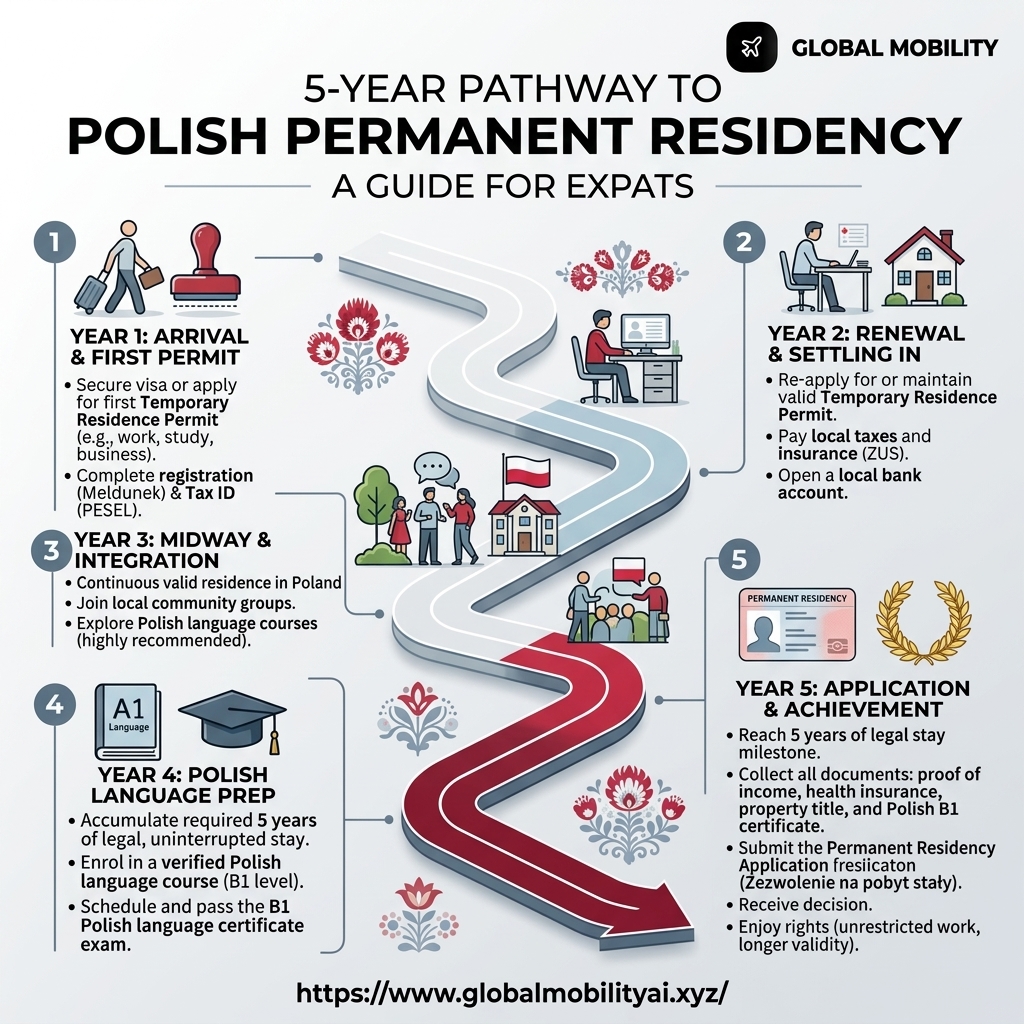
IMG-09: Poland PR Pathway
Visualizing the 5-year transition from temporary work authorization to permanent EU residency.
13. Conclusion: The Bottom Line
If you are a highly skilled professional in 2026, mastering the Poland work permit 2026 framework offers one of the most stable and economically rewarding entry points into the European Union. While the administrative landscape is stringent and demands absolute documentary perfection, the underlying system is highly predictable. The strategic advantage lies in securing a high-value contract in tech or engineering, moving swiftly to secure your biometric residence, and establishing a clear 5-year pathway to permanent residency.
Your success depends entirely on precision. Do not rely on outdated forums or anecdotal advice. Run your profile through the Immigration Probability Score at GlobalMobilityAI.xyz to identify any immediate red flags before applying. Benchmark your initial offer using the Salary Comparison Tool to ensure your compensation supports a high-savings lifestyle in cities like Warsaw or Kraków. If you are also considering western alternatives, review our detailed Netherlands Highly Skilled Migrant Visa guide to compare tax advantages. Stop waiting for the perfect moment—leverage the Polish economic boom today.
Predict your mobility score.
Use our AI engine to get your personalized visa pathway, salary prediction, and relocation roadmap.
More Insights
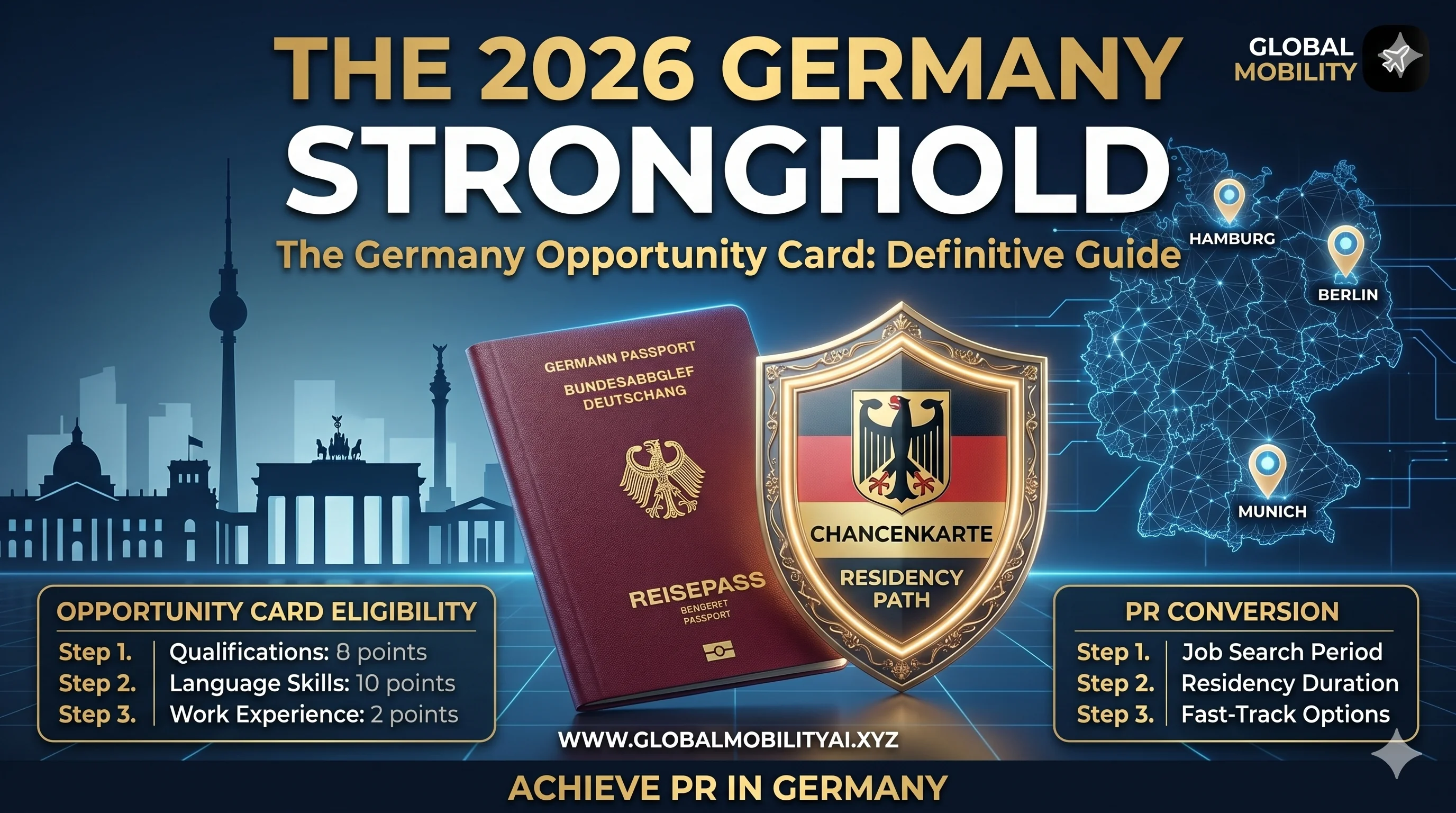
Germany Opportunity Card 2026: Points, How to Apply & Fastest Jobs

The Ultimate Golden Visa Masterclass 2026: The Strategic Wealth & Mobility Blueprint