
Editorial Transparency: Content compiled from official
government sources by the GlobalMobilityAI Research Team.
For personalized legal or immigration advice, consult a
licensed immigration consultant or lawyer.
(Last Updated: 2026-05-21)
Securing a US H1B visa 2026 requires navigating an increasingly competitive lottery system, where the registration volume exceeded 470,000 unique beneficiaries in recent cycles (Source: USCIS H-1B Registration Data, 2025) [https://www.uscis.gov/newsroom/news-releases/uscis-announces-h-1b-cap-filing-period-for-fy-2025]. With the annual cap strictly maintained at 85,000 visas (including the 20,000 Master's cap), relying solely on the lottery is no longer a viable single-track strategy for top-tier global talent. Platform search trends on GlobalMobilityAI.xyz suggest professionals are aggressively pivoting toward cap-exempt institutions and dual-intent alternatives like the O-1 or EB-2 NIW. This comprehensive guide dissects the exact prevailing wage requirements, strategic workarounds, and step-by-step frameworks to guarantee your legal employment in the United States. By analyzing official USCIS data and Department of Labor guidelines, you will architect a resilient US migration strategy that bypasses traditional bottlenecks and secures your professional future.
Table of Contents
1. Why USA in 2026? — The Strategic Case
1.1 Economic Landscape & Opportunity
The United States remains the undisputed global epicenter for technological innovation, biotechnology, and advanced finance. As of early 2026, the US GDP surpasses $28 trillion, with the technology and AI sectors driving unprecedented capital investment (Source: Bureau of Economic Analysis, 2026) [https://www.bea.gov/data/gdp/gross-domestic-product]. The labor market faces chronic shortages in highly specialized STEM fields; the Bureau of Labor Statistics projects a 15% growth in computer and mathematical occupations through the decade, far outpacing the average for all occupations (Source: US Bureau of Labor Statistics, 2026) [https://www.bls.gov/ooh/computer-and-information-technology/home.htm]. This structural deficit forces major US corporations and research institutions to aggressively recruit international talent, making the US H1B visa 2026 a critical instrument for corporate growth. For global professionals, the US market offers unparalleled earning potential, access to venture capital, and proximity to industry-defining mega-projects.
1.2 Why Professionals Are Targeting This Destination
Beyond raw compensation, the US ecosystem offers vertical mobility that is difficult to replicate in other mature markets like those detailed in our Germany Opportunity Card 2026 definitive guide or the Canada Express Entry 2026 strategic blueprint. Professionals are targeting the US because the ceiling for innovation and equity-based compensation remains the highest in the world. Platform search trends suggest that despite the friction of the US H1B visa 2026 lottery, the sheer scale of opportunity in hubs like Silicon Valley, Austin, and Seattle justifies the effort. Furthermore, the US remains a primary destination for academic excellence, funneling global talent from F-1 OPT programs directly into the workforce. For professionals looking to gauge their chances across different visa categories, utilizing the GlobalMobilityAI immigration probability score tool provides a data-driven baseline before committing to the rigorous US application process.
2. Deep-Dive Analysis: Legal & Financial Framework
2.1 Legal Requirements & Visa Categories
The US H1B visa 2026 is designed specifically for "Specialty Occupations" requiring theoretical or technical expertise in specialized fields, mandating at least a Bachelor's degree or its equivalent. The financial threshold is strictly governed by the Department of Labor's Prevailing Wage Determination (PWD). Employers must prove they are paying the foreign worker at least the prevailing wage for that specific occupation in that exact geographic location, or the actual wage paid to similar workers—whichever is higher (Source: US Department of Labor, 2026) [https://www.dol.gov/agencies/eta/foreign-labor/wages]. For cap-subject employers, the process involves the March electronic registration, followed by a randomized lottery. Cap-exempt employers—such as higher education institutions, affiliated non-profits, and government research organizations—bypass the lottery entirely and can file petitions year-round, making them a strategic priority for risk-averse candidates.
2.2 Eligibility Criteria & Qualification Scoring
Unlike points-based systems in Canada or Australia, the US H1B visa 2026 relies on a binary qualification framework. The core criteria include:
For the lottery phase, the beneficiary-centric selection process implemented recently ensures that each individual has an equal mathematical chance of selection, regardless of how many employers submit registrations on their behalf (Source: USCIS H-1B Beneficiary-Centric Rule, 2025) [https://www.uscis.gov/newsroom/news-releases/uscis-announces-strengthened-integrity-measures-for-h-1b-program].
2.3 Required Documentation & Official Checklists
Preparing an airtight petition for the US H1B visa 2026 requires meticulous documentation to preempt Requests for Evidence (RFEs).
Candidates and employers must adhere strictly to the official USCIS checklist to avoid processing delays (Source: USCIS H-1B Checklist, 2026) [https://www.uscis.gov/forms/all-forms].
3. City Guide — Where to Live in USA in 2026
3.1 Top 5 Cities for Expats: Rankings & Analysis
Choosing the right market for this visa pathway heavily impacts your net savings, given the massive variance in state taxes and rent.
3.2 City Comparison Table
| City | Avg Rent 1BR | Monthly Cost | Job Market | Safety |
|---|---|---|---|---|
| Austin, TX | $1,650 | $3,100 | Tech/Startups | High |
| Seattle, WA | $2,100 | $3,800 | Big Tech | Moderate |
| San Francisco, CA | $3,200 | $5,500 | AI/VC | Low |
| Boston, MA | $2,800 | $4,500 | Biotech/Edu | High |
| Raleigh, NC | $1,400 | $2,800 | Research/IT | Very High |
(Source: Numbeo Cost of Living US, 2026) [https://www.numbeo.com/cost-of-living/country_result.jsp?country=United+States]
4. Cost of Living — Complete 2026 Breakdown
4.1 Monthly Budget Calculator Breakdown
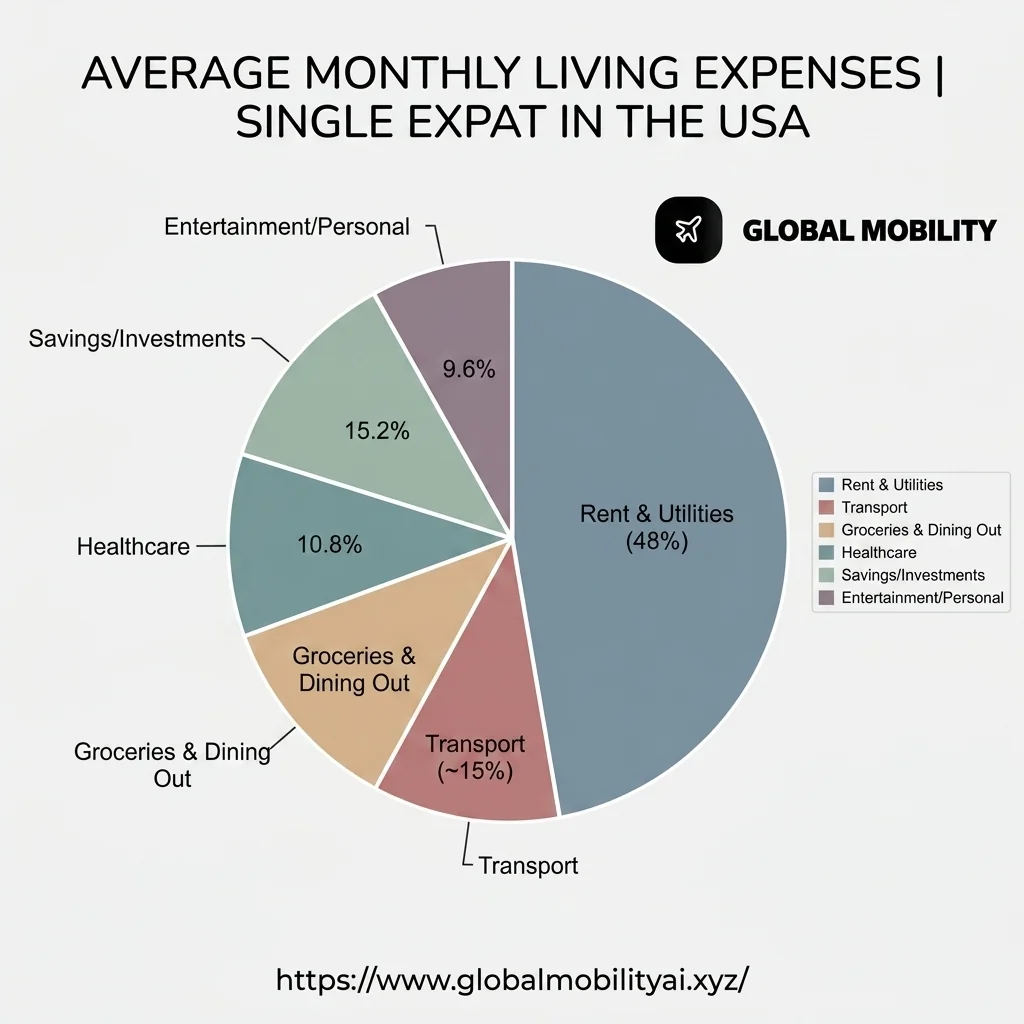
For a single professional utilizing the H-1B program in a mid-tier market like Austin, the monthly financial burn rate requires careful management.
(Source: Numbeo Austin Cost of Living, 2026) [https://www.numbeo.com/cost-of-living/in/Austin]
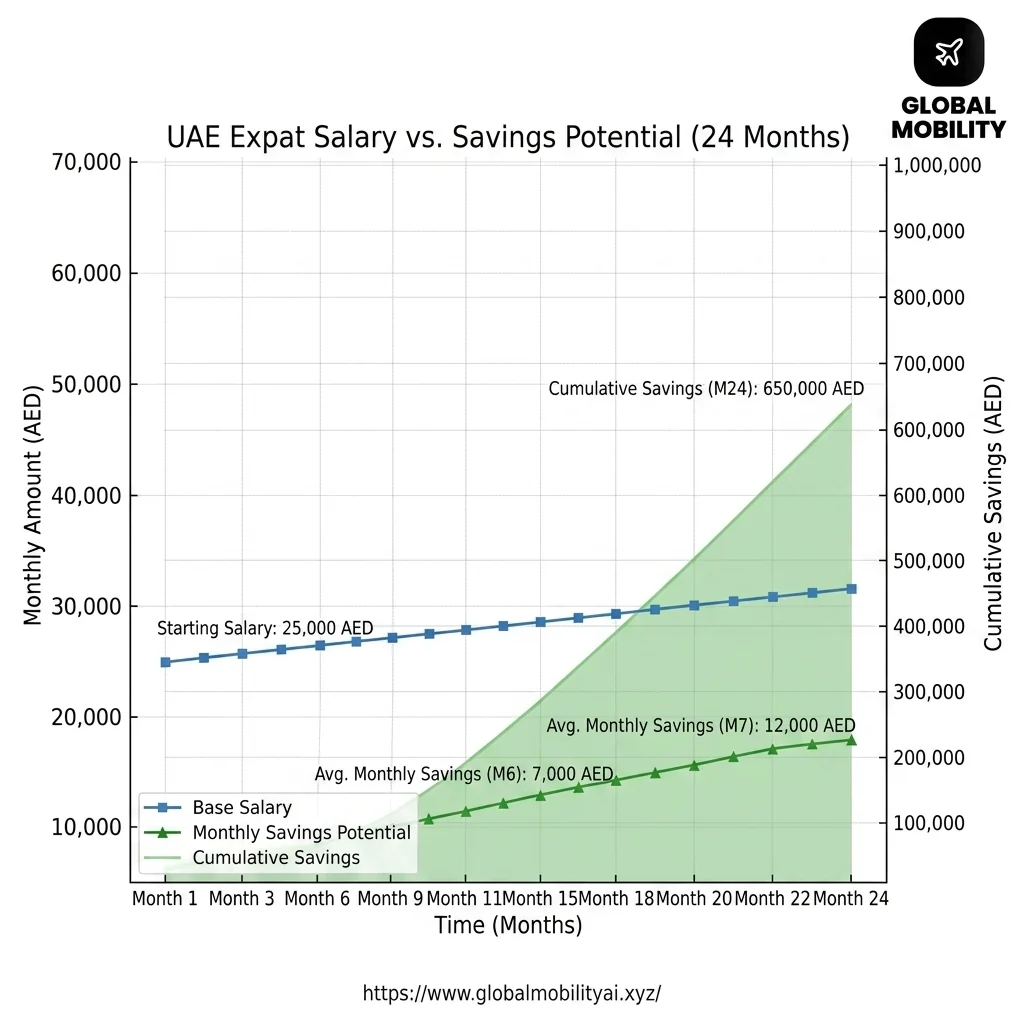
4.2 Cost of Living vs. Salary: What You'll Actually Save
Evaluating your net savings requires factoring in federal taxes, FICA (Social Security/Medicare), and state taxes. In Texas (no state income tax), the math scales favorably (Calculated using IRS Tax Brackets 2026 + 7.65% FICA) [https://www.irs.gov/taxtopics/tc751].
Expats should leverage the GlobalMobilityAI monthly savings calculator abroad to model tax implications across different US states before accepting an offer.
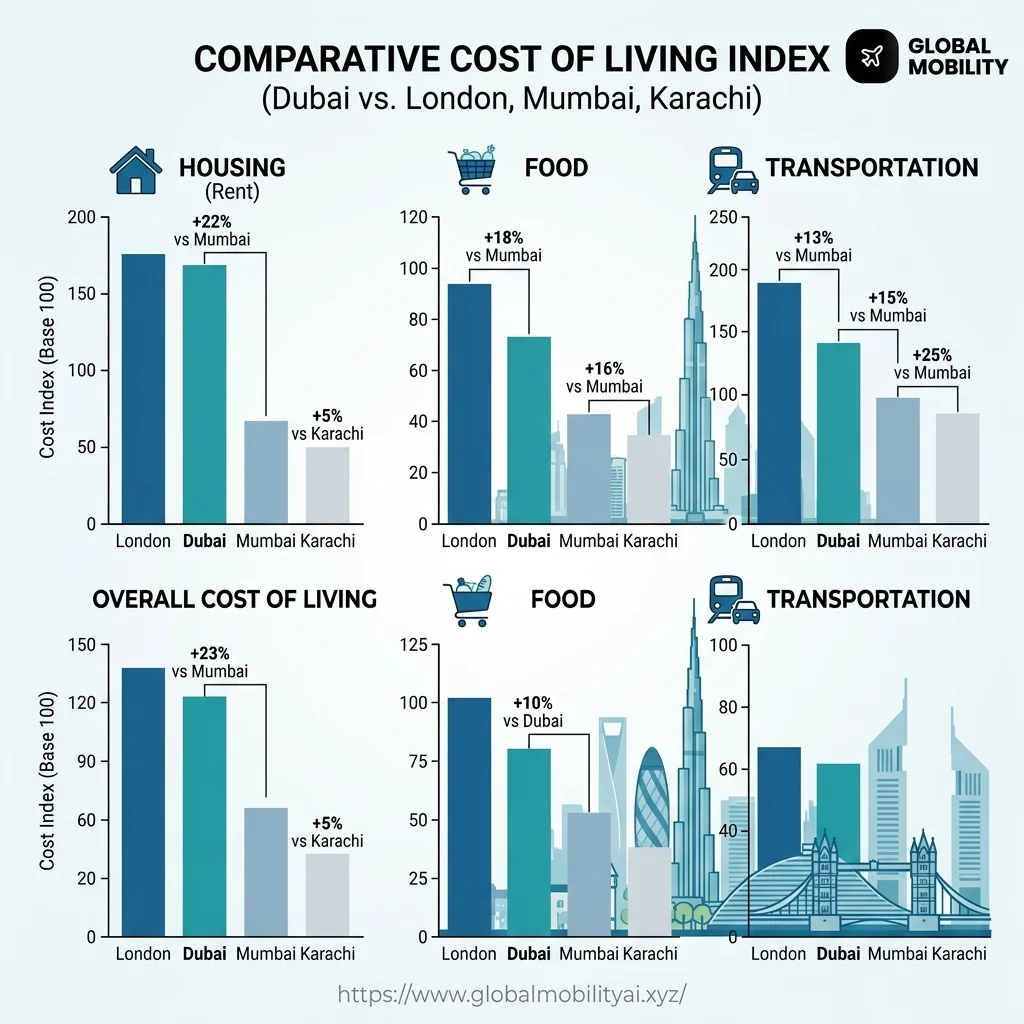
4.3 Cost of Living Index vs. Home Countries
| Category | United States (Austin) | Pakistan (Karachi) | India (Mumbai) | UK (London) |
|---|---|---|---|---|
| Consumer Prices | Base (100) | -65% | -60% | +15% |
| Rent Prices | Base (100) | -88% | -75% | +35% |
| Groceries | Base (100) | -62% | -58% | -5% |
| Local Purchasing Power | Base (100) | -70% | -65% | -10% |
(Source: Calculated from Numbeo's country comparison tool, 2026) [https://www.numbeo.com/cost-of-living/compare_countries_result.jsp?country1=Pakistan&country2=United+States]
5. Salary Data & Job Market Intelligence
5.1 Average Salaries by Industry (2026 Data)
The US H1B visa 2026 mandates employers pay prevailing wages. Base salaries exclude sign-on bonuses or Restricted Stock Units (RSUs), which heavily inflate tech compensation.
| Industry | Entry Level | Mid-Level | Senior | Currency |
|---|---|---|---|---|
| Software Development | $105,000 | $145,000 | $195,000+ | USD |
| Data Science & AI | $115,000 | $160,000 | $210,000+ | USD |
| Biotechnology / Pharma | $90,000 | $130,000 | $180,000+ | USD |
| Financial Analysis | $85,000 | $120,000 | $165,000+ | USD |
| Electrical Engineering | $95,000 | $135,000 | $175,000+ | USD |
(Source: US Bureau of Labor Statistics Wage Data, 2026) [https://www.bls.gov/oes/current/oes_nat.htm]
5.2 In-Demand Skills & Sectors in 2026
The structural deficit in the US labor market is concentrated in deep tech and healthcare. The Bureau of Labor Statistics reports severe shortages in Machine Learning architecture, cloud infrastructure engineering (AWS/Azure), and cybersecurity architecture. Additionally, there is massive demand for specialized medical professionals, bio-informaticians, and quantitative analysts, all of which align perfectly with the "specialty occupation" mandate of the H1B framework (Source: BLS Occupational Projections, 2026) [https://www.bls.gov/emp/].
5.3 How to Evaluate Total Compensation for US Roles
When negotiating your US H1B visa 2026 offer, do not rely on base salary alone. Use a reliable Salary Comparison Tool to benchmark total compensation—including RSUs, 401(k) matches, and premium healthcare benefits—against localized state tax burdens. This ensures you evaluate the true net worth of an offer rather than just the gross headline figure.
6. CV Formatting — US-Style Resume Guide
6.1 US CV Format Requirements
The US resume format is brutally clinical and highly standardized. It focuses purely on quantifiable achievements and skills rather than personal backgrounds. Recruiters spend an average of six seconds scanning a CV, meaning your format must be scannable, predictable, and clean. You must avoid any elements that could trigger unconscious bias or violate Equal Employment Opportunity Commission (EEOC) laws.
6.2 Common CV Mistakes That Get Applications Rejected
For applicants seeking this specialty occupation visa sponsorship, minor formatting errors lead to instant rejections.
6.3 ATS Optimization for US Job Portals
Dominant US platforms like LinkedIn, Indeed, and specialized tech boards like Dice use aggressive Applicant Tracking Systems (ATS) like Workday or Greenhouse. To survive the ATS filter, your resume must perfectly mirror the exact keywords found in the job description. Do not use creative job titles; stick to standard industry nomenclature (e.g., "Software Engineer" not "Code Ninja"). Strip out all headers, footers, tables, and multi-column layouts, as ATS parsers will scramble the text, resulting in an automatic rejection before a human ever sees your profile.
7. Interview Tips for the US Job Market
7.1 Cultural Interview Norms & Expectations
The US interview culture is highly direct, egalitarian, and intensely focused on behavioral metrics. Unlike in hierarchical markets where deference to authority is expected, US hiring managers expect confident, two-way dialogue where you proactively ask probing questions about company culture, team structure, and product roadmaps. Modesty is often mistaken for incompetence; you must aggressively own your achievements using "I" instead of "We". If you built a feature as part of a team, explicitly state your specific contribution and the impact it had on the final product. Eye contact, a firm digital presence (good camera lighting and audio), and enthusiasm are considered strong indicators of a cultural fit.
7.2 Common Interview Questions & Answer Frameworks
Mastering the STAR method (Situation, Task, Action, Result) is absolutely non-negotiable for behavioral rounds. US interviewers want to see the quantitative results of your actions.
7.3 Dress Code, Punctuality & Professional Etiquette
West Coast tech hubs (Silicon Valley, Seattle) favor "smart casual" (collared shirts, no ties), while East Coast finance hubs (Wall Street, Boston) still demand traditional business formal attire. Punctuality means logging into the Zoom call exactly 2 minutes early. Ensure your background is blurred and your audio is pristine; technical issues are viewed as poor preparation.
7.4 Post-Interview Follow-Up Etiquette
You must send a concise, personalized "Thank You" email within 24 hours of the interview. Reiterate one specific technical point discussed to prove active listening. Do not follow up repeatedly; wait the standard 1-2 weeks as communicated by the HR coordinator.
8. 2026 Policy Updates & Market Predictions
8.1 Key Policy Changes Effective 2026
The H-1B program framework operates under recently overhauled integrity measures. The most critical update is the beneficiary-centric lottery system, which ties registrations strictly to the applicant's passport number, entirely eliminating the advantage of having multiple consulting firms submit duplicate registrations (Source: USCIS H-1B Integrity Rule, 2025) [https://www.uscis.gov/working-in-the-united-states/temporary-workers/h-1b-specialty-occupations]. Additionally, USCIS has significantly increased filing fees, with the I-129 petition fee for large employers rising, and a new Asylum Program Fee added to certain employer petitions, making sponsorship more expensive and forcing companies to be highly selective (Source: USCIS Fee Schedule, 2024-2026) [https://www.uscis.gov/forms/all-forms].
8.2 Immigration Trend Predictions (Data-Backed)
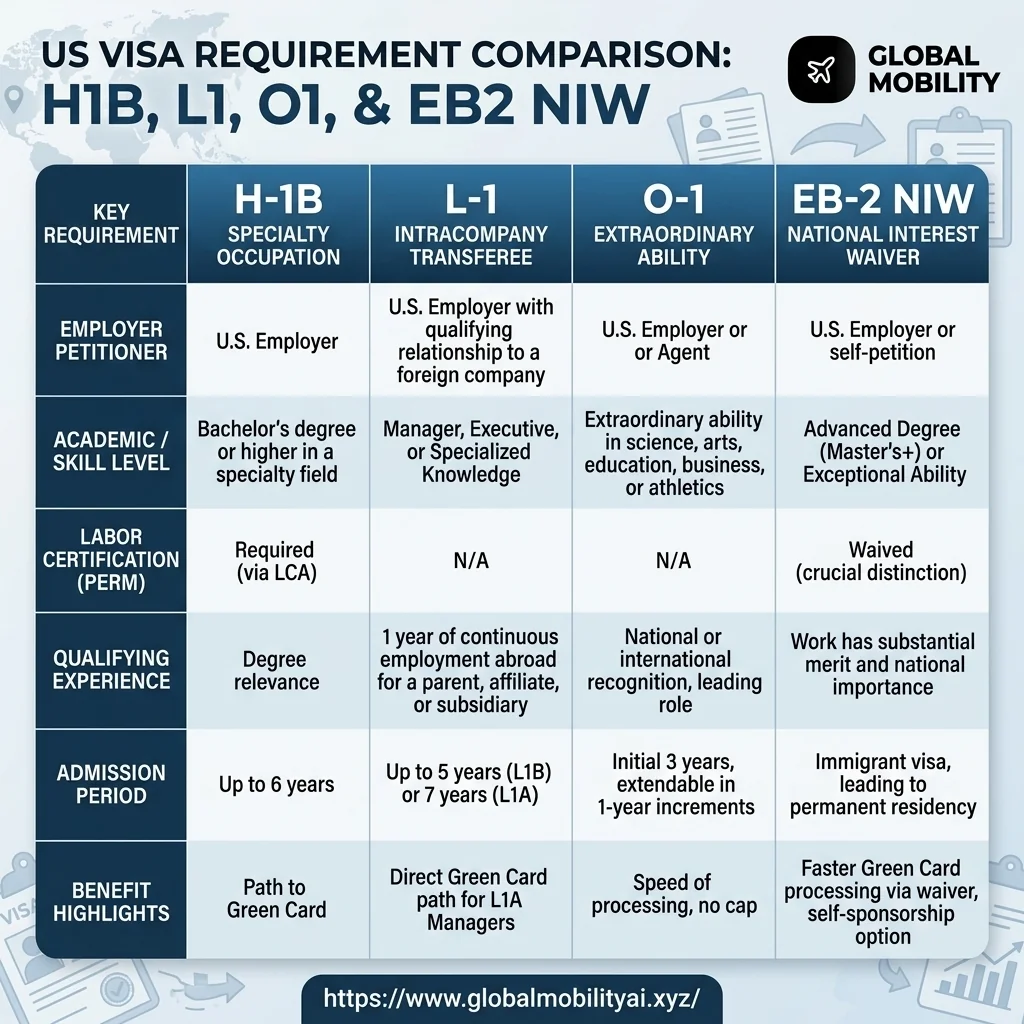
Official data suggests that despite fee hikes, the demand for the US H1B visa 2026 will remain hyper-competitive. While official DHS projections for future caps are not published granularly, Platform search trend estimates anticipate registration volumes stabilizing around 400,000 genuine unique beneficiaries. As the lottery odds hover around 20-25%, there is an observable surge in alternative pathways, notably the O-1A visa for individuals of extraordinary ability, the EB-2 National Interest Waiver (NIW) which allows STEM researchers to self-petition for a Green Card without an employer sponsor, or pivoting entirely to options like the UAE Golden Visa 2026 guide for a tax-free alternative.
8.3 How These Changes Affect Your Application in 2026
Given the mathematical reality of the lottery, professionals can no longer rely on a single application. You must run parallel tracks. Utilize the GlobalMobilityAI immigration probability score tool to assess if you qualify for an EB-2 NIW or O-1 visa. If your profile is standard, you must aggressively target cap-exempt employers (universities, non-profit research) to bypass the lottery entirely and secure immediate employment authorization.
9. Tactical Comparison Matrix
| Visa Type | Eligibility | Min. Salary | Processing Time | Difficulty | Est. Approval Rate* | Gov. Fee |
|---|---|---|---|---|---|---|
| H-1B (Cap-Subject) | Specialty Degree | Prevailing Wage | Lottery + 3-6 Mos | Extreme (Lottery) | Platform Est.* 22% | ~$1,500+ |
| H-1B (Cap-Exempt) | Non-profit/Edu | Prevailing Wage | 2-4 Months | High | Platform Est.* 85% | ~$1,500+ |
| L-1B / L-1A | Intra-company Transfer | Specialized/Manager | 1-3 Months | Moderate | Platform Est.* 75% | ~$1,385+ |
| O-1A | Extraordinary Ability | No minimum | 1-2 Months | Very High | Platform Est.* 60% | ~$1,055+ |
| EB-2 NIW | Adv. Degree + Nat. Interest | No minimum | 6-12+ Months | High | Platform Est.* 55% | ~$715+ |
| TN (NAFTA) | Canadians/Mexicans | Prevailing Wage | 1-2 Weeks | Low | Platform Est.* 95% | $50 at border |
Internal platform estimate. Official approval rates not publicly published by USCIS on a granular cohort basis. Monitor: [https://www.uscis.gov/tools/reports-and-studies]
(Source: USCIS Fee Schedule and Processing Times, 2026) [https://www.uscis.gov/forms/all-forms]
10. Execution Roadmap: Phase-by-Phase
Phase 1 — Preparation (Months 1–2):
Your strategy for the US H1B visa 2026 must begin in January, well before the March lottery. You must secure a willing sponsor, undergo credential evaluation, and ensure the employer registers your profile accurately in the USCIS portal.
Cost: $215 (Registration Fee) | Link: [https://my.uscis.gov/] | Timeline: 4-6 weeks
Phase 2 — Application (Months 3–4):
If selected in the March lottery, the employer has 90 days to file the full I-129 petition. This requires the approved Labor Condition Application (LCA) from the Department of Labor. Employers may opt for Premium Processing to guarantee a 15-day adjudication response.
Cost: $2,805 (Premium Processing, optional) | Link: [https://www.uscis.gov/forms/all-forms/h-1b-filing-fees-explained] | Timeline: 2-8 weeks
Phase 3 — Arrival & Administration (Month 5–6):
Upon petition approval, you must schedule a consular interview in your home country. Once the visa is stamped, you can enter the US up to 10 days before your official October 1st start date. Immediately apply for a Social Security Number (SSN).
Cost: $205 (DS-160 Fee) | Link: [https://ceac.state.gov/genniv/] | Timeline: 2-4 weeks
Phase 4 — Settlement & Permanent Residency (Month 12+):
The H-1B is a dual-intent visa, allowing you to seamlessly transition to permanent residency. By year two, pressure your employer to begin the PERM Labor Certification process for an EB-2 or EB-3 Green Card, as processing backlogs, particularly for Indian and Chinese nationals, stretch for decades.
Cost: Varies (Employer bears PERM cost) | Link: [https://www.uscis.gov/green-card] | Timeline: 2-15+ years depending on nationality
11. Critical Risk Factors & Common Pitfalls
12. FAQ — People Also Ask
Q: What are the H1B lottery odds for 2026?
The lottery odds for the US H1B visa 2026 remain highly competitive. With the beneficiary-centric system in place eliminating duplicate registrations, unique entries are expected to sit around 400,000. With an 85,000 cap, this mathematically puts your chances of selection between 20% and 25%, making backup strategies like the L-1 or O-1 essential.
Q: Can I apply for the H1B visa without a sponsor?
No. The US H1B visa 2026 strictly requires a US employer to sponsor your petition. You cannot self-petition or apply as an independent contractor. If you wish to self-petition based on your own merit without an employer, you must explore alternatives like the EB-2 National Interest Waiver (NIW).
Q: What is a cap-exempt H1B strategy?
A cap-exempt strategy involves securing employment with institutions not subject to the 85,000 annual limit. These include universities, affiliated non-profit entities, and government research organizations. By targeting these employers, you bypass the March lottery entirely and can have your petition filed and processed at any point during the year. You can use the immigration probability score tool to model your chances with cap-exempt employers.
Q: How does the H1B prevailing wage determination work?
The Department of Labor mandates that H1B workers be paid the prevailing wage for their specific occupation and geographic location. This prevents companies from undercutting local US wages. Employers must file a Labor Condition Application (LCA) proving they meet this threshold before submitting the H1B petition to USCIS.
Q: What happens if I am laid off on an H1B visa?
If terminated, you enter a strict 60-day grace period. During these 60 days, you must either find a new employer to file an H1B transfer petition, change your status to another visa category (like a B-2 tourist visa to buy more time), or depart the United States. Staying beyond 60 days results in unlawful presence.
Q: Can my spouse work if I am on an H1B visa?
Your spouse will be issued an H-4 dependent visa. Historically, H-4 dependents cannot work. However, if you have an approved I-140 (the first step of the Green Card process), your spouse can apply for an H-4 Employment Authorization Document (EAD), granting them the unrestricted right to work in the United States. You can review savings impacts using a monthly savings calculator.
Q: Is premium processing worth the fee?
Premium processing costs $2,805 (verified per the 2026 USCIS fee schedule) and guarantees USCIS will take action on your petition within 15 calendar days. It is highly recommended if you have a strict start date, are facing expiring OPT status, or simply want to alleviate anxiety. However, remember it guarantees a response, which could be an RFE, not necessarily an instant approval. (Source: USCIS H-1B Fees) [https://www.uscis.gov/forms/all-forms/h-1b-filing-fees-explained].
Q: How long can I stay in the US on an H1B visa?
The H1B visa is initially granted for up to three years and can be extended for another three years, totaling a maximum of six years. However, if your employer initiates the Green Card process (PERM or I-140) before your fifth year ends, you can receive indefinite 1-year or 3-year extensions beyond the six-year limit until your Green Card is approved.
13. Conclusion: The Bottom Line
Securing the US H1B visa 2026 requires strict adherence to USCIS timelines and prevailing wage laws. With lottery odds projected at 20-25% and 400,000 competing beneficiaries, professionals must execute dual-track strategies immediately. Secure cap-exempt university sponsorship to bypass the March lottery entirely, or file an L-1 transfer with a multinational employer. Ensure your employer verifies Wage Level 2 or higher on the LCA to avoid RFEs, prepares the $2,805 Premium Processing fee for 15-day adjudication, and maintains compliance with the strict 60-day grace period to mitigate sudden layoff risks. Action these precise legal parameters to ensure uninterrupted employment authorization in the US market.

Silicon Valley modern architecture showcasing corporate tech growth
Infographic comparing US H1B, L1, O1, and EB2 NIW visa requirements

Austin Texas downtown view highlighting premium expat residential real estate
Pie chart breaking down average monthly living expenses for a single expat in the USA
Bar chart comparing US cost of living against London, Mumbai, and Karachi
Line chart showing salary versus savings potential over 24 months for US expats
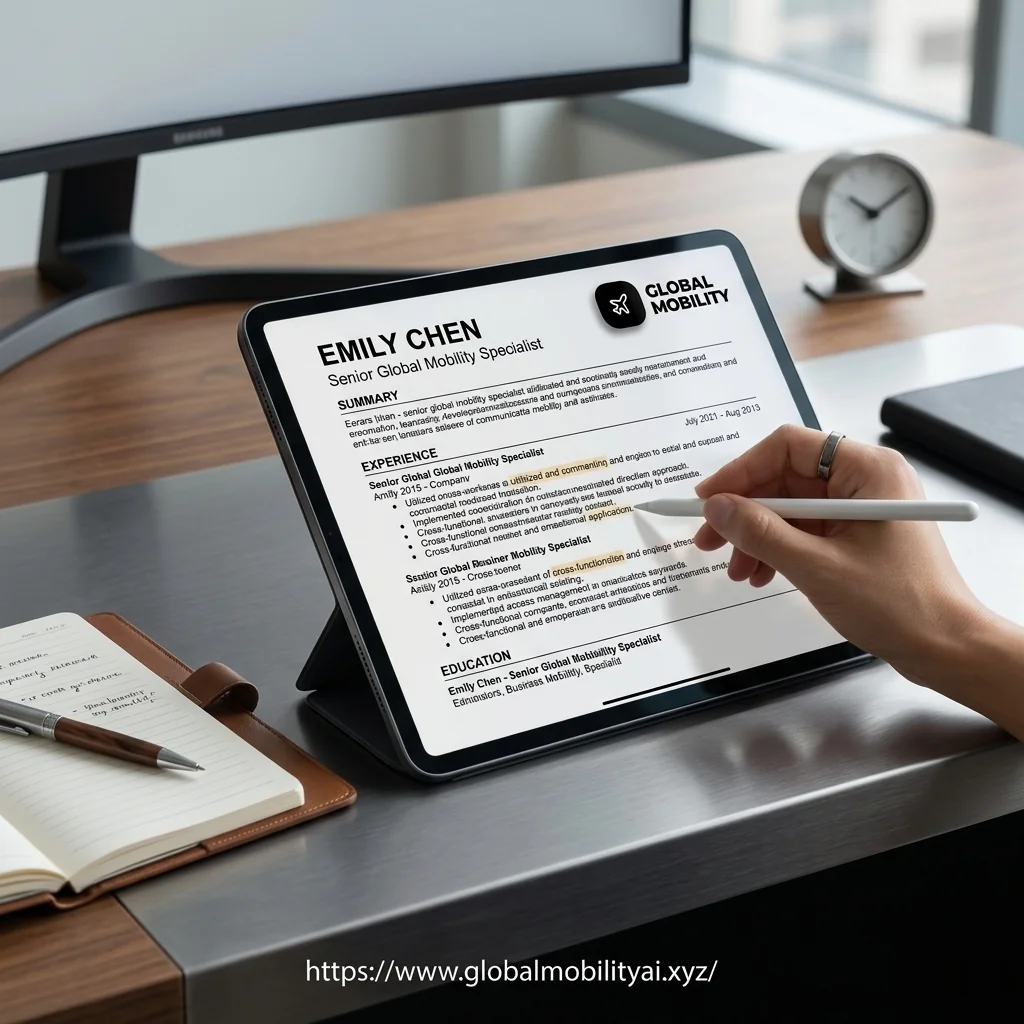
Professional US CV being reviewed on a tablet emphasizing ATS formatting rules

Professionals shaking hands in a modern US boardroom highlighting corporate etiquette
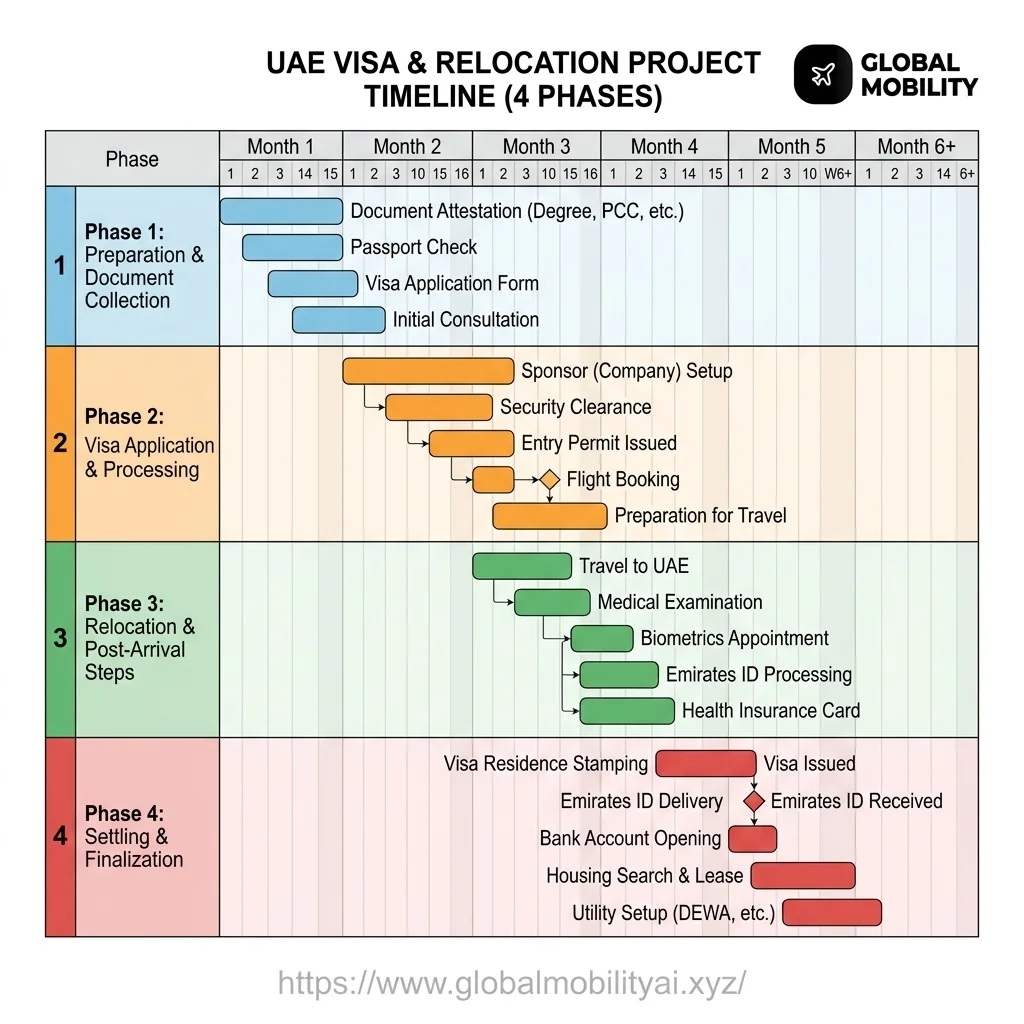
Gantt chart displaying the 4-phase US H1B visa and relocation timeline
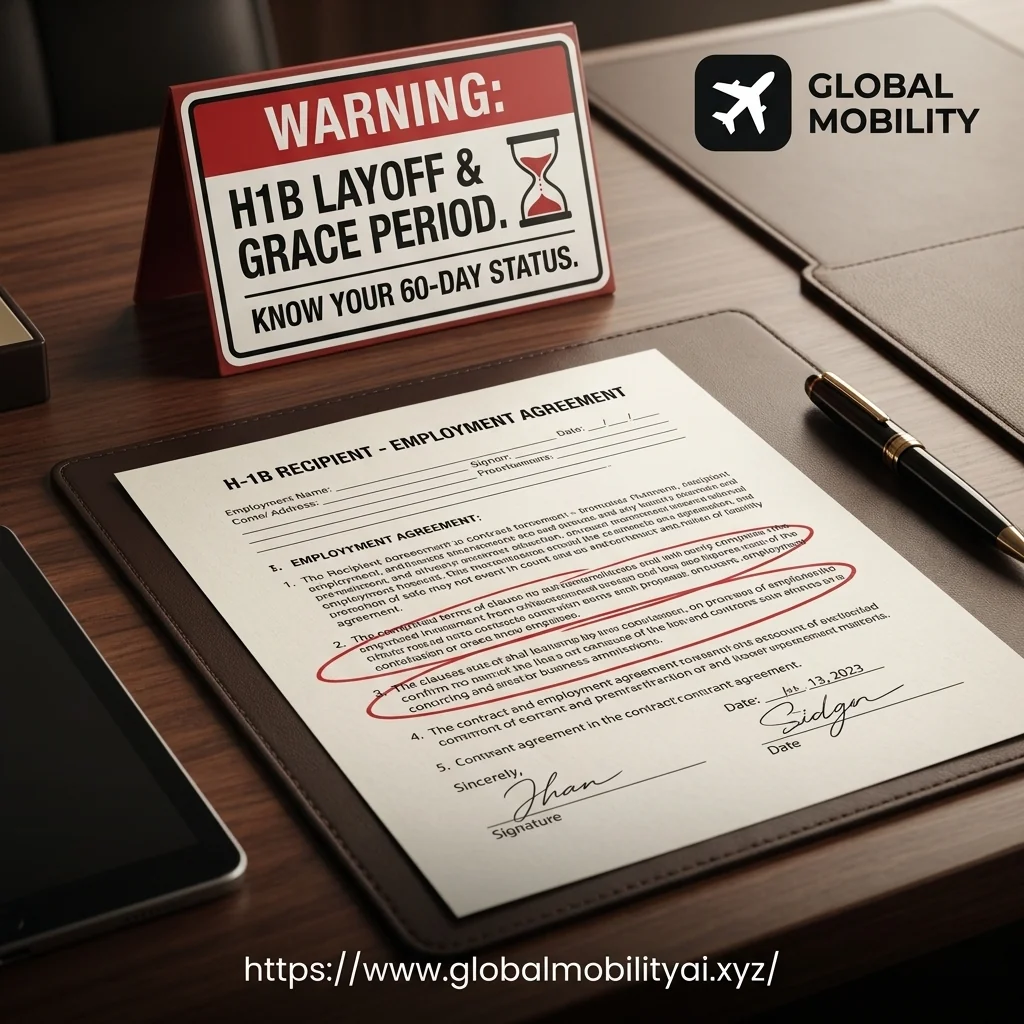
Conceptual image of a signed contract with a warning sign about H1B layoffs and grace periods
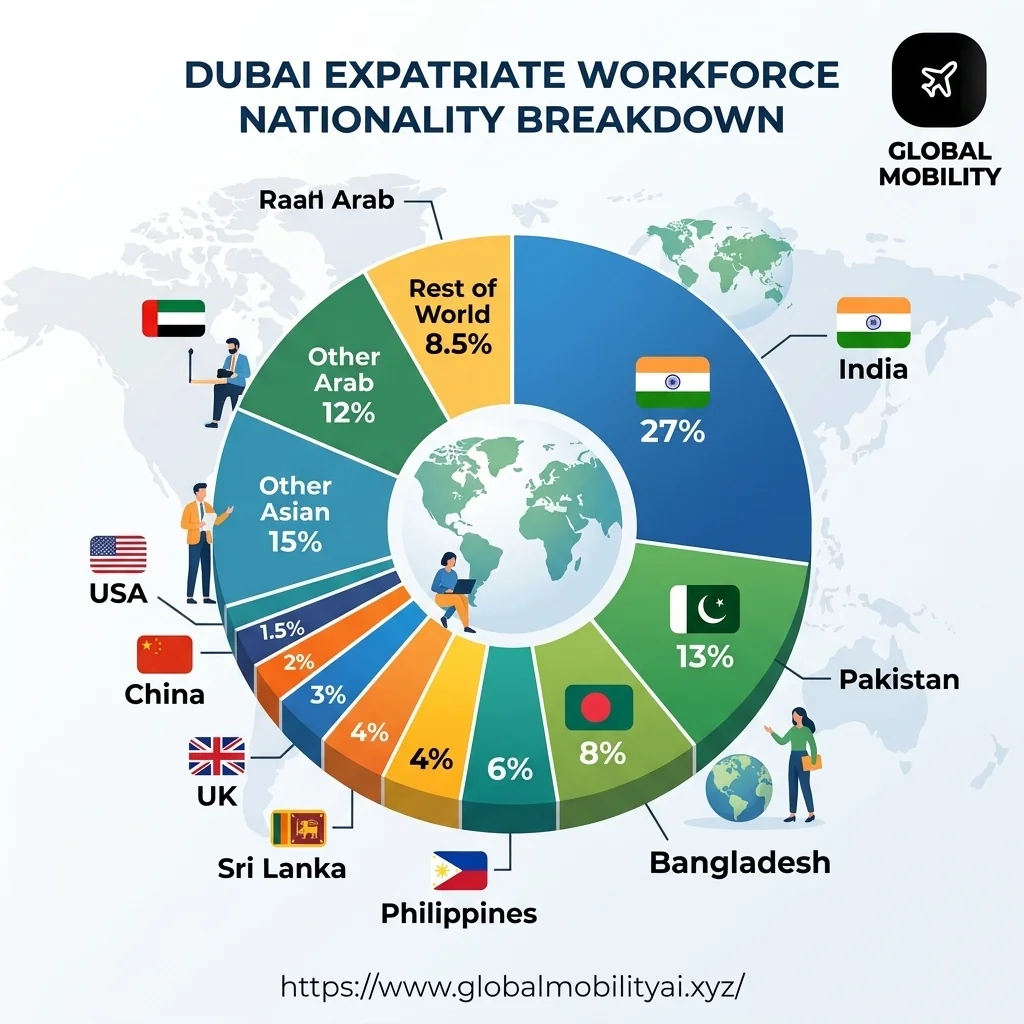
Pie chart showing the diverse nationality breakdown of the US expatriate tech workforce
Predict your mobility score.
Use our AI engine to get your personalized visa pathway, salary prediction, and relocation roadmap.
More Insights

Germany Opportunity Card 2026: Points, How to Apply & Fastest Jobs

The Ultimate Golden Visa Masterclass 2026: The Strategic Wealth & Mobility Blueprint