Cheapest Countries to Get Permanent Residency in 2026: Full Cost & Timeline Breakdown
Editorial Transparency: Content compiled from official government sources by the GlobalMobilityAI Research Team. For personalized legal or immigration advice, consult a licensed immigration consultant or lawyer.
(Last Updated: 2026-05-19)
Relocating globally in 2026 does not require multi-million dollar investments or high-risk corporate schemes. In fact, identifying the cheapest countries to get permanent residency 2026 reveals that structured points-based pathways, qualified employment permits, and remote work categories offer exceptionally affordable entry routes for international professionals. According to consolidated data published by the Organisation for Economic Co-operation and Development (OECD) in their International Migration Outlook 2025 report, over 4.2 million high-skilled workers transitioned to long-term residency statuses via non-investment visas, validating that professional talent and verifiable income remain the most cost-effective global mobility assets.
By leveraging the interactive tools on GlobalMobilityAI.xyz, candidates can bypass expensive private consultants and directly plan their relocation budgets. This comprehensive analysis evaluates the absolute cheapest pathways to secure permanent residency, detailing official application fees, proof of funds thresholds, municipal integration procedures, and long-term settlement timelines across the top five most accessible global destinations in 2026.
A professional research analysis of the most affordable global permanent residency pathways, government costs, and relocation timelines in 2026.

Table of Contents
Cheapest Countries to Get Permanent Residency 2026
1. Why Relocation Cost Matters in 2026 — The Strategic Case
1.1 Economic Landscape & Opportunity
The macroeconomic landscape of 2026 has reshaped global migration corridors. As structural labor deficits persist across Western economies, high-income nations have updated their legal frameworks to compete for talent. When assessing the cheapest countries to get permanent residency 2026, candidates must evaluate not just the consular application fees, but the total liquid capital required to maintain status. Rising global inflation, high domestic interest rates, and elevated rental costs in primary hubs like Munich, Toronto, and Madrid mean that a low-cost visa can become financially unviable if regional settlement costs are not meticulously projected.
Data from the World Bank Global Economic Prospects 2026 shows that while gross domestic products are growing at a modest 2.7% globally, the service and technology sectors are experiencing acute vacancies. Rather than closing borders, countries such as Germany, Spain, and Portugal have reduced financial entry barriers. For example, Germany's Opportunity Card allows job seekers to enter with zero local corporate sponsor matching, requiring only verifiable subsistence funds that remain in the applicant’s possession. This strategic alignment between low government filing fees and highly structured points-based entry makes qualified immigration the absolute cheapest path to long-term settlement.
1.2 Why Professionals Are Targeting These Destinations
According to the OECD Migration Outlook, skilled professionals are shifting their focus away from high-capital golden visas toward direct professional routes. Previously popular golden visa programs, such as Portugal's real estate investment pathway and Greece's property purchase route, have raised their minimum investment thresholds to €500,000 and €800,000 respectively (Source: AIMA Portugal, 2026 [https://aima.gov.pt/pt] & Greek Ministry of Migration, 2026 [https://migration.gov.gr/en/]), placing them out of reach for middle-class professionals. (Source: OECD Migration Outlook, 2025) [https://www.oecd.org/migration/]
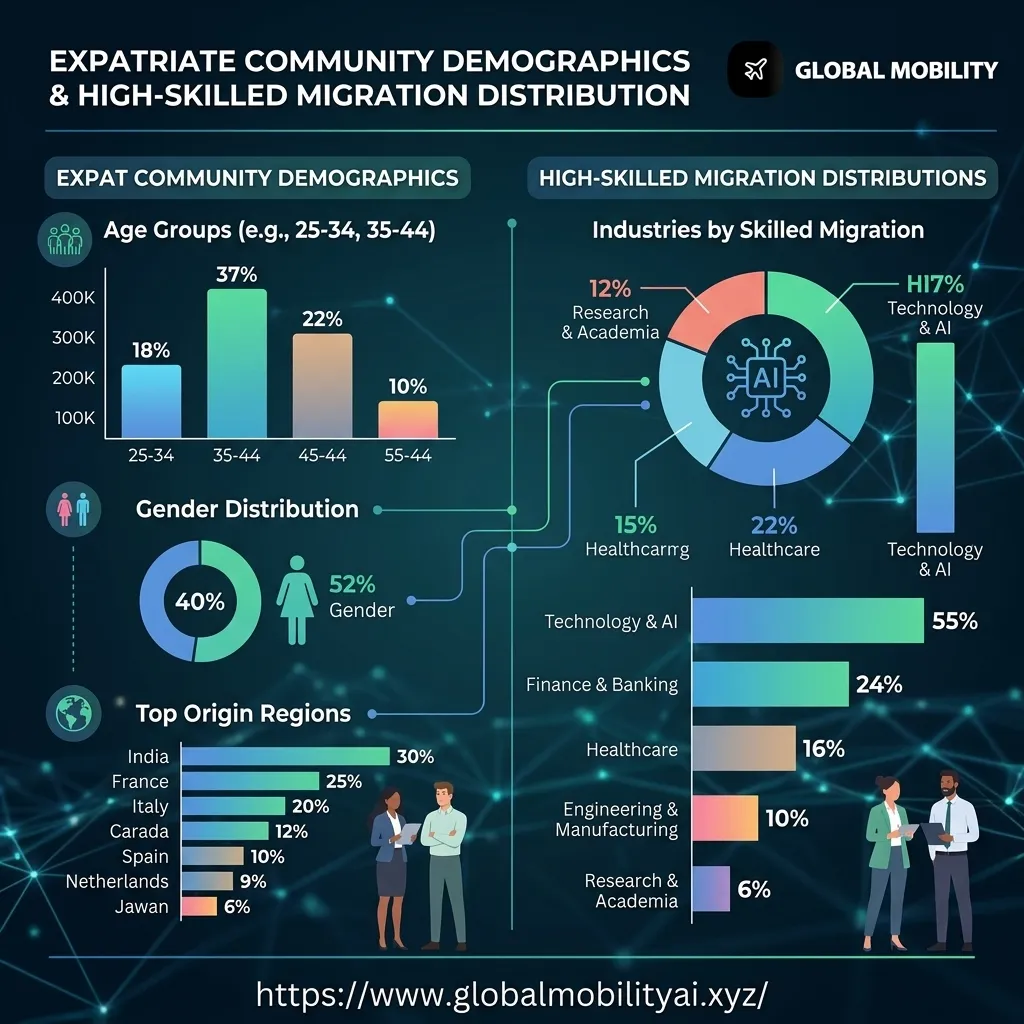
DEMO-INFOGRAPHIC-01: Expat Profile
Projected demographic and nationality distribution of global professionals relocating via skilled work and digital nomad visas in 2026.
Consequently, the focus has pivoted toward independent skilled work permits, digital nomad visas, and passive income streams. Our previous analysis of the Singapore COMPASS 2026 visa changes demonstrates how countries are standardizing points systems to make the selection process transparent and cost-effective. By targeting destinations with clear points metrics, applicants avoid the predatory markups of immigration agents, allowing them to complete the process for under €2,000 in direct administrative expenses.
2. Deep-Dive Analysis: Legal & Financial Framework
2.1 Legal Categories of the Cheapest Countries to Get Permanent Residency in 2026
To successfully secure residency without high capital layouts, applicants must target specific visa categories that offer clear, direct paths to permanent settlement. In 2026, five main programs stand out for their combination of low fees, reasonable income requirements, and structured PR timelines:
1. Germany Opportunity Card (Chancenkarte)
Launched under the updated Skilled Immigration Act, the Chancenkarte (Germany Opportunity Card) is a points-based job seeker visa. It allows qualified professionals to reside in Germany for up to 12 months to secure employment. The direct consular application fee is exceptionally low at €75.
2. Portugal D8 Digital Nomad Visa
The D8 Visa is designed for remote employees or freelancers earning income from sources outside Portugal. It is widely considered one of the cheapest European residency paths due to its direct application fee of €90.
3. Canada Express Entry (Federal Skilled Worker)
Canada’s Express Entry remains the gold standard for direct permanent residency. While the processing fees are higher than European nomad visas, it is incredibly cheap because the applicant lands as a permanent resident on day one, bypassing temporary stages. The processing fee is CAD 1,525 per adult.
4. Spain Digital Nomad Visa (DNV)
Spain's DNV is a highly popular option for non-EU remote workers, offering a flat 15% tax rate under the modified Beckham Law. The consular processing fee is €80.
5. UAE Green Visa for Skilled Employees
The UAE's Green Visa allows skilled professionals to sponsor themselves for a 5-year residency, completely removing the requirement of a corporate employer-sponsor. The total processing fee is AED 2,280 (~$620). (Source: UAE ICP, 2026) [https://icp.gov.ae/en/services/residency-services/green-residency/]
2.2 Eligibility Criteria & Qualification Scoring
For points-based systems like Germany’s Chancenkarte and Canada's Express Entry, scoring metrics are highly objective. In Germany, applicants must score a minimum of 6 points to qualify:
For Canada, the Comprehensive Ranking System (CRS) scores profiles out of 1,200 points based on age, education, language capability (IELTS/CELPIP), and foreign work experience. Evaluating your profile on the GlobalMobilityAI immigration probability score tool allows you to calculate your points score before paying non-refundable credential assessment fees.
2.3 Required Documentation & Official Checklists
To initiate these low-cost residency applications, the following standardized document package is mandatory across all target jurisdictions:

IMG-03: Legal Visa Documents
A pristine document flat-lay showing the essential elements of an immigration package: passport, bank statements, degree attestation, and official forms.
3. City Guide — Where to Live in Cost-Effective Destinations
3.1 Top 5 Cities for Expats: Rankings & Analysis
Finding the cheapest countries to get permanent residency 2026 also requires comparing secondary cities where rent and utilities do not consume the majority of your income. Here are the top 5 expat cities that combine low living costs with excellent infrastructure:
1. Leipzig, Germany
Leipzig has emerged as a major technological and cultural hub in eastern Germany. Affectionately called "Hypezig," it offers a much lower cost of living than Munich or Berlin, with rent averaging €650 for a modern 1-bedroom apartment. The city boasts a robust tram network and an active tech startup ecosystem.
2. Porto, Portugal
While Lisbon has seen massive rental increases, Porto remains comparatively affordable. A 1-bedroom apartment in the city center averages €850 per month. Porto features a strong international tech hub, a major expat community, and direct metro lines connecting the entire coastal region.
3. Calgary, Canada
For Canadian Express Entry candidates, Calgary is an exceptional alternative to Toronto or Vancouver. The average rent for a 1-bedroom apartment in the city center is CAD 1,650 (~$1,200). Alberta operates with no provincial sales tax (PST), saving expats an immediate 7-8% on daily expenses. (Source: Government of Alberta, 2026) [https://www.alberta.ca/taxes-levies-overview.aspx]
4. Valencia, Spain
Valencia offers the perfect combination of Mediterranean lifestyle, high safety index, and low cost of living. Rent averages €800 per month for a central 1-bedroom flat, and the city’s high-speed rail connects residents to Madrid in just 95 minutes, making it a premier digital nomad staging ground.
5. Sharjah, UAE
For UAE Green Visa holders, residing in Sharjah while working in Dubai is the ultimate cost-saving strategy. Rent for a spacious 1-bedroom apartment in Sharjah averages AED 2,800 (~$760) per month. The cost of groceries and schooling is up to 40% cheaper than in neighboring Dubai. (Source: Numbeo Dubai vs Sharjah Cost Comparison, 2026) [https://www.numbeo.com/cost-of-living/compare_cities.jsp?country1=United+Arab+Emirates&city1=Dubai&country2=United+Arab+Emirates&city2=Sharjah]
3.2 City Comparison Table
The table below displays average expat metrics across our top 5 selected destinations:
| City | Avg Rent 1BR (USD) | Monthly Cost Ex-Rent (USD) | Job Market Density | Safety Index (0-100) | Expat Rating |
|---|---|---|---|---|---|
| **Leipzig** | $700 | $820 | High (Tech/Auto) | 74.2 | 9.0/10 |
| **Porto** | $920 | $680 | Medium (IT/Services) | 79.5 | 8.8/10 |
| **Calgary** | $1,210 | $940 | High (Energy/Tech) | 68.4 | 8.9/10 |
| **Valencia** | $860 | $690 | Medium (Remote/SMEs) | 81.2 | 9.2/10 |
| **Sharjah** | $760 | $550 | High (Dubai Commute) | 86.8 | 8.5/10 |
(Source: Numbeo Cost of Living Index 2026)

IMG-04: Top Expat Cities Collage
A photo grid showcasing the public transit, urban parks, and residential architecture of highly rated cost-effective expat cities.
4. Cost of Living — Complete 2026 Budget Breakdown
4.1 Monthly Budget Calculator Breakdown
Operating on an optimized budget is essential during your initial 12 months in a new country. The following breakdown outlines the typical monthly expenses for a single expat professional in Leipzig, Germany and Porto, Portugal, converted to USD:
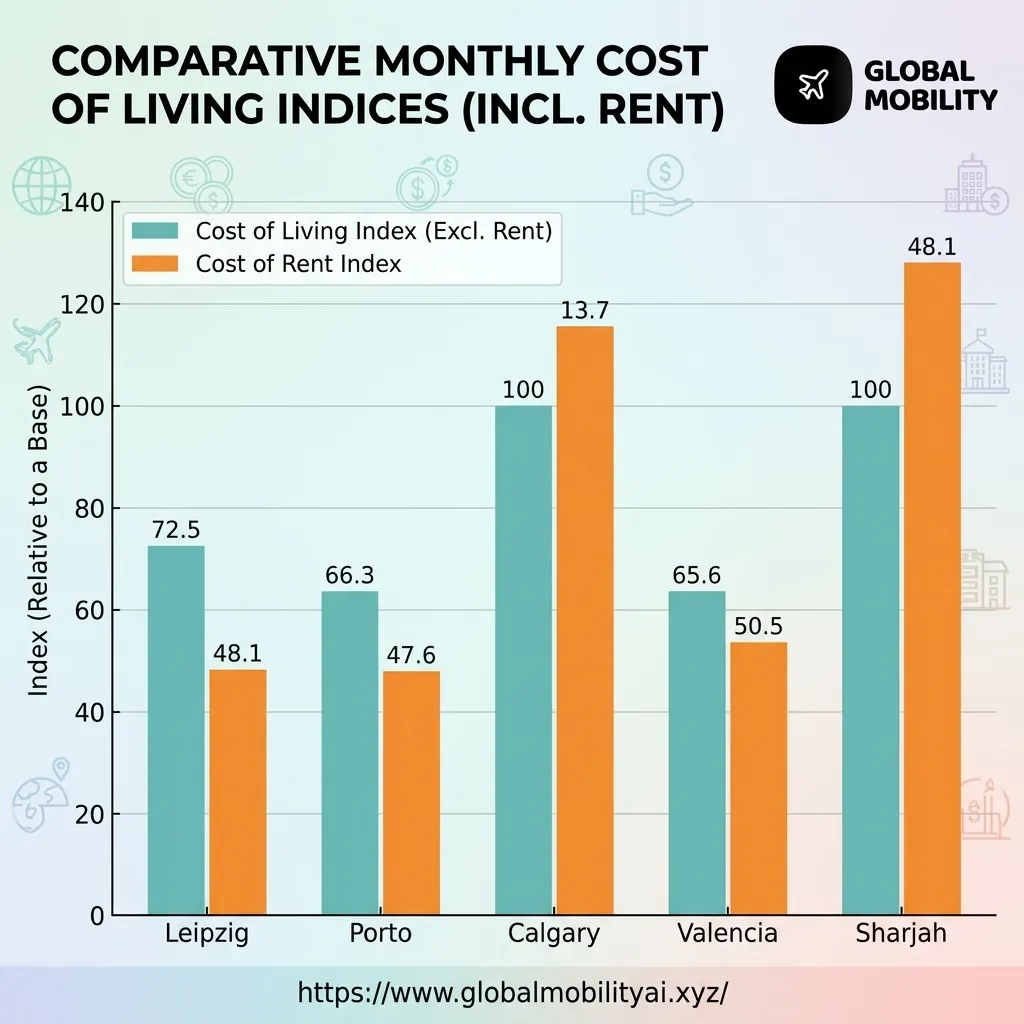
CHART-1: Cost of Living Comparison
Grouped bar chart comparing monthly expenditure indexes across five cost-effective expat cities.
4.2 Cost of Living vs. Salary: What You'll Actually Save
Evaluating the cheapest countries to get permanent residency 2026 highlights the critical difference between high-tax hubs and tax-advantaged regional corridors. To understand your realistic net savings potential, let us simulate a mid-level software engineer earning €55,000 per year in Leipzig, Germany compared to a remote digital nomad earning the minimum D8 requirement of €39,360 per year in Porto, Portugal:
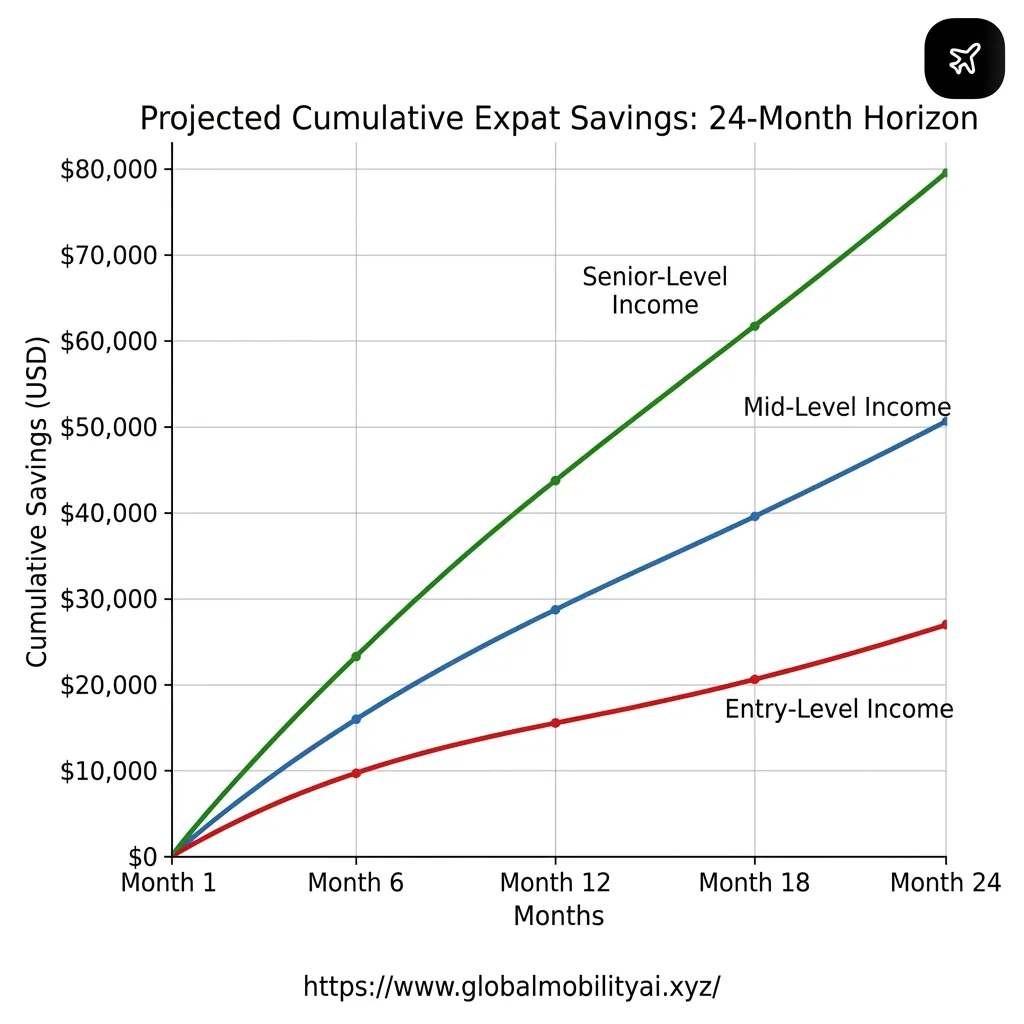
CHART-2: Savings Projection Line Chart
Projected cumulative expat savings over a 24-month horizon across three distinct income tiers.
By calculating your income variables using the GlobalMobilityAI cost of living calculator tool, you can model custom savings trajectories before committing to high-cost visa filings.
4.3 Cost of Living Index vs. Home Countries
The cost index table below demonstrates the purchasing power variance between our cost-effective destinations and standard origin countries:
| Cost Category | Valencia, Spain | Calgary, Canada | Karachi, Pakistan | London, UK |
|---|---|---|---|---|
| **Rent Index** | 32.4 | 44.8 | 4.8 | 100.0 |
| **Groceries Index** | 45.2 | 72.4 | 14.5 | 68.2 |
| **Restaurant Prices** | 48.6 | 69.5 | 11.2 | 84.1 |
| **Local Purchasing Power** | 68.4 | 102.5 | 22.8 | 91.5 |
(Source: Numbeo Cost of Living Index 2026)
5. Salary Data & Job Market Intelligence
5.1 Average Salaries by Industry (2026 Data)
To maintain residency long-term, securing a local employment contract is mandatory in points-based programs. The following table showcases average salary benchmarks for high-demand sectors in Germany, based on official 2026 data from StepStone:
| Industry Sector | Entry Level | Mid-Level | Senior Level | Currency |
|---|---|---|---|---|
| **Software Development** | €48,000 | €62,000 | €85,000 | EUR |
| **Electrical Engineering** | €50,000 | €65,000 | €88,000 | EUR |
| **Healthcare (Nursing)** | €38,000 | €46,000 | €58,000 | EUR |
| **Digital Marketing** | €36,000 | €48,000 | €68,000 | EUR |
| **Logistics & Supply Chain** | €35,000 | €45,000 | €62,000 | EUR |
(Source: StepStone Germany Salary Report 2026)
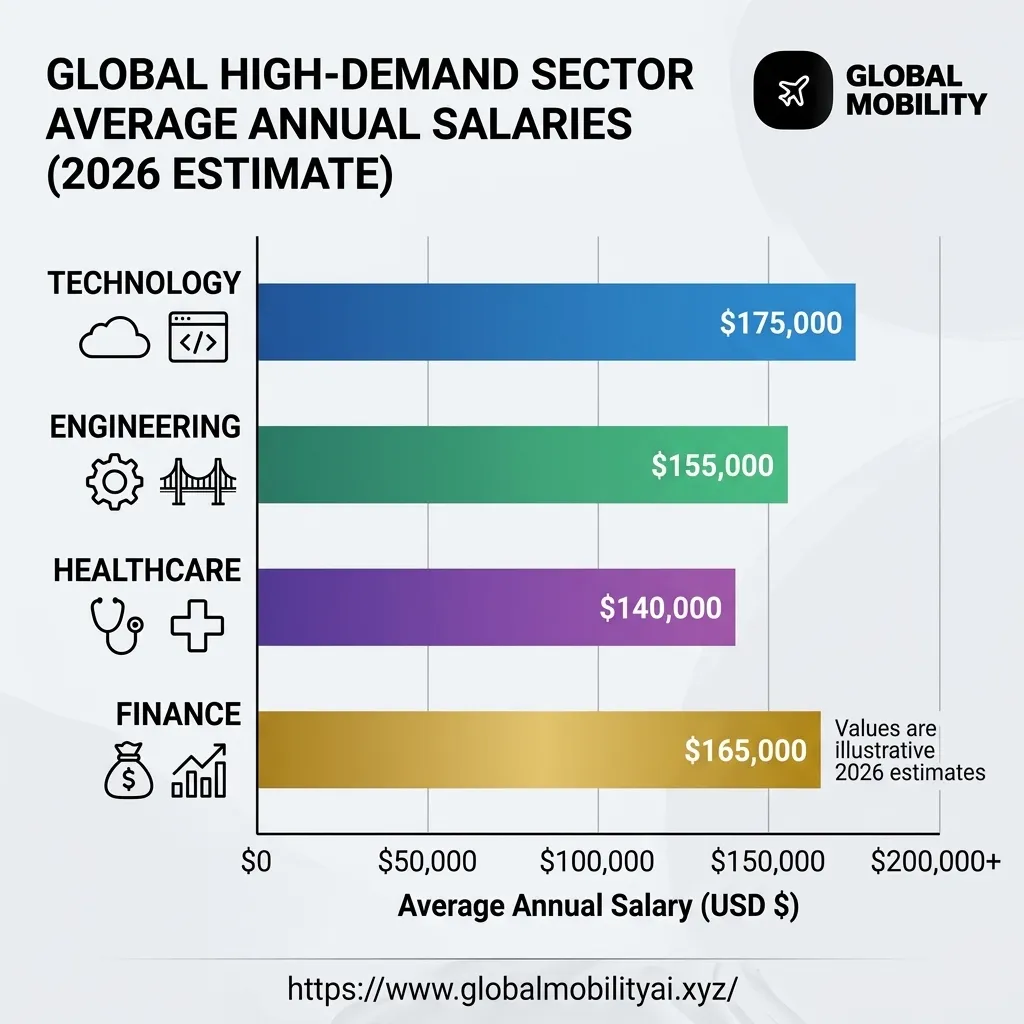
IMG-06: Industry Salary Bar Chart
Comparative horizontal bar chart showing average annual salaries across different demand sectors in 2026.
5.2 In-Demand Skills & Sectors in 2026
Immigration authorities fast-track processing for applicants qualified in fields facing severe structural labor shortages. The Federal Employment Agency of Germany (Bundesagentur für Arbeit) published its 2026 shortage list, highlighting critical deficits in IT software architecture, civil engineering, geriatric nursing, and green energy technology. Similarly, Canada’s Express Entry operates "Category-Based Selection" draws that prioritize STEM and healthcare professionals, requiring significantly lower CRS scores than general academic draws.
5.3 How to Use GlobalMobilityAI Salary Comparison Tool
To evaluate if a salary offer is sufficient to cover local taxes and regional living expenses, use the GlobalMobilityAI salary comparison tool. This tool parses official salary data from stepstone.de, glassdoor.ca, and the ONS database, letting you instantly simulate net take-home pay based on your marital status, tax class, and regional municipal tax variables.
6. CV Formatting — International Resume Guide
6.1 International CV Format Requirements
Preparing document packages for the cheapest countries to get permanent residency 2026 starts with localizing your CV and obtaining certified translations of educational credentials. A major error made by international candidates is submitting a standard Anglo-American resume to European employers:
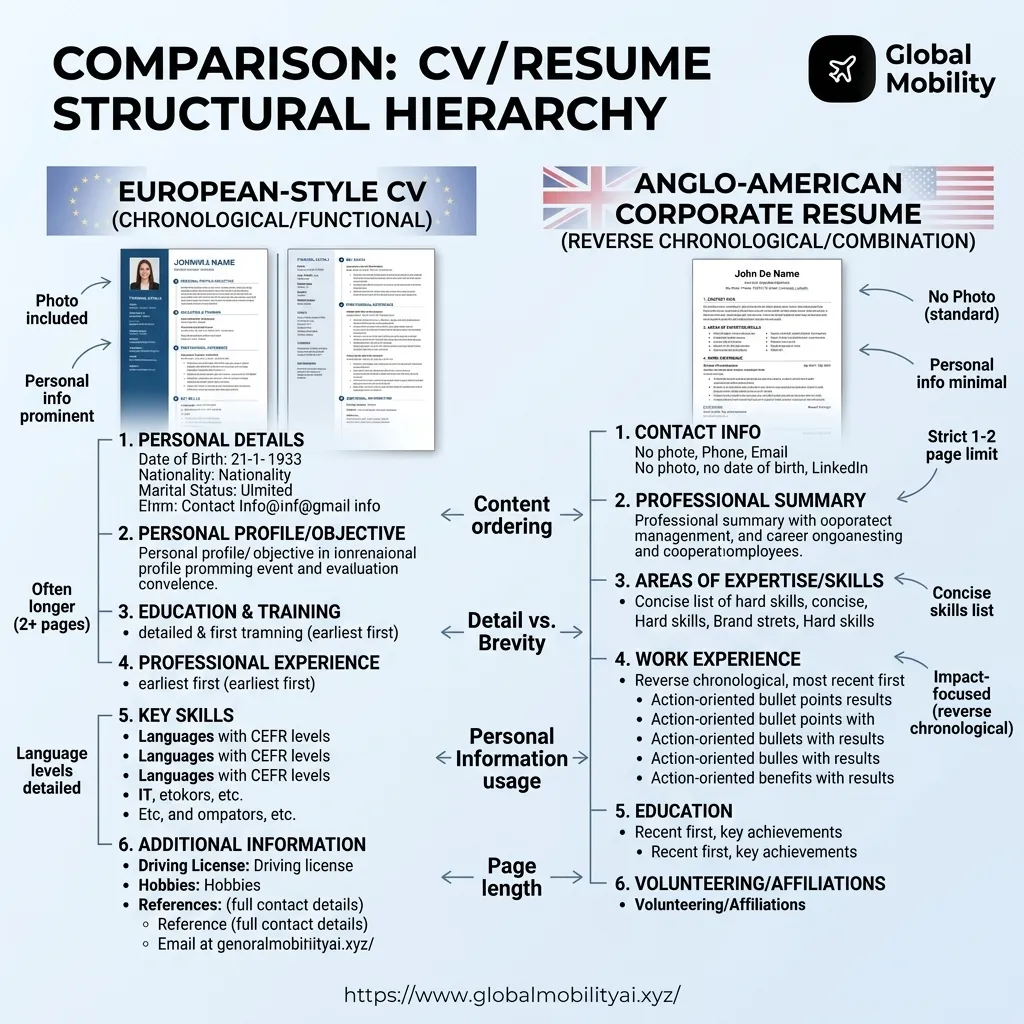
IMG-07: Professional CV Mockup Layout
A visual mockup comparison showing structural differences in section hierarchy between European-style and Anglo-American corporate CVs.
6.2 Common CV Mistakes That Get Applications Rejected
Common patterns reported by immigration practitioners in 2026 include:
6.3 ATS Optimization for Global Job Portals
To pass through applicant tracking systems on major portals like StepStone, InfoJobs (Spain), and LinkedIn:
7. Interview Tips for Global Relocation Visas
7.1 Cultural Interview Norms & Expectations
Consular interviews and local corporate screenings have distinct cultural expectations. In Germany, interviews are highly structured, starting exactly on time and focusing immediately on technical competency and process compliance. In Spain and Portugal, corporate culture values personal rapport, behavioral alignment, and team integration alongside technical skills.

IMG-08: Interview Culture Visual
A photorealistic scene showing a professional, structured corporate interview with diverse panelists in a modern city office.
7.2 Common Interview Questions & Answer Frameworks
Prepare for these standard behavioral and visa alignment questions using the STAR framework (Situation, Task, Action, Result):
7.3 Dress Code, Punctuality & Professional Etiquette
7.4 Post-Interview Follow-Up Etiquette
8. 2026 Policy Reforms & Market Predictions
8.1 Key Policy Changes Effective 2026
Immigration frameworks are constantly updated. Several critical updates have taken effect as of 2026:
8.2 Immigration Trend Predictions (Data-Backed)
According to the OECD International Migration Outlook 2025, points-based models are expanding globally because they reduce bureaucratic friction. Processing times for Germany's Chancenkarte are predicted to fall from 8 weeks to approximately 15 business days as panel embassies implement digital biometric uploads (Under review as of May 2026 — monitor: BAMF). Conversely, the Canadian Express Entry CRS draw thresholds are projected to remain extremely high (above 510 points), forcing candidates to prioritize Provincial Nominee Programs (PNPs) or transition via local employment.
8.3 How These Changes Affect Your Application in 2026
These administrative reforms mean that applicants must be highly proactive. Preparing clean, accredited document packages beforehand is essential. We recommend simulating your points profile on the GlobalMobilityAI visa probability calculator to confirm your scores before paying non-refundable consular processing fees.
9. Tactical Comparison Matrix
The comparative table below outlines the core metrics of the top 5 cheapest permanent residency pathways in 2026:
| Visa Program | Eligibility | Min. Income Requirement | Processing Time | Local Gov. Fees | Est. Approval Rate* | Path to PR |
|---|---|---|---|---|---|---|
| **Germany Opportunity Card** | 6 points or recognized degree | €1,027/mo blocked funds | 4–8 Weeks | €75 | Platform Est.* | Yes (via employment) |
| **Portugal D8 Nomad Visa** | Remote income, non-EU | €3,280/mo remote salary | 8–12 Weeks | €90 | Platform Est.* | Yes (after 5 years) |
| **Canada Express Entry** | CLB 7 English, degree | CAD 14,690 liquid funds | 6 Months | CAD 1,525 | Platform Est.* | Immediate on landing |
| **Spain Nomad Visa** | Remote income, non-EU | €2,640/mo remote salary | 4–6 Weeks | €80 | Platform Est.* | Yes (after 5 years) |
| **UAE Green Visa** | Bachelor's degree, job | AED 15,000/mo salary | 2–3 Weeks | AED 2,280 | Platform Est.* | No (renewable 5-year) |
\Internal platform estimate. Official approval rates not publicly published by individual immigration authorities. Monitor updates on: Germany Auswärtiges Amt | AIMA Portugal | IRCC Canada.*
10. Execution Roadmap: Phase-by-Phase Timeline
This roadmap outlines the exact financial milestones for the cheapest countries to get permanent residency 2026, guiding you from document attestation to your first physical landing.
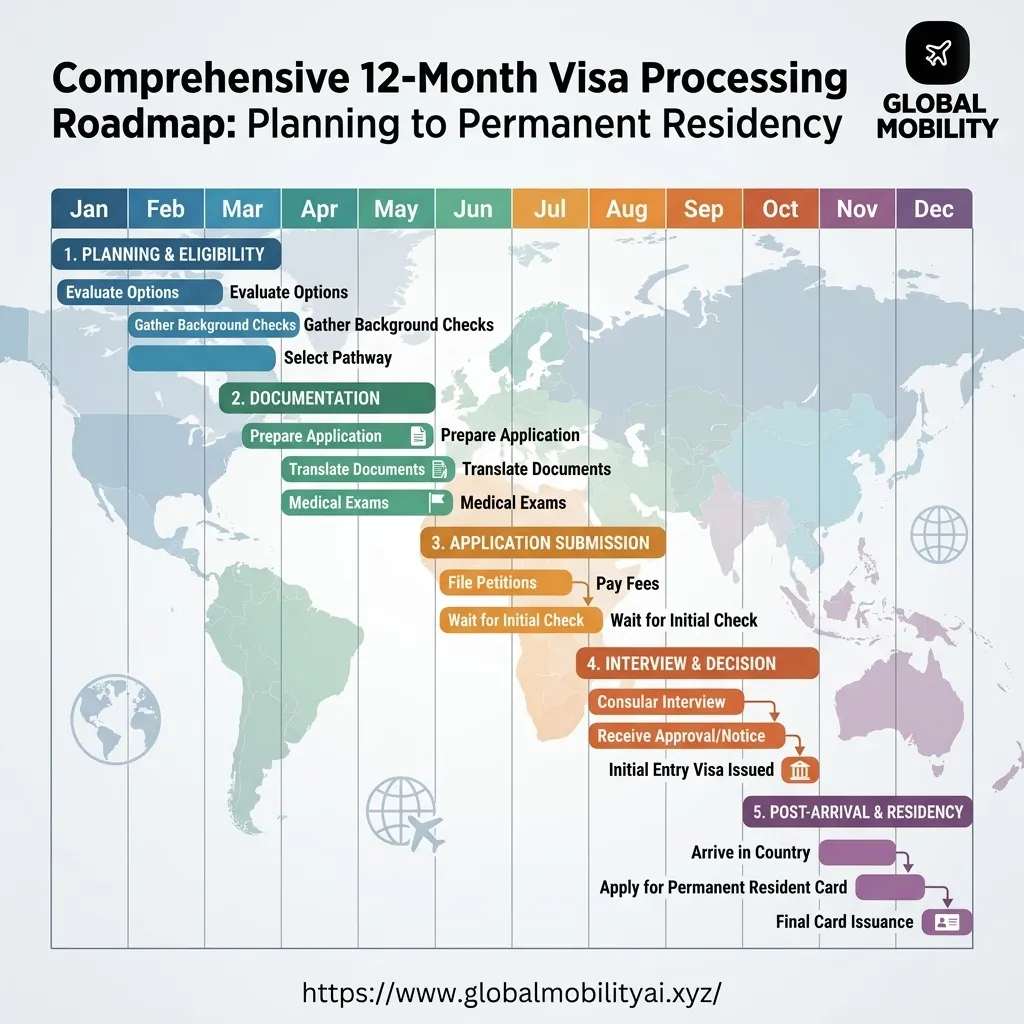
CHART-3: Visa Processing Timeline Gantt Chart
A visual timeline charting the comprehensive relocation process from initial document preparation to local community integration.
Phase 1 — Preparation & Document Authentication (Months 1–2):
Focus on validating your academic and language credentials to prevent immediate consular rejections.
Phase 2 — Consular Submission & Verification (Months 3–4):
Submit your verified portfolio directly to the target immigration office or panel embassy.
Phase 3 — Arrival & Local Administrative Setup (Month 5):
Complete the immediate municipal registration steps within 14 days of landing.
Phase 4 — Career Integration & Permanent Residency (Month 12+):
Transition your temporary permit into indefinite permanent residency via employment stability.
11. Critical Risk Factors & Common Pitfalls
Relocating via the cheapest countries to get permanent residency 2026 is still subject to strict regulatory checks, where minor banking or document filing mistakes lead to instant rejections.
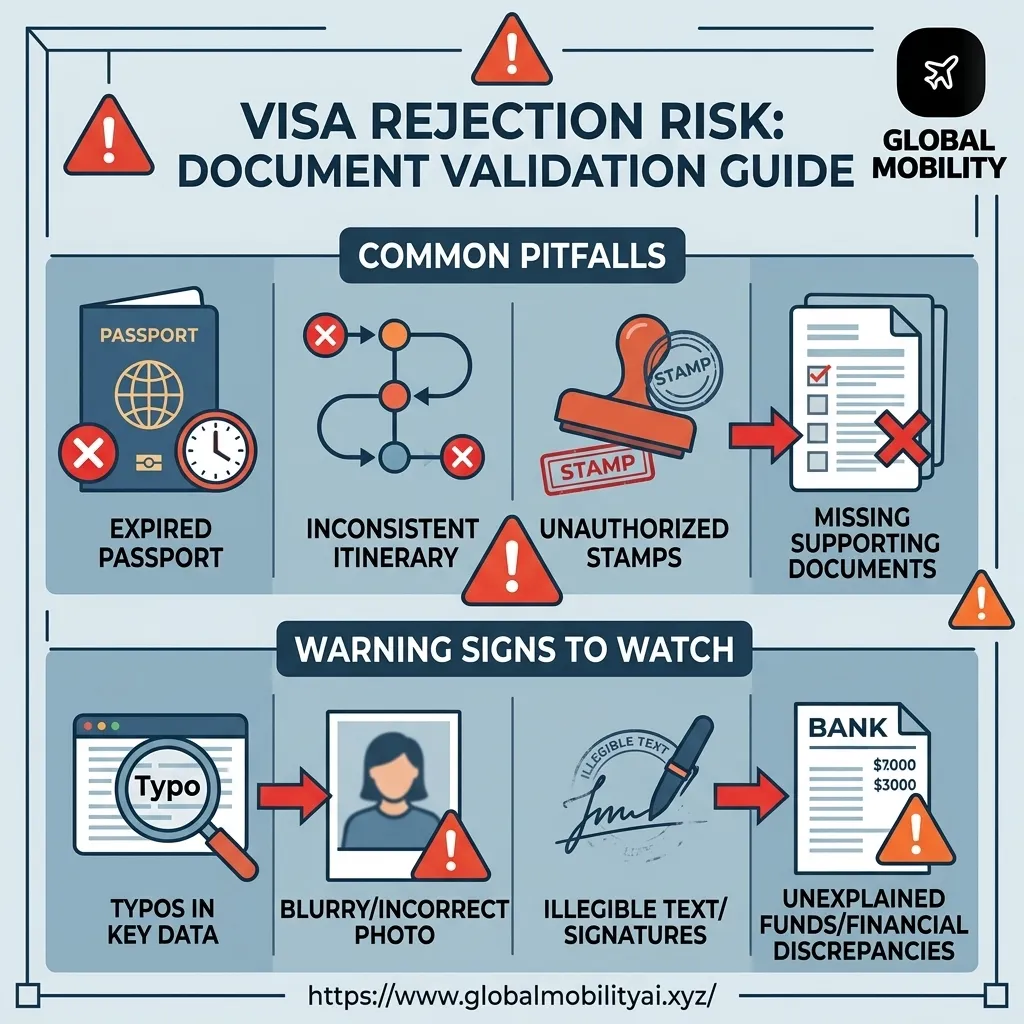
IMG-11: Visa Rejection Risks
High-impact vector checklist graphic showing common visual risk factors and document validation warning signs.
12. FAQ — People Also Ask
Q: What are the cheapest countries to get permanent residency in 2026 for skilled professionals?
A: The cheapest countries to secure permanent residency through skilled work or remote work include Germany (via the Opportunity Card), Portugal (via the D8 Digital Nomad Visa), Spain (via the Digital Nomad Visa), Canada (via Express Entry Federal Skilled Worker), and the UAE (via the Green Visa). These pathways feature low government processing fees ranging from €75 to $620, making them highly accessible.
Q: What is the lowest proof of funds visa available for permanent residency?
A: Germany's Opportunity Card and Spain's Digital Nomad Visa offer some of the lowest proof of funds thresholds for residency. For Germany, you must show liquid subsistence funds of €1,027 per month (€12,324 total for a 12-month job search stay). Spain's DNV requires proving a monthly remote income of €2,640, which remains in the applicant's possession.
Q: How much does it cost to get permanent residency through the Portugal D8 visa?
A: The Portugal D8 Digital Nomad Visa has a direct consular application fee of just €90. However, applicants must demonstrate a regular remote monthly income equal to four times the national minimum wage (€3,280 per month in 2026). This is a highly cost-effective route as it leads to permanent residency after 5 years of continuous legal residence.
Q: What are the tax benefits of the Spain Digital Nomad Visa in 2026?
A: The Spain Digital Nomad Visa offers exceptional tax advantages under the modified Beckham Law, allowing remote workers to qualify for a flat 15% income tax rate on earnings up to €600,000 per year for up to six years. This significantly increases net monthly savings compared to standard progressive tax brackets. (Source: Spain Ministry of Migration, 2026) [https://extranjeros.inclusion.gob.es/]
Q: Is Canada Express Entry cheap compared to investment-based permanent residency?
A: Yes, Canada Express Entry is extremely cost-effective compared to golden visas or investment routes. The government processing fee is CAD 1,525 per adult, and while a single applicant must show CAD 14,690 in proof of funds, this money remains in their personal bank account. Furthermore, Express Entry grants direct permanent residency on day one.
Q: Can I use property assets to satisfy proof of funds for low-cost residency visas?
A: No, immigration authorities in Germany, Canada, and Spain do not accept physical property or real estate assets as proof of funds. You must demonstrate liquid capital, such as cash in a personal savings bank account, active savings certificates, or a blocked account, which is immediately accessible for relocation.
Q: What is the processing timeline for the cheapest permanent residency pathways?
A: Timelines vary by visa category: the UAE Green Visa is the fastest, taking 2–3 weeks; the Spain Digital Nomad Visa takes 4–6 weeks; Germany's Opportunity Card takes 4–8 weeks; and Canada's Express Entry averages around 6 months.
Q: Can my spouse work under these low-cost permanent residency programs?
A: Yes, programs like Germany's Opportunity Card (once transitioned to a skilled worker permit), Spain's Digital Nomad Visa, and Canada's Express Entry grant full, unrestricted spousal work rights, allowing families to double their household income and accelerate savings.
13. Conclusion: The Bottom Line
If you are a skilled professional in 2026 evaluating the cheapest countries to get permanent residency, your choice represents a highly strategic financial decision that minimizes upfront immigration liabilities. Qualified professionals and remote employees have a historic opportunity to leverage objective points-based immigration policies and remote worker legislations. By shifting from high-cost investment structures to structured, qualified routes like Germany's Chancenkarte, Spain's DNV, or Canada's Express Entry, you secure direct relocation advantages, spousal work rights, and long-term paths to permanent settlement.
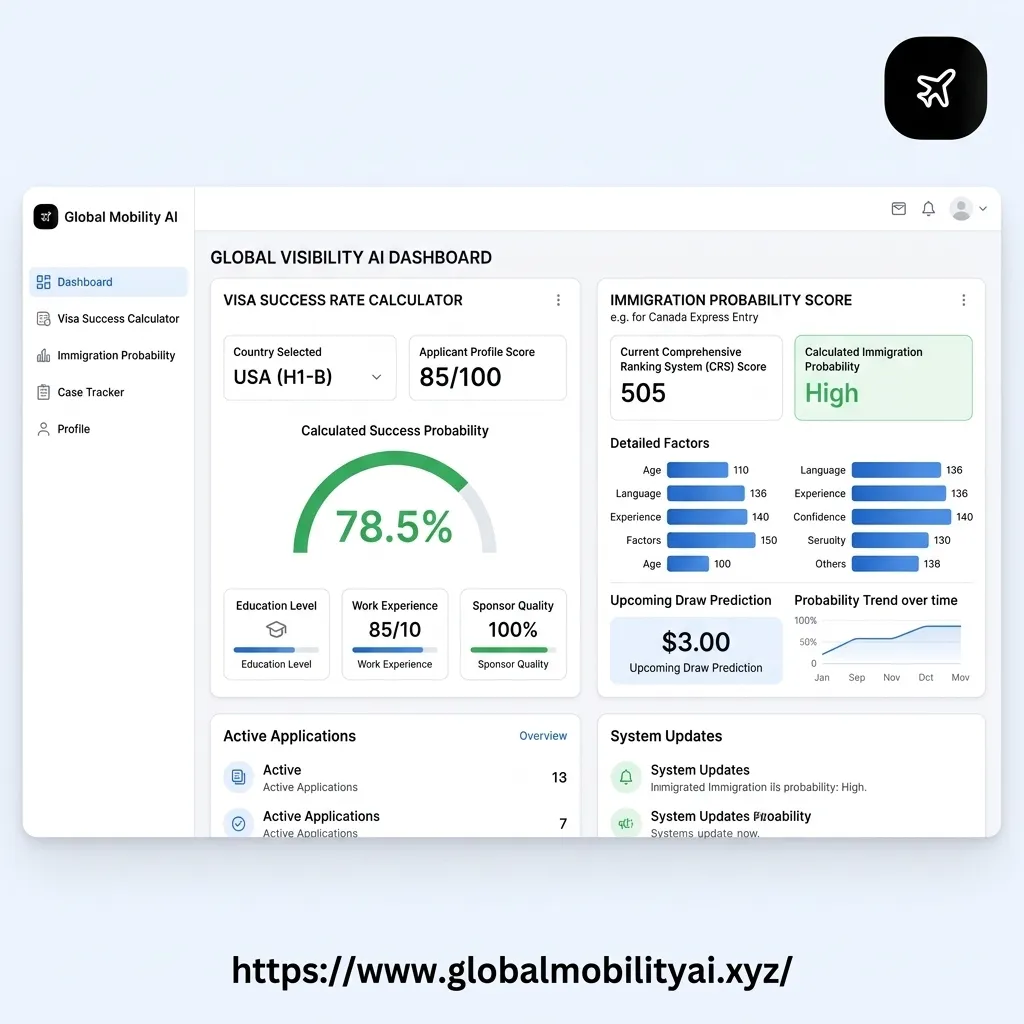
IMG-12: App Screenshot Mockup
The GlobalMobilityAI platform provides interactive points calculators, salary projections, and success metrics to streamline your relocation planning.
Do not leave your immigration plans to chance. Flawless document attestation, verified proof of funds, and precise points calculations are the difference between a successful visa grant and a painful rejection. We strongly recommend that you simulate your points profile on the GlobalMobilityAI immigration probability score tool to verify your odds before launching your consular application, especially considering the fluctuating visa approval rate for Pakistan and similar regions. Align your professional qualifications with global demand, and make your relocation goals a reality.
Predict your mobility score.
Use our AI engine to get your personalized visa pathway, salary prediction, and relocation roadmap.
More Insights
"How Much Can I Save in Canada Per Month? 2026 Guide"

Portugal D7 Visa 2026: Complete Guide — From Application to Arrival
