
Denmark Positive List Visa 2026: Fast-Track Scheme, Eligible Jobs, Salary & PR Timeline
Editorial Transparency: Content compiled from official government sources by the GlobalMobilityAI Research Team. For personalized legal or immigration advice, consult a licensed immigration consultant or lawyer. (Last Updated: 2026-05-28)
According to official statistics from the Danish Agency for International Recruitment and Integration (SIRI), the updated Danish Positive List framework for 2026 comprises 183 job titles for people with a Higher Education and 57 job titles for Skilled Work. Navigating the Denmark positive list visa 2026 has become a primary target for global professionals seeking high-quality public infrastructure, strong labor unions, and a balanced family life. Platform analysis on GlobalMobilityAI.xyz suggests that as traditional immigration corridors in North America and the UK face tightening quotas, Northern Europe’s demand-driven visa tracks offer a highly reliable alternative. This guide outlines the exact legal, financial, and procedural requirements to secure a Danish work permit in 2026 and transition to permanent residency.
Table of Contents
1. Why Denmark in 2026? — The Strategic Case
Relocating to Denmark represents a calculated decision to trade nominal cash salary maximization for structural quality of life and long-term societal stability.
1.1 Economic Landscape & Opportunity
Denmark’s economy is defined by high productivity, specialized high-tech industries, and a robust social safety net underpinned by the "flexicurity" model. According to the OECD Economic Surveys for Denmark (Source: OECD, 2024) [https://www.oecd.org/economy/denmark-economic-snapshot/], Denmark has maintained stable GDP growth driven by strong performances in life sciences, green technology, maritime shipping, and digital services. Despite global macroeconomic pressures, the country faces a persistent labor shortage in critical areas like engineering, software development, healthcare, and specialized vocational trades. The Danish Ministry of Finance projects that to maintain its public welfare infrastructure, Denmark must attract over 15,000 foreign skilled professionals annually through 2030. This structural shortage makes Denmark a highly accessible market for foreign professionals who possess in-demand skills.
1.2 Why Professionals Are Targeting This Destination
Platform search trends suggest that international candidates are prioritizing Denmark due to its flat corporate hierarchies, mandatory five-week paid annual leave, and heavily subsidized childcare system. For instance, the municipal childcare subsidy guarantees that parents pay no more than 25% of the operational costs of a daycare spot, making family relocation highly cost-effective. Additionally, Denmark's clear immigration pathways contrast sharply with the complex, lottery-based systems of other nations, which we compared in our Netherlands highly skilled migrant visa 2026 guide and the Germany opportunity card 2026 analysis. Foreign professionals are leveraging these Northern European pathways to establish a stable career footprint in the EU while securing a direct trajectory toward citizenship.
2. Denmark Positive List Visa 2026: Legal & Financial Framework
Understanding the Danish immigration system requires distinguishing between the various work permit pathways administered by SIRI.
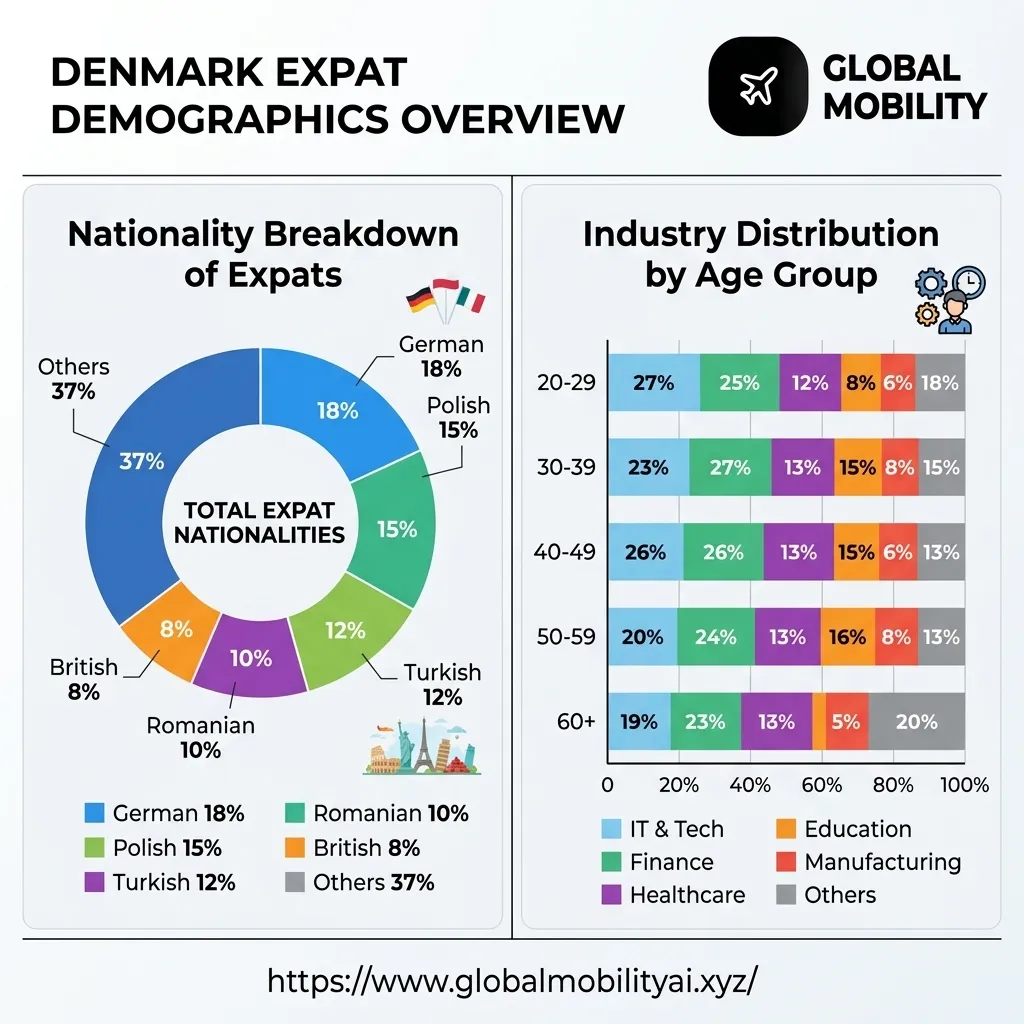
DEMO-INFOGRAPHIC-01: Expat Demographics in Denmark
2.1 Legal Requirements & Visa Categories
To qualify for the Denmark positive list visa 2026, an applicant must have a formal, written job offer from a Danish employer. The Positive List itself is split into two distinct schemes:
Crucially, Denmark does not enforce a single minimum salary for the Positive List scheme. Instead, the salary and employment conditions offered must correspond to "Danish standards." This means the salary must be inline with collective agreements or typical market rates for that specific role. In contrast, the standard Pay Limit Scheme requires a fixed minimum annual salary of DKK 552,000 for applications submitted in 2026, while the Supplementary Pay Limit Scheme sets a threshold of DKK 446,000 (Source: Danish Agency for International Recruitment and Integration, 2026) [https://nyidanmark.dk/en-GB/You-want-to-apply/Work/Pay-limit-scheme].
2.2 Eligibility Criteria & Qualification Scoring
Unlike Canada's Express Entry or the UK's Points-Based System, the Positive List scheme does not use a variable point score. Eligibility is binary:
Applications must be submitted online through the official Ny i Danmark portal (Source: Danish Agency for International Recruitment and Integration, 2026) [https://nyidanmark.dk/en-GB/].
2.3 Required Documentation & Official Checklists
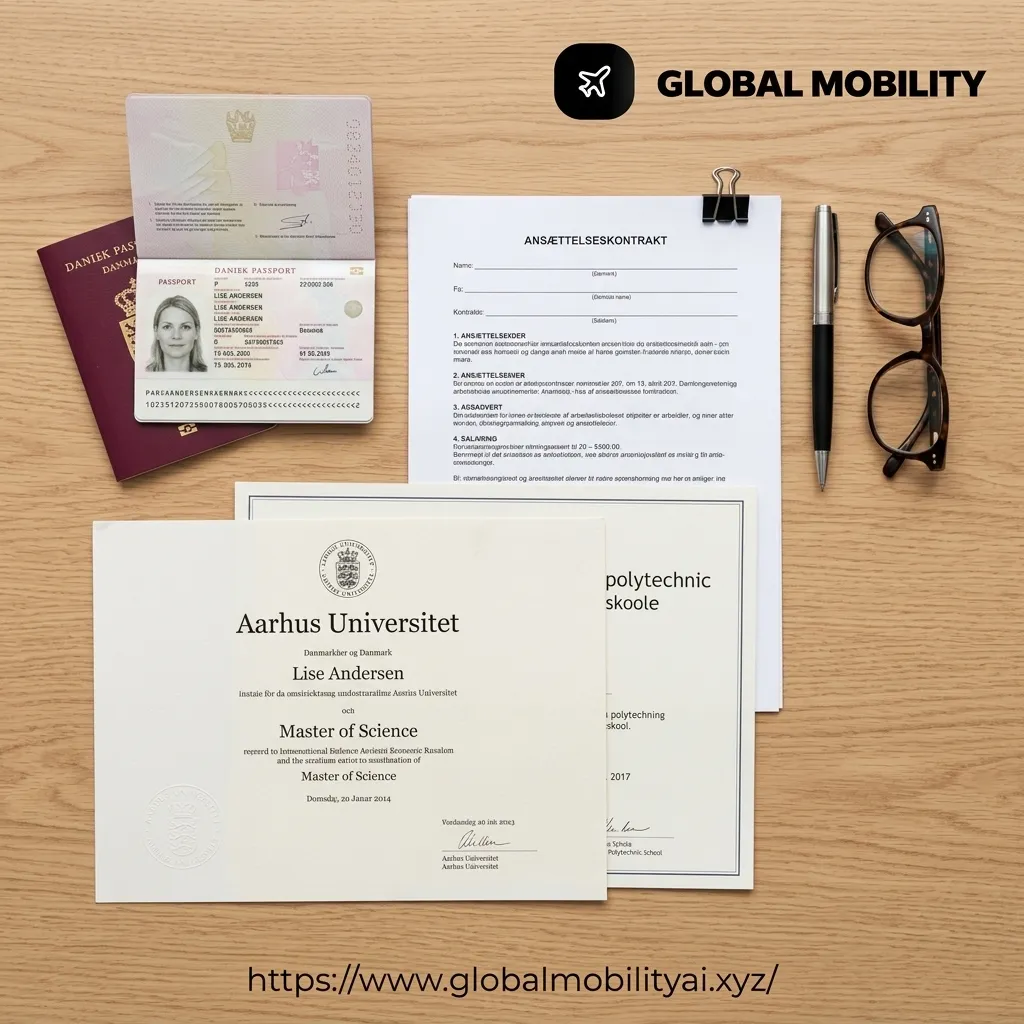
SIRI enforces a strict documentary check. The following files must be uploaded in PDF format:
SIRI provides a standardized checklist via their official work application portal (Source: SIRI Document Checklists, 2026) [https://nyidanmark.dk/en-GB/You-want-to-apply/Work/].
3. City Guide — Where to Live in Denmark in 2026
Danish cities are consistently ranked among the world’s most livable, but they differ significantly in rent levels, job market density, and community dynamics.
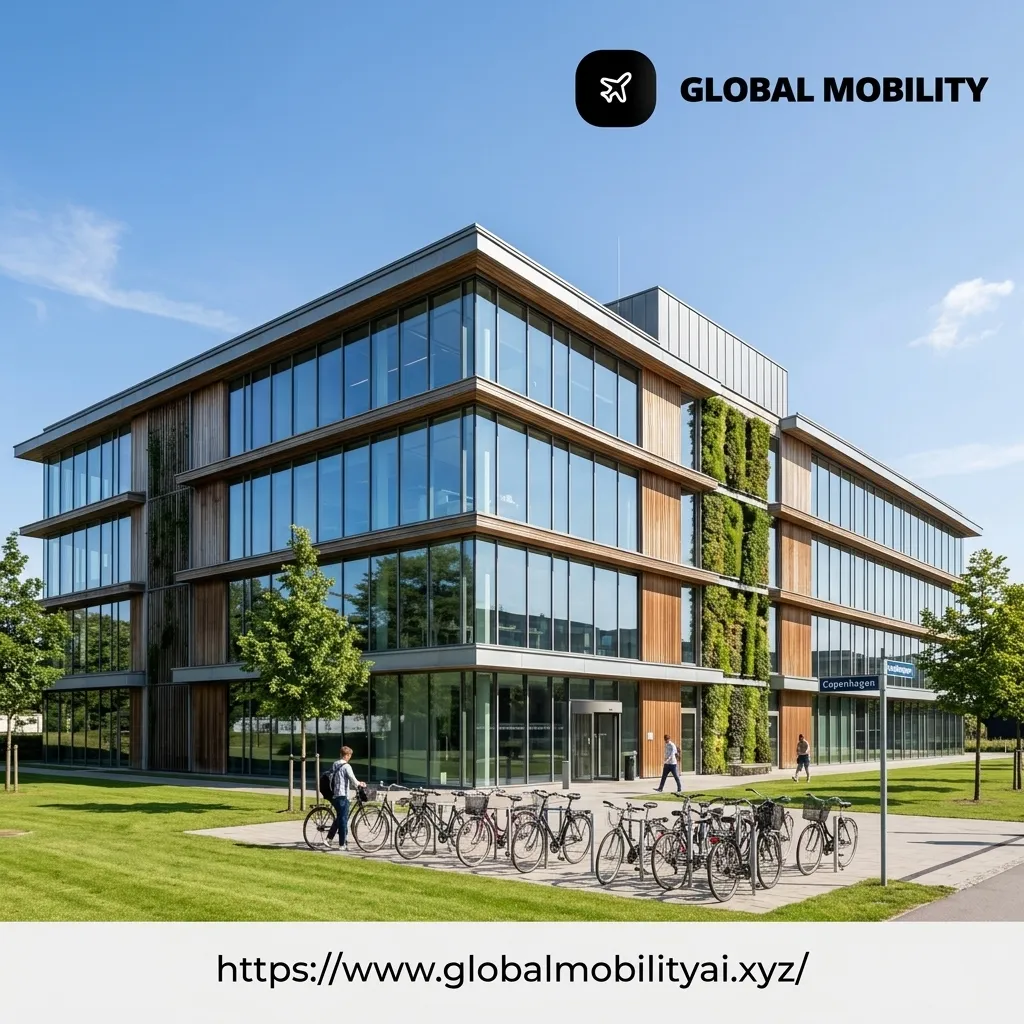
IMG-03: Copenhagen Expat Hub
3.1 Top 5 Cities for Expats: Rankings & Analysis
3.2 City Comparison Table
The table below compiles cost of living and expat index metrics across Denmark’s five primary urban centers:
| City | Avg Rent 1BR (Centre) | Total Monthly Cost (Single) | Job Market | Safety Index | Expat Rating |
|---|---|---|---|---|---|
| Copenhagen | DKK 12,500 | DKK 21,500 | Exceptional | Very High | 9.0/10 |
| Aarhus | DKK 8,200 | DKK 16,800 | High | Exceptional | 8.7/10 |
| Odense | DKK 6,500 | DKK 14,200 | Moderate-High | Exceptional | 8.4/10 |
| Aalborg | DKK 5,800 | DKK 13,500 | Moderate | Very High | 8.1/10 |
| Esbjerg | DKK 5,200 | DKK 13,100 | Specialized | High | 7.9/10 |
(Source: Numbeo Cost of Living Index Denmark, 2026) [https://www.numbeo.com/cost-of-living/country_result.jsp?country=Denmark]
4. Cost of Living — Complete 2026 Breakdown
Living in Denmark requires a clear budgeting strategy due to high consumption taxes (25% VAT) and progressive income tax brackets.
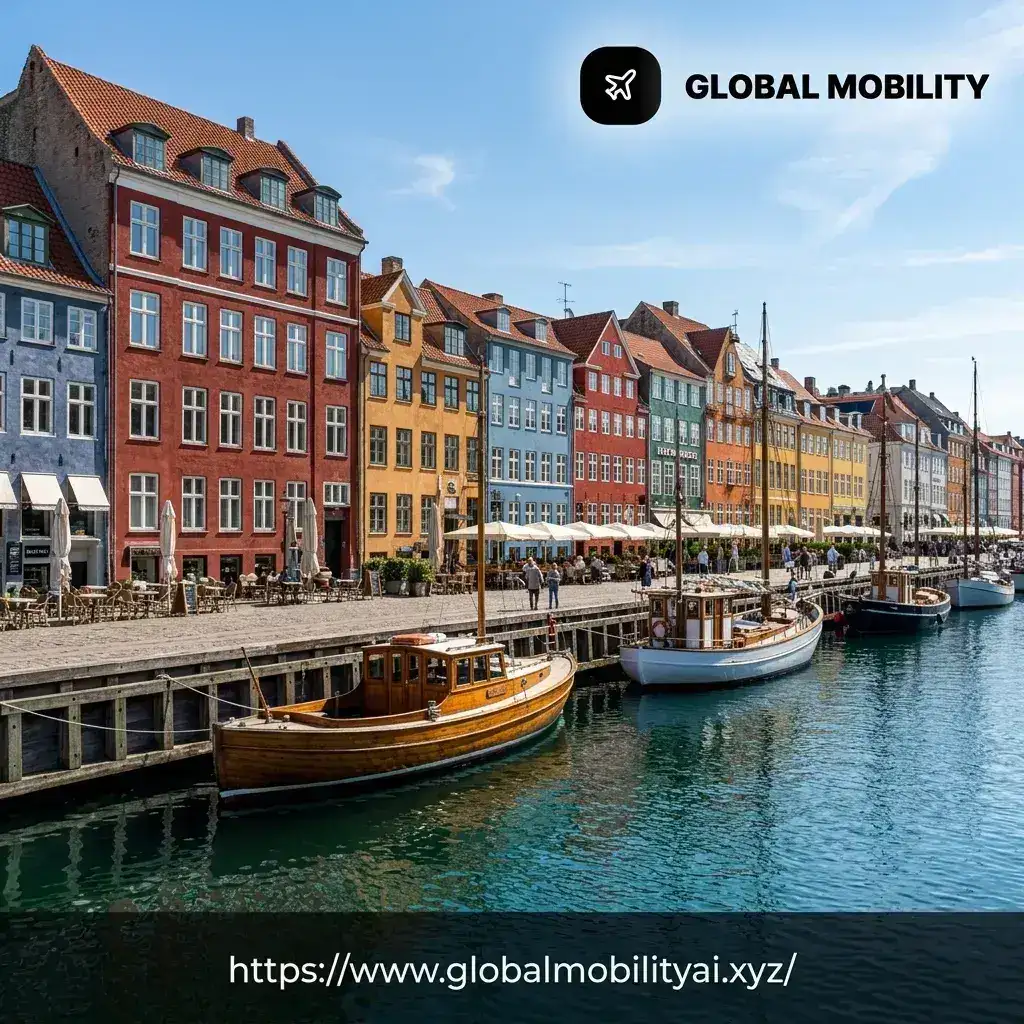
IMG-04: Copenhagen Real Estate Market
4.1 Monthly Budget Calculator Breakdown
Itemized average monthly expenses for an expat professional in Copenhagen (DKK / USD equivalent):
(Source: Numbeo Cost of Living Survey, 2026) [https://www.numbeo.com/cost-of-living/in/Copenhagen]
4.2 Cost of Living vs. Salary: What You'll Actually Save
We model three net savings scenarios for expat professionals under standard Danish taxation (assuming Class 1 single tax status with an average 38% effective tax rate):
To model custom saving scenarios based on your specific family size and proposed salary contract, utilize the GlobalMobilityAI Cost of Living Calculator. Salary data is sourced from Statistics Denmark (Source: Danmarks Statistik, 2024) [https://www.dst.dk/en].
4.3 Cost of Living Index vs. Home Countries
The cost of living in Denmark is high compared to major expat sender nations. The table below represents relative costs indexed against Copenhagen (Base 100):
| Category | Denmark (Copenhagen) | Pakistan (Lahore) | India (Bangalore) | UK (London) |
|---|---|---|---|---|
| Groceries | 100 (Base) | 22 | 26 | 78 |
| Rent Index | 100 (Base) | 9 | 14 | 115 |
| Restaurant | 100 (Base) | 18 | 21 | 82 |
(Source: Numbeo Country Comparison Index, 2026) [https://www.numbeo.com/cost-of-living/compare_countries.jsp]
5. Salary Data & Job Market Intelligence
Securing a job in Denmark requires understanding local salary benchmarks and in-demand skills sectors.
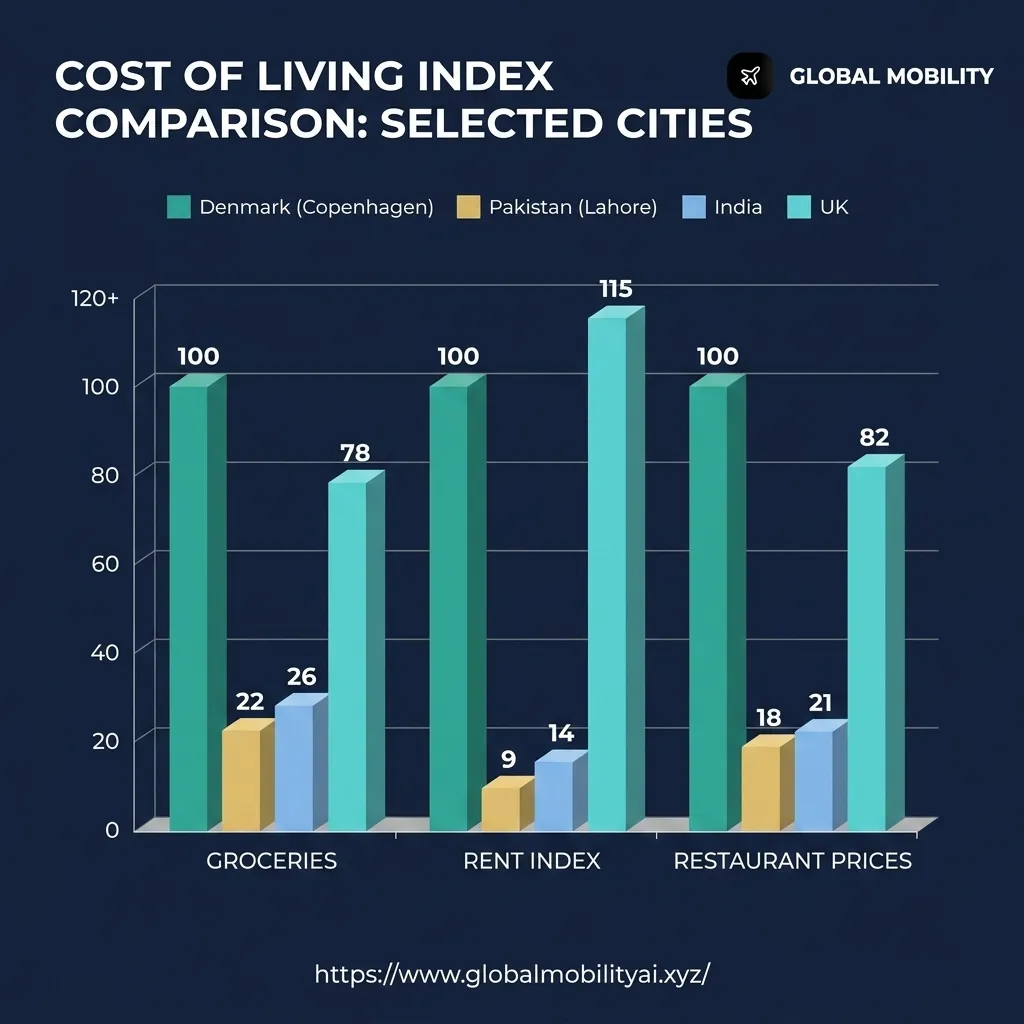
CHART-1: Denmark Cost of Living Comparison
5.1 Average Salaries by Industry (2026 Data)
The following table provides average monthly gross salaries in Denmark across key sectors:
| Industry | Entry Level | Mid-Level | Senior | Currency |
|---|---|---|---|---|
| Software Engineering | DKK 42,000 | DKK 58,000 | DKK 78,000 | DKK |
| Biotechnology & Pharma | DKK 45,000 | DKK 62,000 | DKK 85,000 | DKK |
| Mechanical Engineering | DKK 39,000 | DKK 54,000 | DKK 72,000 | DKK |
| Financial Analysis | DKK 41,000 | DKK 57,000 | DKK 75,000 | DKK |
| Nursing & Healthcare | DKK 32,000 | DKK 42,000 | DKK 52,000 | DKK |
(Source: Statistics Denmark Salary Statistics, 2026) [https://www.dst.dk/en/Statistik/emner/arbejde-indkomst-og-formue/loen-og-arbejdsomkostninger]
5.2 In-Demand Skills & Sectors in 2026
The Danish Labor Market Council (AMBeskæftigelse) publishes the official "Work Market Balance" twice a year, detailing acute labor shortages. For 2026, the primary demand focuses on:
5.3 How to Use GlobalMobilityAI Salary Comparison Tool
Before signing a contract, you must ensure that your salary proposal corresponds to Danish standards to prevent SIRI from rejecting your work permit. The GlobalMobilityAI Salary Comparison Tool allows you to compare your job offer against verified Danish salary statistics by role, region, and experience level. This guarantees that your contract is compliant with local labor benchmarks before submission.
6. CV Formatting — Denmark-Style Resume Guide
The Danish job market places high value on transparency, flat structures, and personal fit. Your CV must reflect these cultural parameters.
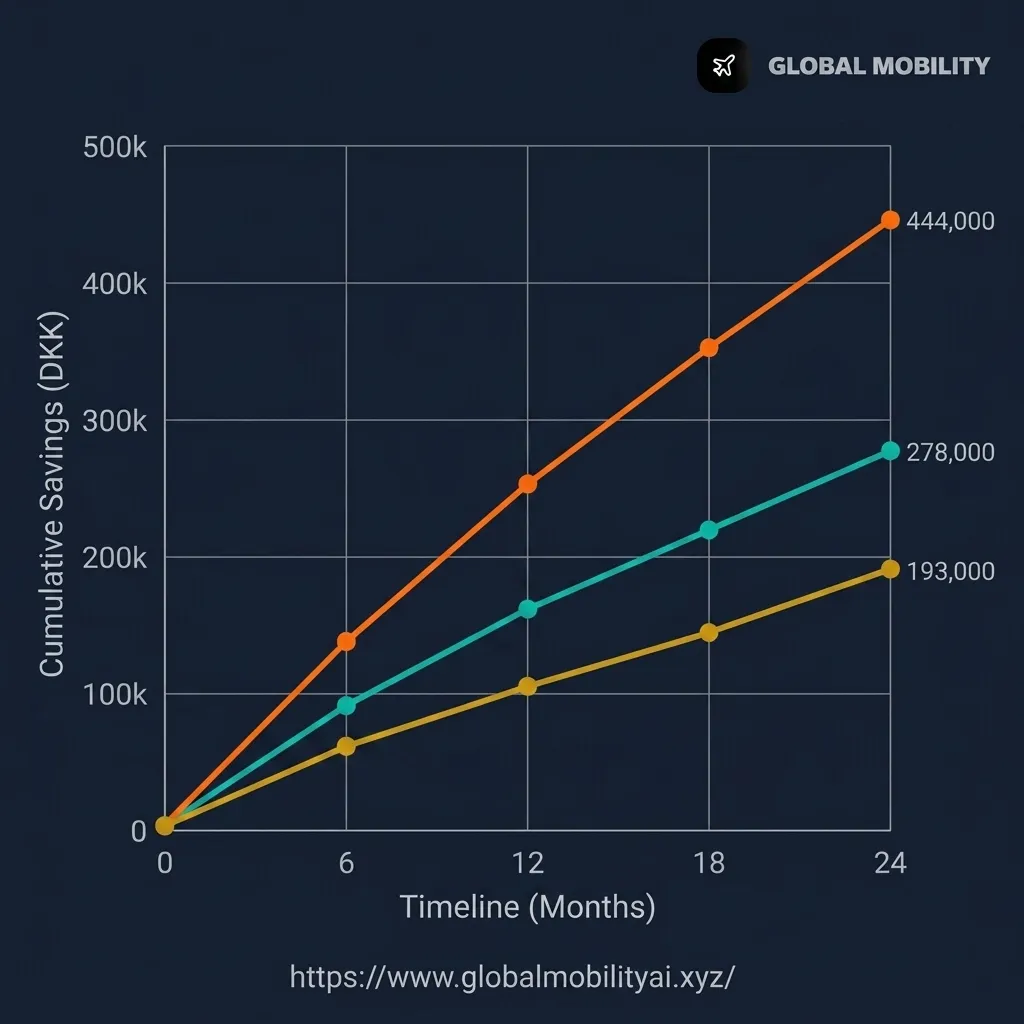
CHART-2: Salary vs Savings Potential Denmark
6.1 Denmark CV Format Requirements
6.2 Common CV Mistakes That Get Applications Rejected
6.3 ATS Optimization for Denmark Job Portals
The dominant job portals in Denmark are Jobindex.dk, Workindenmark.dk, and LinkedIn. Danish ATS systems parse PDF documents for localized industry keywords. To optimize your parse rate, match the keywords in your CV exactly to those listed in the Danish job description. Avoid tables, text boxes, and complex graphics, as these elements cause parsing errors in Jobindex's proprietary database systems.
7. Interview Tips for the Denmark Job Market
Danish interviews are conversational dialogues focused equally on technical competence and team chemistry.
IMG-05: Documentation Preparation
7.1 Cultural Interview Norms & Expectations
Danish corporate culture is characterized by low hierarchy and high autonomy. Interviewers will treat you as an equal colleague from the start. Expect direct, open questions about your working style, how you handle conflict, and your ability to work independently. Overselling yourself or "bragging" is counterproductive due to the cultural influence of the "Law of Jante" (Janteloven), which values modesty and collective success over individual superiority.

Danish Corporate Office with Diverse Professionals Collaborating at Standing Desks
7.2 Common Interview Questions & Answer Frameworks
7.3 Dress Code, Punctuality & Professional Etiquette
Punctuality in Denmark is absolute. Arriving even 2 minutes late without prior notice is considered highly unprofessional. Dress code is "smart casual"—neat, clean, and understated. Avoid overly formal business suits unless interviewing for executive investment banking roles. A collared shirt and dark trousers are standard for men; professional blouses or smart knitwear for women.
7.4 Post-Interview Follow-Up Etiquette
Send a brief, polite email within 24 hours thanking the interviewers for their time. Do not follow up repeatedly; Danish HR processes are structured, and hiring decisions usually take 2 to 4 weeks. If you have not received an update after the specified timeline, a polite phone call to the hiring manager is acceptable and shows proactive interest.
8. Denmark Positive List Visa 2026 Policy Updates & Market Predictions
Immigration laws are adjusted annually by the Danish parliament (Folketinget) to align with economic conditions.

IMG-06: Skilled Assessment Process
8.1 Key Policy Changes Effective 2026
Effective January 1, 2026, SIRI introduced several key administrative and financial adjustments:
8.2 Immigration Trend Predictions (Data-Backed)
OECD migration data indicates a steady 8% year-over-year increase in skilled work permits issued for Northern Europe. Processing times for SIRI work permits are projected to stabilize:
SIRI is expanding its digital biometrics scanning app, allowing applicants to verify their identity via smartphone, reducing consulate queues.
8.3 How These Changes Affect Your Application in 2026
With the 2026 thresholds active, ensure your employment contract lists your base salary, holiday pay, and pension contributions separately and clearly to avoid processing delays. To evaluate whether your target role aligns with Denmark positive list visa 2026 active thresholds, use the GlobalMobilityAI Immigration Probability Score to calculate your visa approval probability.
9. Tactical Comparison Matrix
The matrix below compares Denmark's primary work permit and residency pathways:

Danish Krone Coins and Notes next to Danish Work Permit Documents
| Visa Track | Minimum Salary | Education Req. | Processing Time | Employer Req. | Est. Approval Rate* | Gov. Application Fee |
|---|---|---|---|---|---|---|
| **Positive List (Higher Ed)** | Danish Standards | Bachelor's Min. | 1-2 Months | Standard CVR | Platform Est.* | DKK 4,615 |
| **Positive List (Skilled)** | Danish Standards | Vocational | 1-2 Months | Standard CVR | Platform Est.* | DKK 4,615 |
| **Fast-Track (Pay Limit)** | DKK 552,000 / yr | None | 10 Days | SIRI Certified | Platform Est.* | DKK 4,615 |
| **Standard Pay Limit** | DKK 552,000 / yr | None | 1 Month | Standard CVR | Platform Est.* | DKK 4,615 |
| **Supplementary Pay Limit** | DKK 446,000 / yr | None | 1 Month | Standard CVR | Platform Est.* | DKK 4,615 |
| **Fast-Track (Researcher)** | Danish Standards | Master's/PhD | 14 Days | SIRI Certified | Platform Est.* | DKK 4,615 |
\Internal platform estimate based on historical database inputs. Official visa approval statistics are not published by SIRI. Monitor updates via: Ny i Danmark Work Visas.*
10. Execution Roadmap: Phase-by-Phase
Securing your Danish residency under the Positive List scheme requires a structured step-by-step process.
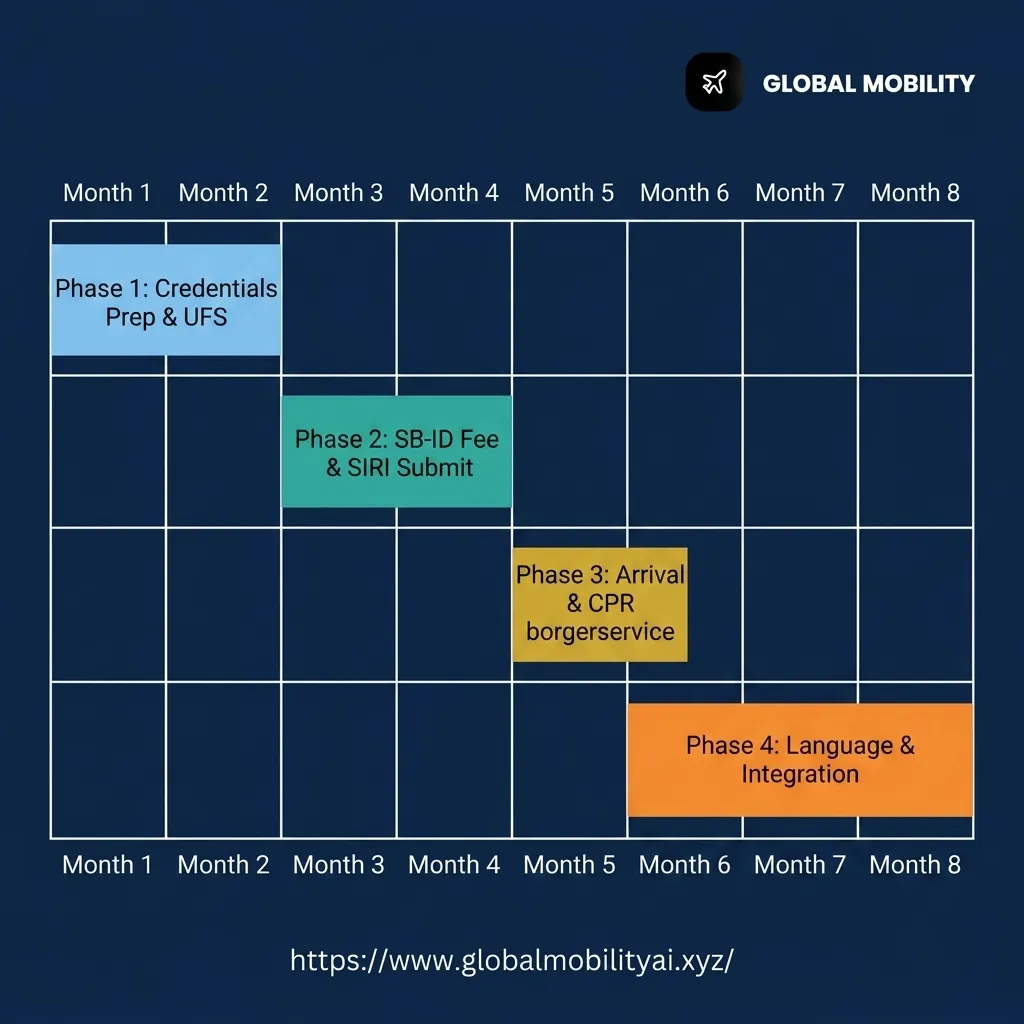
CHART-3: Denmark Visa Processing Timeline
Phase 1 — Preparation (Months 1–2):
Determine whether your job is listed under the Denmark positive list visa 2026 guidelines, evaluate your academic credentials, and initiate the degree evaluation process.
Phase 2 — Application Submission (Months 3–4):
Create a case order ID and submit the online application through SIRI.
Phase 3 — Arrival & Administration (Month 5):
Register with the Danish Civil Registration System upon arrival.
Phase 4 — Settlement & Permanent Residency (Years 1–8):
Maintain compliance with your visa conditions and transition to permanent residency.
11. Critical Risk Factors & Common Pitfalls
Securing a Danish work permit involves avoiding major regulatory traps that lead to immediate rejection or deportations:
12. FAQ — People Also Ask
Q: What are the eligibility requirements for the Denmark positive list visa 2026?
The primary eligibility requirement is securing a concrete job offer from a Danish employer for a position that appears on the active Positive List for Higher Education or Skilled Work. Additionally, your salary and employment conditions must meet Danish standard terms (collective agreements). For the Higher Education track, your degree must align with the role and be officially recognized by the Danish Agency for Higher Education and Science. Regulated professions like doctors or teachers must secure Danish authorization prior to submission.
Q: What is the minimum salary for the Denmark Positive List visa in 2026?
Unlike the Pay Limit Scheme, which requires a strict minimum salary of DKK 552,000 in 2026, the Positive List visa does not have a set minimum threshold. Instead, your salary must correspond to Danish standards. SIRI assesses your contract against current collective bargaining agreements and wage statistics compiled by Statistics Denmark. If your offered wage falls below the median rate for similar roles in the region, the permit will be denied.
Q: Can I bring my family to Denmark on a Positive List visa?
Yes, successful applicants under the Positive List scheme are entitled to bring their spouse, registered partner, or cohabiting partner, as well as dependent children under the age of 18. Your family members can apply for accompanying permits concurrently with your work visa. To calculate the monthly cost impact of dependents on your household budget, use the GlobalMobilityAI Cost of Living Calculator to model your expenses in Copenhagen vs Aarhus. Accompanying spouses are granted full rights to work in Denmark.
Q: Can I apply for the Denmark positive list visa 2026 without a job offer?
No, you cannot apply for the Positive List work permit without a signed employment contract from a registered Danish employer. The scheme is entirely demand-driven, requiring the employer to initiate the SB-ID process. If you want to search for jobs locally in Denmark, you must explore other pathways like the Germany Opportunity Card or rely on a tourist visa to conduct job interviews, though you cannot work during this period.
Q: How long does it take to get Denmark permanent residency?
The standard timeline to qualify for a permanent residence permit in Denmark is 8 years of uninterrupted legal residency. However, you can fast-track this timeline to 4 years if you meet all basic requirements and satisfy all four supplementary integration criteria: passing Danish Language Test 3, maintaining full-time employment for 4 years, meeting the annual taxable income threshold, and passing the active citizenship exam.
Q: What is the Denmark supplementary pay limit threshold 2026?
The Supplementary Pay Limit Scheme is an alternative work permit track for roles not on the Positive List but offering salaries below the standard Pay Limit Scheme. For applications submitted in 2026, the minimum salary threshold is set at DKK 446,000 per year. To determine your eligibility and model your immigration probability, run your profile through the GlobalMobilityAI Immigration Probability Score tool.
Q: Is Danish language proficiency required for the Positive List visa?
No, SIRI does not require proof of Danish language proficiency for the initial work permit application under the Positive List scheme. Most international companies use English as their primary corporate language. However, learning Danish is highly critical for social integration and is a mandatory requirement if you plan to apply for permanent residency or citizenship later.
Q: What is the processing time for the Denmark Fast-track scheme?
For Danish employers certified under the Fast-Track scheme, processing times are exceptionally quick. The Pay Limit and Supplementary Pay Limit tracks are typically processed in under 10 days for online submissions. The Researcher track is processed within 14 days, allowing foreign professionals to relocate and begin working almost immediately while administrative registrations are finalized.
13. Conclusion: The Bottom Line
In summary, the Denmark positive list visa 2026 represents a highly structured, reliable, and swift pathway for international professionals to transition into the Nordic labor market. While high personal income tax rates and Copenhagen rent costs demand careful budgeting, the structural trade-off is offset by unparalleled work-life balance, subsidized public services, and family security.
If you are an IT specialist or senior engineer planning a move in 2026, early document preparation is key. Ensure your degree is submitted for evaluation and verify your contract using the GlobalMobilityAI Salary Comparison Tool to guarantee alignment with local collective agreements. Your successful relocation to Denmark depends on careful attention to these regulatory details.

Happy Family Cycling in Copenhagen Park Daytime Denmark
Predict your mobility score.
Use our AI engine to get your personalized visa pathway, salary prediction, and relocation roadmap.
More Insights

Germany Opportunity Card 2026: Points, How to Apply & Fastest Jobs

The Ultimate Golden Visa Masterclass 2026: The Strategic Wealth & Mobility Blueprint