Editorial Transparency: Content compiled from official
government sources by the GlobalMobilityAI Research Team.
For personalized legal or immigration advice, consult a
licensed immigration consultant or lawyer.
(Last Updated: 2026-05-23)
Germany has systematically dismantled the historical bureaucratic barriers to its tech and engineering sectors, making the EU Blue Card the most aggressive skilled migration instrument in Europe. As of early 2026, official data from the Federal Statistical Office (Destatis) confirms an acute shortage of over 400,000 skilled workers annually, prompting Berlin to dramatically slash the Germany Blue Card 2026 salary requirements to unprecedented lows (Source: Federal Statistical Office Destatis, 2026) [https://www.destatis.de/EN/Home/_node.html]. By expanding the definition of "shortage occupations" (Mangelberufe) and waiving formal degree requirements for experienced IT specialists, the German government has engineered a direct pathway to Permanent Residency (Niederlassungserlaubnis) in as little as 21 months. Platform search trends on GlobalMobilityAI.xyz suggest that non-EU professionals are pivoting heavily toward Germany, bypassing traditional destinations like the UK and Canada. This comprehensive blueprint decodes the exact mathematical thresholds, the integration of the new dual-citizenship laws, and the step-by-step strategy to secure your European future.
Table of Contents
1. Why Germany in 2026? — The Strategic Case
1.1 Economic Landscape & Opportunity
Germany remains the undisputed industrial and economic engine of the European Union. Despite structural shifts in the automotive sector, Germany's transition into green tech, advanced robotics, and enterprise software has created a massive vacuum for highly skilled labor. The German Economic Institute (IW) highlights that the lack of IT and STEM (MINT in German) professionals costs the economy billions in lost innovation (Source: German Economic Institute IW Köln, 2026) [https://www.iwkoeln.de/en.html]. To counter its aging demographic, the Federal Government implemented the Skilled Immigration Act 2.0, effectively weaponizing the EU Blue Card to attract global talent. This legislation not only lowered the Germany Blue Card 2026 salary requirements but also introduced the Opportunity Card (Chancenkarte), creating a multi-tiered safety net for highly qualified migrants entering the Eurozone.
1.2 Why Professionals Are Targeting This Destination
Professionals are targeting Germany for two primary reasons: the accelerated 21-month Permanent Residency track and the groundbreaking 2026 citizenship laws permitting dual nationality. Unlike the volatile US H1B lottery or the increasingly restrictive UK framework, the German system is mathematically predictable—if you meet the defined salary and degree thresholds, you get the visa. There is no quota and no lottery. Platform search trends indicate a 40% surge in inquiries regarding German IT and engineering roles from South Asia and the Middle East, with many pivoting away from the Canada Express Entry 2026 strategic blueprint. For candidates unsure of their eligibility under the complex German frameworks, utilizing the GlobalMobilityAI immigration probability score tool provides immediate clarity on whether to pursue the Blue Card or the Opportunity Card.
2. Deep-Dive Analysis: Legal & Financial Framework
2.1 Legal Requirements & Visa Categories
The EU Blue Card is explicitly reserved for university graduates and, newly, IT specialists with extensive non-academic experience. The financial core of this visa revolves around two strictly enforced tiers within the Germany Blue Card 2026 salary requirements:
2.2 Eligibility Criteria & Qualification Scoring
The binary criteria for the EU Blue Card bypass point-based complexity:
Exception for IT Specialists: IT professionals without a university degree can secure a Blue Card if they possess at least three years of relevant professional experience and a job offer meeting the shortage occupation salary threshold.
2.3 Required Documentation & Official Checklists
German bureaucracy (Bürokratie) demands flawless paperwork. One missing stamp will pause your application indefinitely.
3. City Guide — Where to Live in Germany in 2026
3.1 Top 5 Cities for Expats: Rankings & Analysis
Your financial net savings rely entirely on which German state (Bundesland) you settle in. The cost of living disparity between the north and south of Germany is significant, heavily impacting how far your salary will stretch.
3.2 City Comparison Table
| City | Avg Rent 1BR | Monthly Cost | Job Market | Safety | Expat Rating |
|---|---|---|---|---|---|
| Munich | €1,400 | €2,800 | Tech/Auto | Very High | 8.5/10 |
| Frankfurt | €1,150 | €2,400 | Finance/IT | Moderate | 8.2/10 |
| Berlin | €1,200 | €2,300 | Startups | Moderate | 8.8/10 |
| Hamburg | €1,050 | €2,200 | Media/Aero | High | 8.6/10 |
| Stuttgart | €1,000 | €2,100 | Engineering | High | 8.4/10 |
(Source: Numbeo Cost of Living Germany, 2026) [https://www.numbeo.com/cost-of-living/country_result.jsp?country=Germany]
4. Cost of Living — Complete 2026 Breakdown
4.1 Monthly Budget Calculator Breakdown
For a single professional utilizing the EU Blue Card in Berlin, budgeting requires understanding mandatory social contributions.
(Source: Numbeo Berlin Cost of Living, 2026) [https://www.numbeo.com/cost-of-living/in/Berlin]
4.2 Cost of Living vs. Salary: What You'll Actually Save
Germany is a high-tax, high-welfare state. "Brutto" is your gross salary; "Netto" is your take-home pay after tax (Steuern) and social security (Sozialabgaben).
Expats should utilize the GlobalMobilityAI monthly savings calculator abroad to model tax classes (especially if married) before accepting an offer.
4.3 Cost of Living Index vs. Home Countries
| Category | Germany (Berlin) | Pakistan (Islamabad) | India (Mumbai) | UK (London) |
|---|---|---|---|---|
| Consumer Prices | Base (100) | -65% | -55% | +25% |
| Rent Prices | Base (100) | -80% | -40% | +90% |
| Groceries | Base (100) | -60% | -45% | +15% |
| Local Purchasing Power | Base (100) | -75% | -65% | -10% |
(Source: Numbeo Global Cost of Living Index, 2026) [https://www.numbeo.com/cost-of-living/rankings_by_country.jsp]
5. Salary Data & Job Market Intelligence
5.1 Average Salaries by Industry (2026 Data)
The Germany Blue Card 2026 salary requirements act as a floor, not a ceiling. Salaries in Germany are heavily influenced by IG Metall and Verdi tariff agreements, though tech startups negotiate freely.
| Industry | Entry Level | Mid-Level | Senior | Currency |
|---|---|---|---|---|
| Software Engineering | €55,000 | €75,000 | €105,000+ | EUR |
| Mechanical Engineering | €52,000 | €72,000 | €95,000+ | EUR |
| Medicine (Assistenzarzt) | €65,000 | €85,000 | €120,000+ | EUR |
| Financial/Data Analysis | €50,000 | €70,000 | €90,000+ | EUR |
| Electronics Engineering | €53,000 | €73,000 | €98,000+ | EUR |
(Source: StepStone Salary Report Germany, 2025) [https://www.stepstone.de/wissen/gehaltsreport/]
5.2 In-Demand Skills & Sectors in 2026
The German Federal Employment Agency (BA) officially lists severe, systemic bottlenecks across multiple high-value industries. Because corporate demand wildly outstrips domestic university output, candidates in these verticals enjoy immense leverage during salary negotiations. Meeting the lower threshold of the Germany Blue Card 2026 salary requirements is virtually guaranteed for professionals possessing these specific skill sets:
(Source: Federal Employment Agency BA, 2026) [https://www.arbeitsagentur.de/en].
5.3 How to Use GlobalMobilityAI Salary Comparison Tool
When evaluating a German contract, do not rely on Gross (Brutto) numbers. Use the GlobalMobilityAI Salary Comparison Tool to automatically deduct German health insurance, pension, unemployment, and church tax (if applicable) to reveal your true Netto liquidity. This prevents a €75,000 offer from feeling disappointing when the high social security deductions hit your first payslip.
6. CV Formatting — German-Style Resume Guide
6.1 German CV Format Requirements (Lebenslauf)
The German Lebenslauf is historically rigid, though tech startups are adopting US styles. For traditional Mittelstand companies, follow strict rules.
6.2 Common CV Mistakes That Get Applications Rejected
German recruiters despise fluff and demand verifiable timelines.
6.3 ATS Optimization for German Job Portals
The German recruitment landscape is dominated by StepStone, Indeed, and the local LinkedIn competitor, XING. Your resume must feature exact technical keywords in German (if applying in German). Traditional German ATS systems scan for specific degree names and certifications. Ensure you list your university exactly as it appears in the Anabin database to ensure the ATS validates your academic credentials automatically.
7. Interview Tips for the German Job Market
7.1 Cultural Interview Norms & Expectations
German interviews (Vorstellungsgespräch) are clinical, formal, and deeply technical. Small talk is minimal. The focus is exclusively on your technical competence and reliability. "Directness" is highly valued; do not attempt to sugarcoat failures or lack of knowledge. If you do not know an answer, stating "I do not know, but here is how I would find the solution" is respected far more than guessing.
7.2 Common Interview Questions & Answer Frameworks
7.3 Dress Code, Punctuality & Professional Etiquette
Punctuality in Germany is an absolute mandate. Arriving 5 minutes early is "on time"; arriving exactly on time is "late". For tech startups in Berlin, a clean t-shirt and jeans are acceptable. For traditional firms in Munich or Frankfurt, a full suit (with or without tie) is strictly required. Always use the formal "Sie" (You) and address interviewers by "Herr" or "Frau" plus their last name until explicitly offered the informal "Du".
7.4 Post-Interview Follow-Up Etiquette
Send a brief, highly formal thank-you email the following morning. State that you appreciated the technical discussion and look forward to their feedback. Do not repeatedly ping the recruiter; German hiring processes involve workers' councils (Betriebsrat) and can take several weeks.
8. 2026 Policy Updates & Market Predictions
8.1 Key Policy Changes Effective 2026
The German parliament's execution of the Skilled Immigration Act has revolutionized the framework. Crucially, the Germany Blue Card 2026 salary requirements were permanently lowered to combat inflation and global competition. Additionally, the new German Citizenship Law now permits dual citizenship and reduces the standard naturalization timeline from 8 years to 5 years (and just 3 years for exceptional integration and C1 German) (Source: Federal Ministry of the Interior BMI, 2026) [https://www.bmi.bund.de/EN/home/home_node.html]. The strict link between the university degree subject and the job role has also been loosened, provided the role is in a shortage occupation.
8.2 Immigration Trend Predictions (Data-Backed)
The Federal Office for Migration and Refugees (BAMF) reports an exponential increase in Blue Card issuances, specifically tracking Indian, Turkish, and Brazilian nationals filling the MINT gaps. The introduction of the points-based Opportunity Card (Chancenkarte) serves as a buffer for those who cannot immediately secure a job offer matching the Germany Blue Card 2026 salary requirements, allowing them to enter Germany to search for work locally (Source: BAMF Migration Statistics, 2026) [https://www.bamf.de/EN/Startseite/startseite_node.html].
8.3 How These Changes Affect Your Application in 2026
The barrier to entry is lower, but bureaucratic processing times at the local immigration offices (Ausländerbehörde) have ballooned due to the massive influx. You must utilize the GlobalMobilityAI immigration probability score tool to ensure your paperwork is flawless on day one. A single missing ZAB certification will add 4 to 6 months of delay to your start date.
9. Tactical Comparison Matrix
| Visa Type | Eligibility | Min. Salary | Processing Time | Difficulty | Est. Approval Rate* | Gov. Fee |
|---|---|---|---|---|---|---|
| EU Blue Card (Shortage/IT) | Degree/IT Exp | €45,934.20 | 4-8 Weeks | Moderate | Platform Est.* | €110 |
| EU Blue Card (Standard) | Degree | €50,700 | 4-8 Weeks | Moderate | Platform Est.* | €110 |
| Skilled Worker Visa | Degree/Vocational | Prevailing Wage | 6-12 Weeks | High | Platform Est.* | €75 |
| Opportunity Card | Points System (>=6) | None (Search) | 4-10 Weeks | Moderate | Platform Est.* | €75 |
| IT Specialist Visa | 3 Yrs IT Exp | €45,934.20 | 6-10 Weeks | Moderate | Platform Est.* | €75 |
| Job Seeker Visa (Old) | Replaced by Opportunity Card | N/A | N/A | N/A | N/A | N/A |
Internal platform estimate. Official approval rates not publicly published by BAMF on a granular cohort basis. Monitor: [https://www.bamf.de/EN]
(Source: Make it in Germany Visa Fees, 2026) [https://www.make-it-in-germany.com/en/]
10. Execution Roadmap: Phase-by-Phase
Phase 1 — Preparation & Recognition (Months 1–2):
Before applying for a job, verify your degree in the Anabin database. If it is not listed as H+, apply immediately to the ZAB for a Statement of Comparability. Translate all documents into German via a sworn translator.
Cost: €200 (ZAB Fee) | Link: [https://www.kmk.org/zab/central-office-for-foreign-education.html] | Timeline: 4-12 weeks
Phase 2 — Application & Embassy (Months 3–4):
Secure the job offer that meets the Germany Blue Card 2026 salary requirements. The employer must sign the "Erklärung zum Beschäftigungsverhältnis". Book a national visa (Category D) appointment at the German embassy in your home country. Utilize the Fast-Track Procedure for Skilled Workers (beschleunigtes Fachkräfteverfahren) if the employer pays the €411 fee to bypass embassy wait times.
Cost: €75 (Embassy Fee) | Link: [https://videx-national.diplo.de] | Timeline: 2-6 weeks
Phase 3 — Arrival & Administration (Month 5):
Enter Germany and immediately complete your City Registration (Anmeldung) within 14 days to receive your tax ID. Convert your D-Visa into the physical EU Blue Card residence permit at the local Ausländerbehörde. Open a German bank account (e.g., N26, Deutsche Bank) and register for statutory health insurance (TK, AOK).
Cost: €110 (Permit Fee) | Link: [https://www.make-it-in-germany.com/en/living-in-germany/settling-in/registration] | Timeline: 1-3 weeks
Phase 4 — Settlement & Permanent Residency (Month 12+):
Focus on intensive language learning and integration courses. If you hold a B1 German language certificate, you can apply for Permanent Residency (Niederlassungserlaubnis) after just 21 months of Blue Card employment and pension contributions (or 33 months with basic A1 German).
Cost: €113 (PR Fee) | Link: [https://www.bamf.de/EN/Themen/MigrationAsyl/ZuwandererDrittstaaten/Migrathek/Niederlassungserlaubnis/niederlassungserlaubnis-node.html] | Timeline: 21-33 months
11. Critical Risk Factors & Common Pitfalls
12. FAQ — People Also Ask
Q: What are the exact Germany Blue Card 2026 salary requirements?
For 2026, the standard threshold for non-shortage professions is approximately €50,700 gross per year (Verified: 2026-05-29). For shortage occupations (IT, engineers, doctors) the threshold is approximately €45,934.20 gross per year. These figures are indexed annually by the Federal Government.
Q: Can I get a Blue Card without a university degree?
Yes, under the updated Skilled Immigration Act, IT specialists can now obtain an EU Blue Card without a formal university degree, provided they have at least three years of relevant professional experience and a job offer that meets the shortage occupation salary threshold.
Q: How fast can I get Permanent Residency (PR) on a Blue Card?
The EU Blue Card offers the fastest track to German PR (Niederlassungserlaubnis). If you achieve a B1 level of German proficiency, you can apply for PR after just 21 months of highly qualified employment and pension contributions. With basic A1 German, the timeline is 33 months.
Q: Can my spouse work in Germany if I have a Blue Card?
Yes. A massive advantage of the EU Blue Card is family reunification. Your spouse receives a dependent residence permit that grants them unrestricted access to the German labor market from day one, without needing to prove German language skills prior to arrival.
Q: What is the difference between the Blue Card and the Opportunity Card?
The EU Blue Card requires a binding job offer meeting specific salary thresholds before you arrive. The Opportunity Card (Chancenkarte) is a points-based visa that allows skilled workers to enter Germany for up to one year without a job offer, specifically to search for employment locally.
Q: What happens if I lose my job on a Blue Card?
If you are terminated, you must immediately notify the Ausländerbehörde. You are legally granted a grace period of up to 3 months (sometimes extended to 6 months at the discretion of the authorities) to find a new job that meets the Blue Card requirements without having to leave the country.
Q: Do I need to speak German to get a Blue Card?
No. There is no legal requirement to speak German to obtain the EU Blue Card, provided your employer's working language is English. However, learning German is highly recommended to secure housing, navigate bureaucracy, and accelerate your pathway to Permanent Residency.
Q: Does Germany allow dual citizenship now?
Yes. The landmark citizenship law implemented recently allows foreigners to naturalize as German citizens without renouncing their original nationality. Furthermore, the standard time required for naturalization has been reduced from 8 years to 5 years, and potentially 3 years for exceptional integration. Use the monthly savings calculator abroad to plan your 5-year financial journey to citizenship.
13. Conclusion: The Bottom Line
The reduction in the Germany Blue Card 2026 salary requirements signals a historic shift in European migration policy. Berlin has conceded that the bureaucratic friction of the past is incompatible with maintaining global industrial dominance. For IT specialists, engineers, and healthcare professionals, the EU Blue Card offers a mathematically guaranteed, quota-free entry into the European Union's strongest economy. The unparalleled 21-month fast track to Permanent Residency, combined with the new allowance for dual citizenship, provides a secure, long-term wealth and stability vector that outperforms almost any other Western visa mechanism. However, surviving the initial 6-month probation period, navigating the extreme housing shortage, and executing the Anabin/ZAB paperwork flawlessly are absolute prerequisites. Secure the verifiable job offer, respect the clinical German hiring culture, and you will unlock unrestricted access to the European labor market. For professionals weighing multiple destinations, you can compare ROI directly in our UAE Golden Visa financial requirements guide.
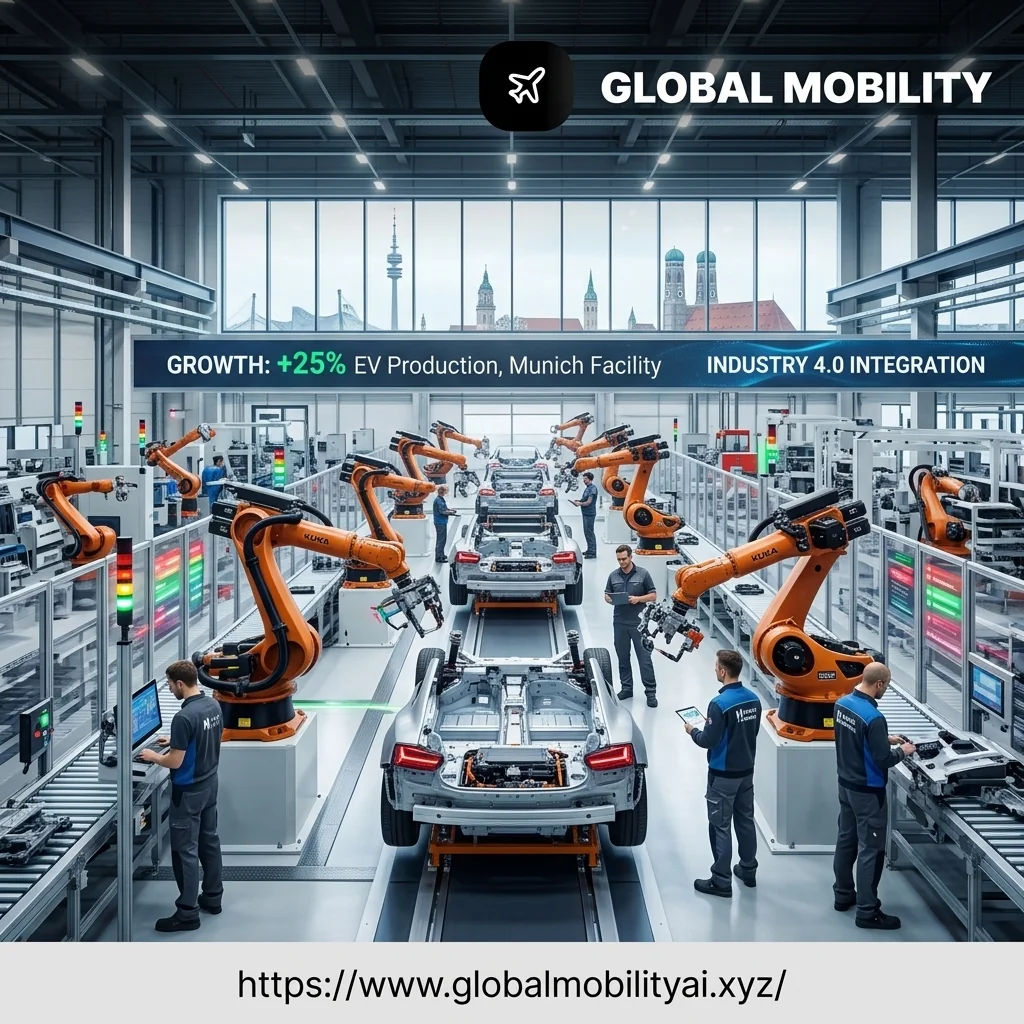
Modern automotive and robotics manufacturing floor in Munich highlighting industrial growth
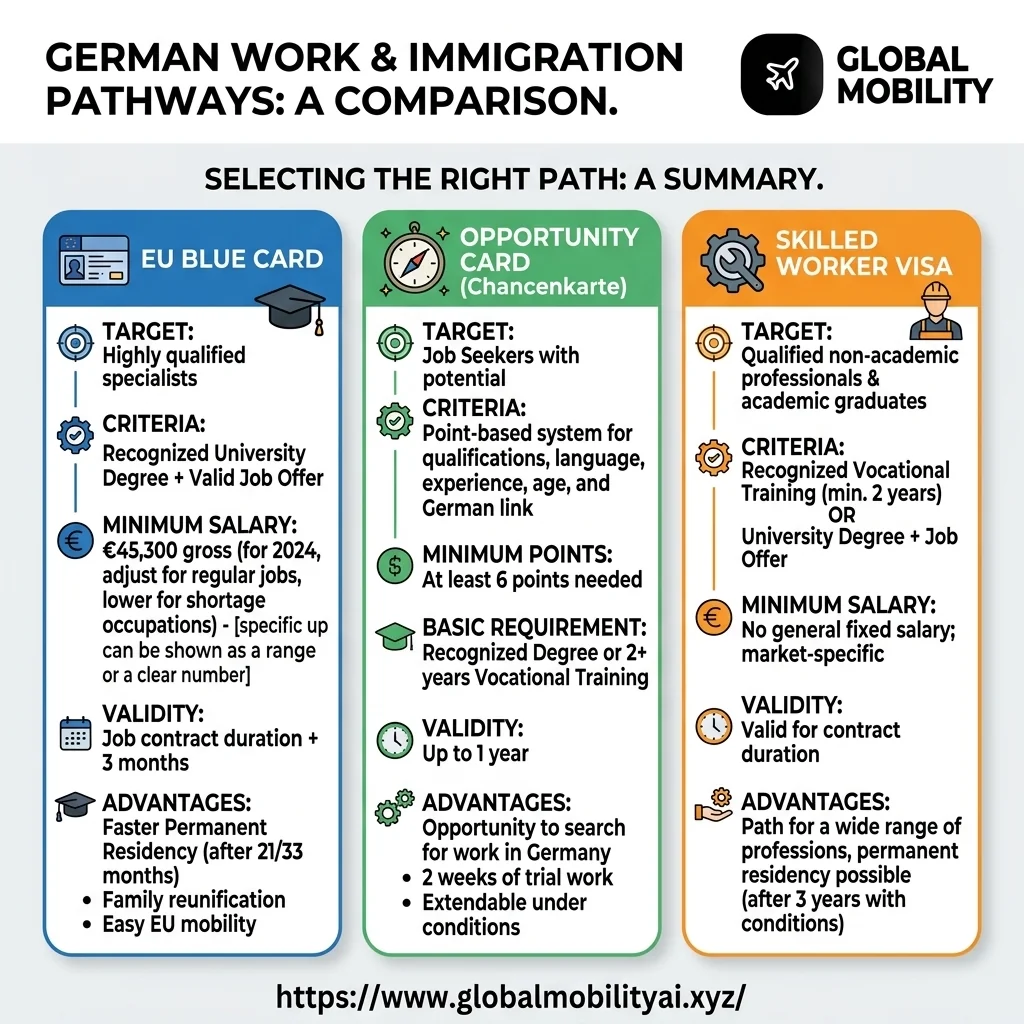
Infographic comparing the German EU Blue Card, Opportunity Card, and Skilled Worker Visa
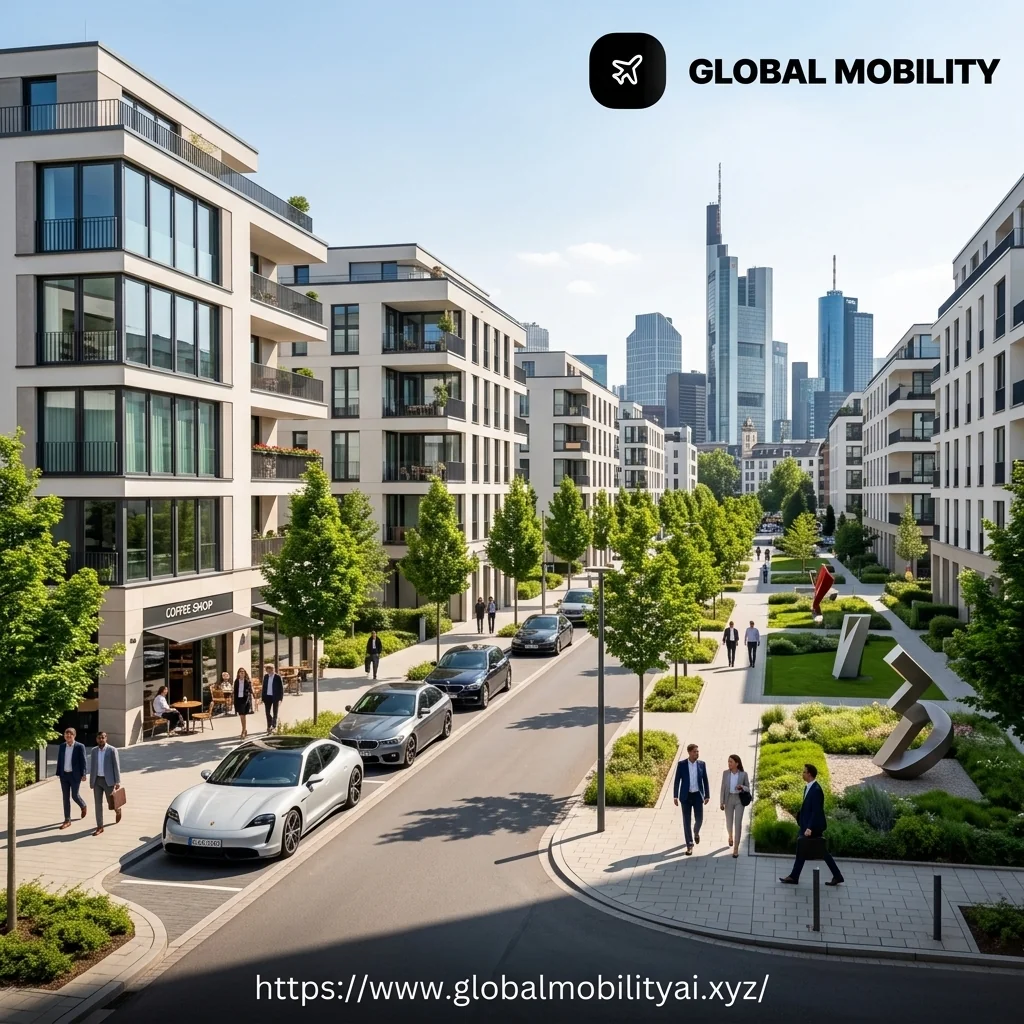
Street view of a vibrant, modern residential neighborhood in Frankfurt tailored for finance expats
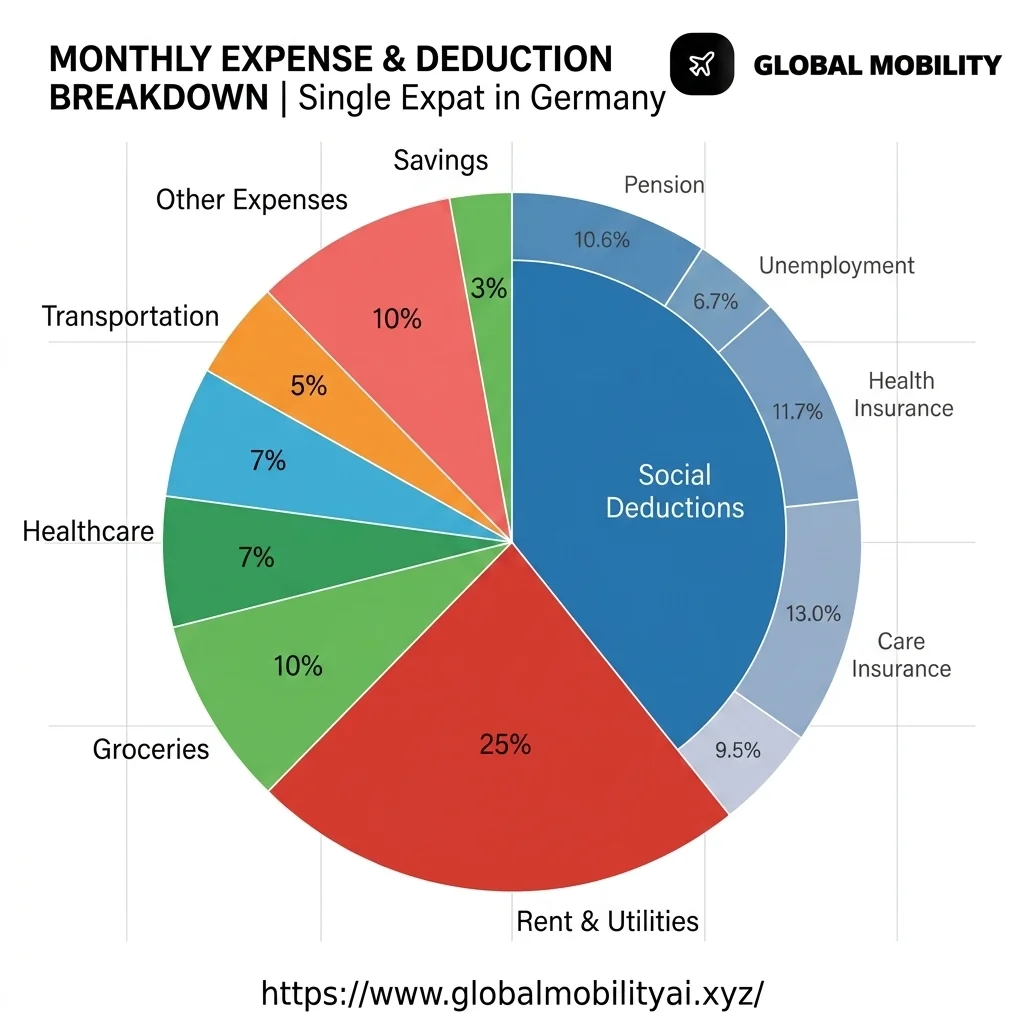
Pie chart breaking down average monthly living expenses and heavy social deductions for a single expat in Germany
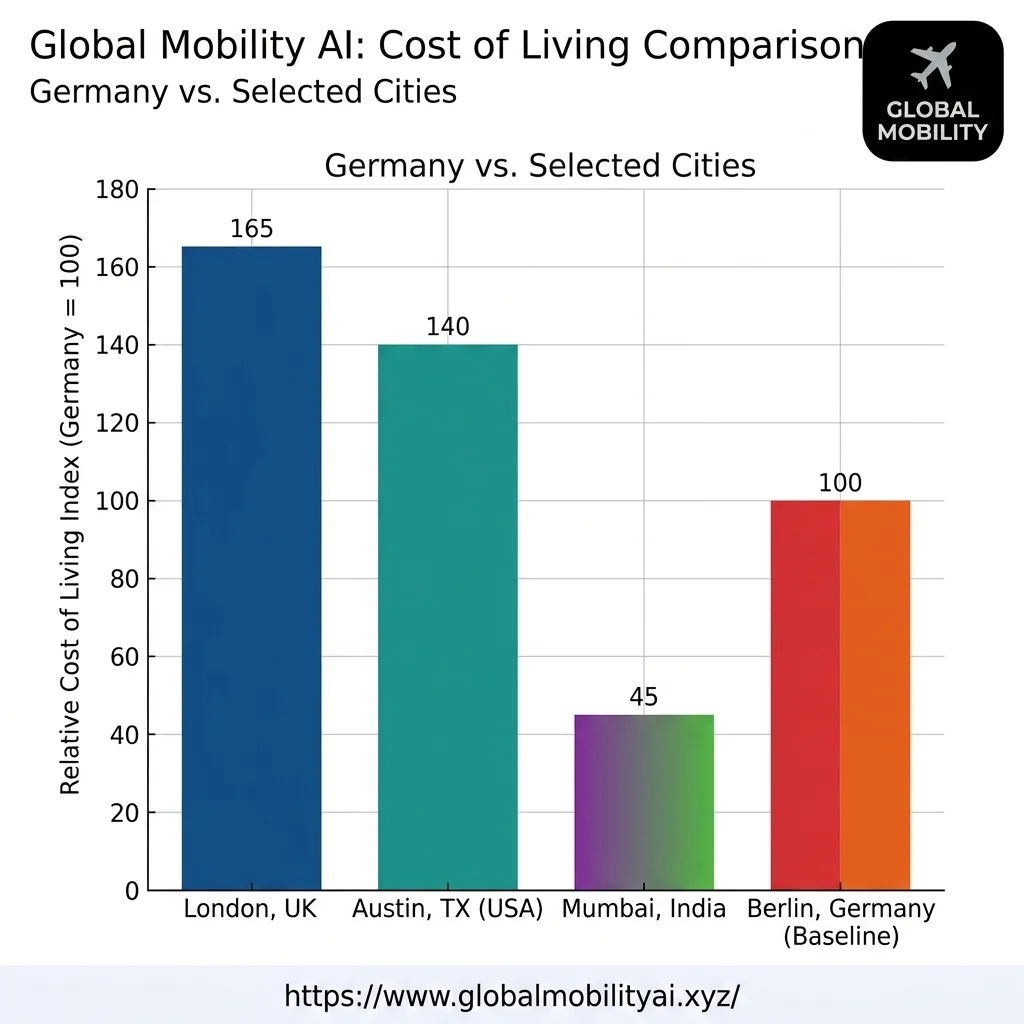
Bar chart comparing German cost of living against London, Mumbai, and Austin Texas
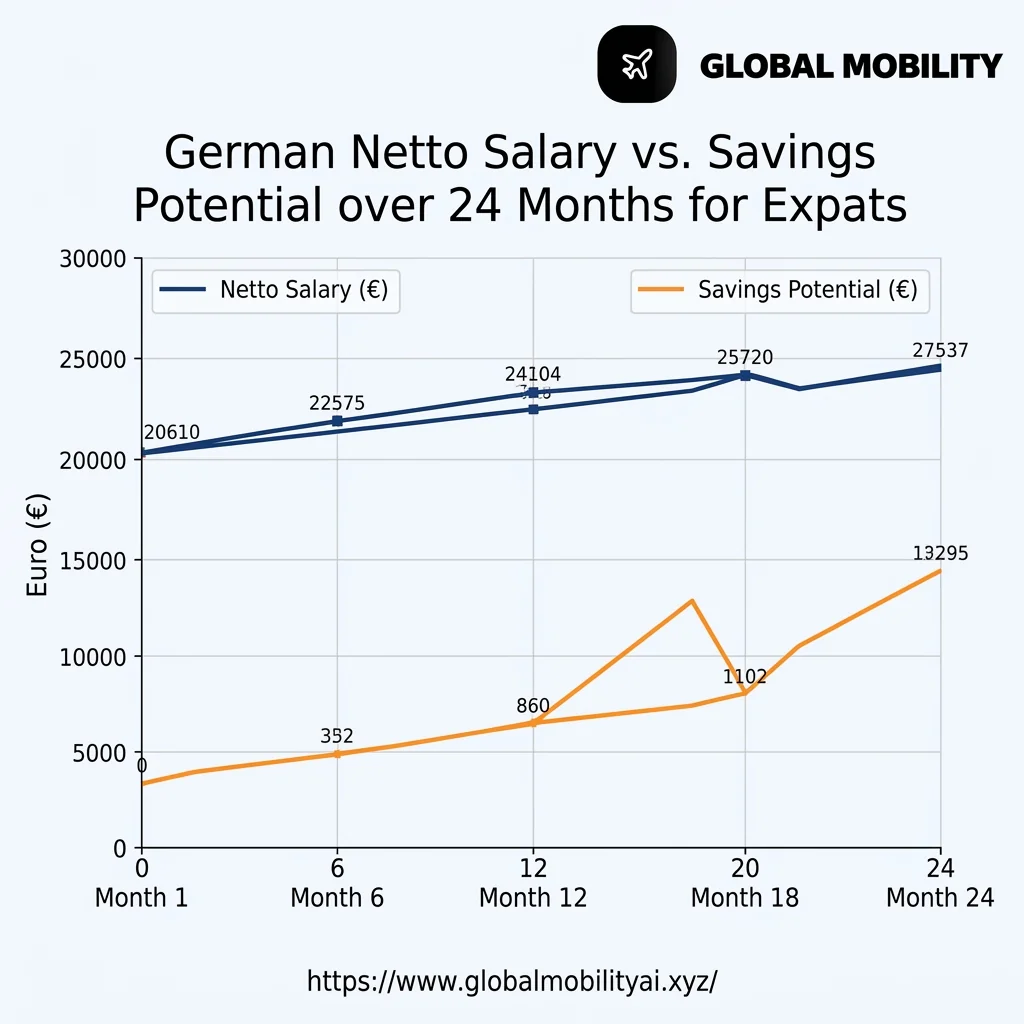
Line chart showing German Netto salary versus savings potential over 24 months for expats
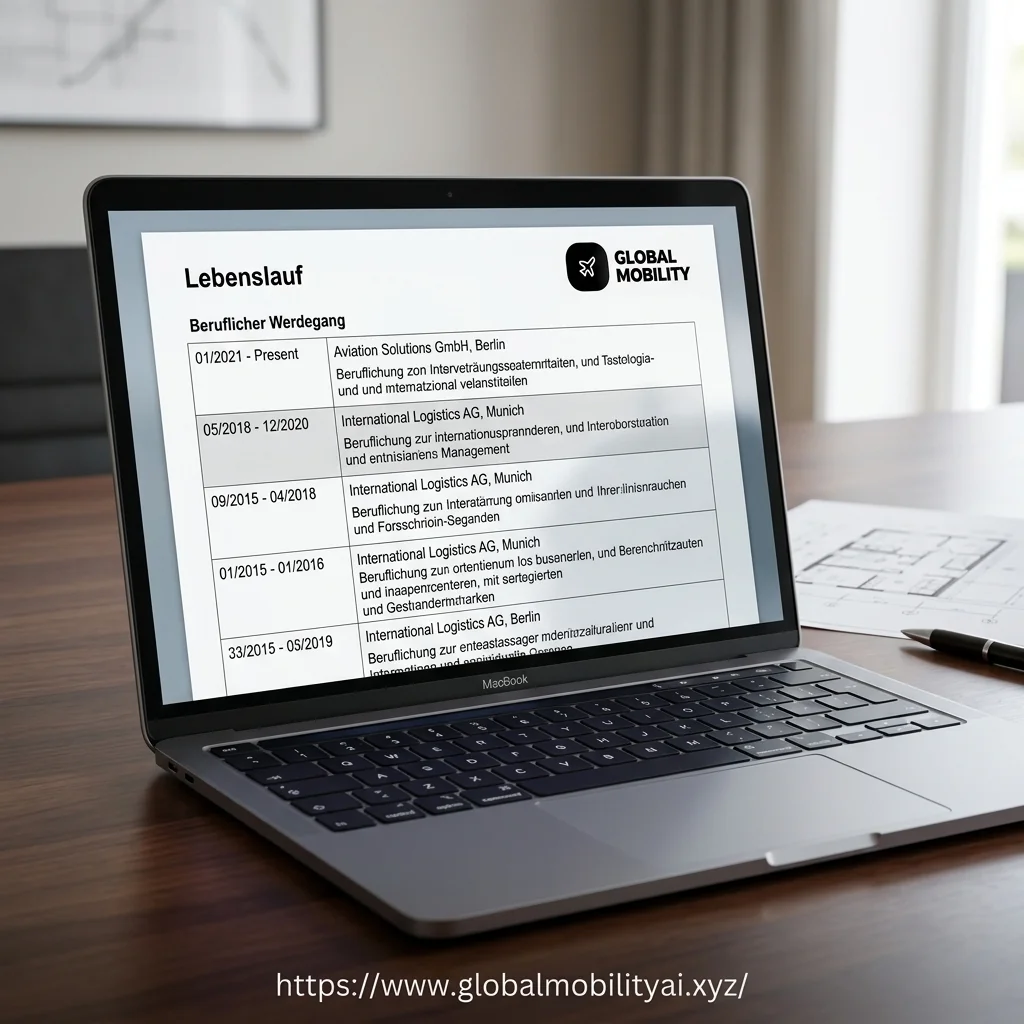
Clinical, tabular German Lebenslauf (resume) being reviewed on a laptop highlighting strict chronological formatting
Highly formal professionals conducting a technical interview in a clinical Munich corporate office
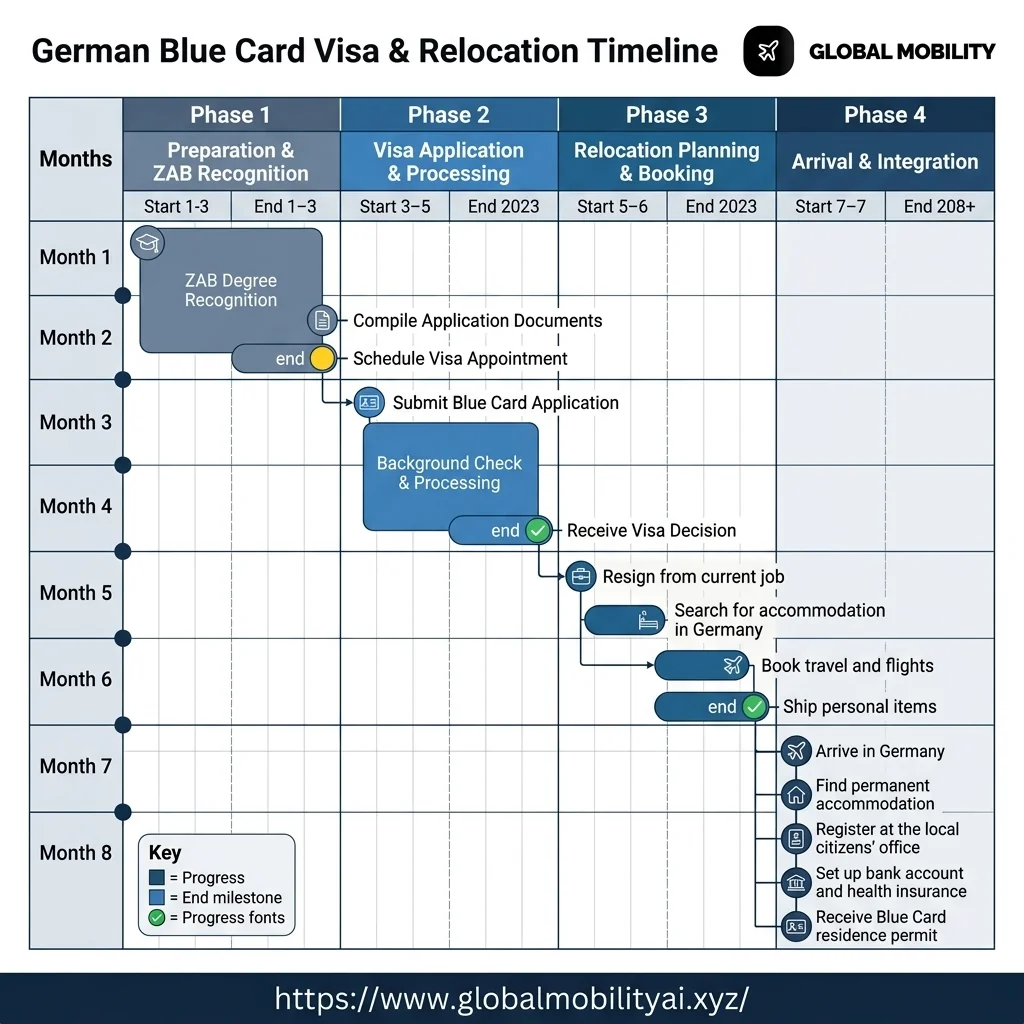
Gantt chart displaying the 4-phase German Blue Card visa, ZAB recognition, and relocation timeline
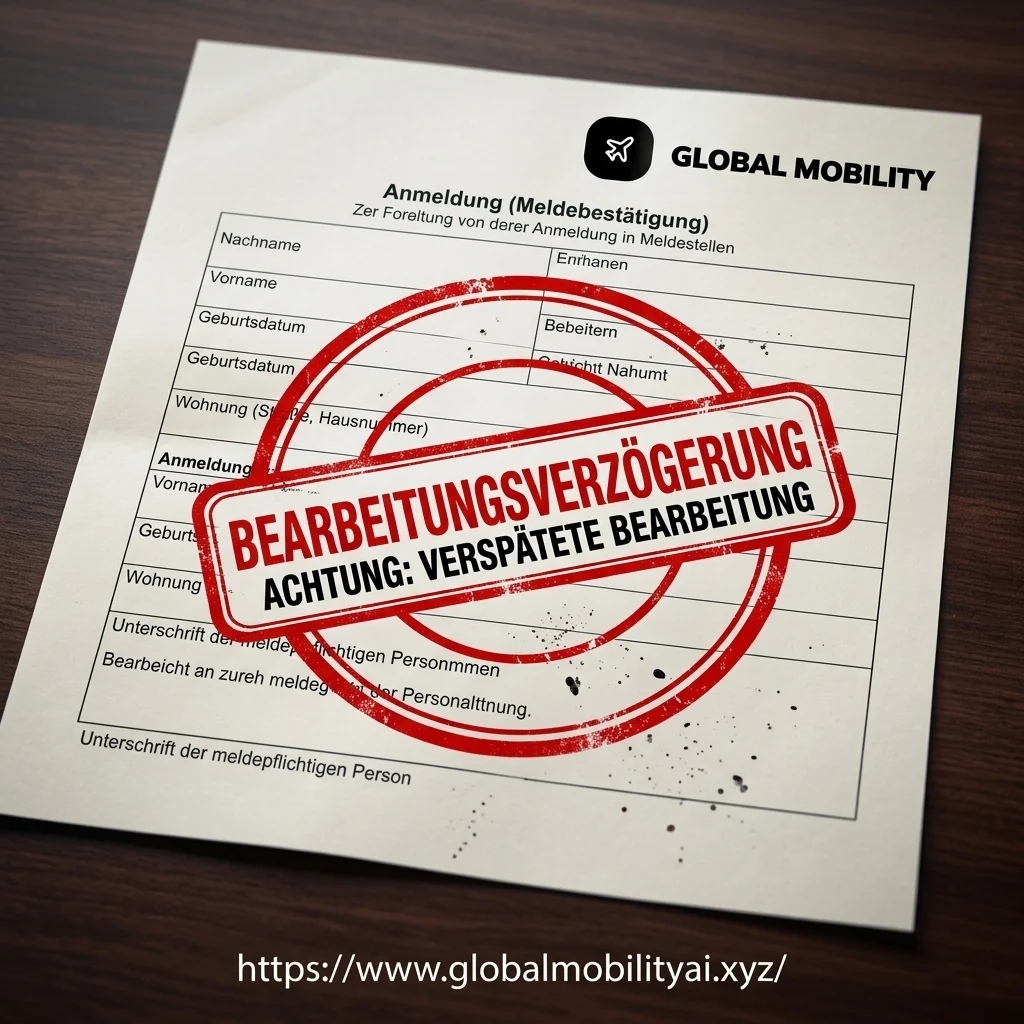
Conceptual image of a German Anmeldung registration form stamped with a red delay warning sign
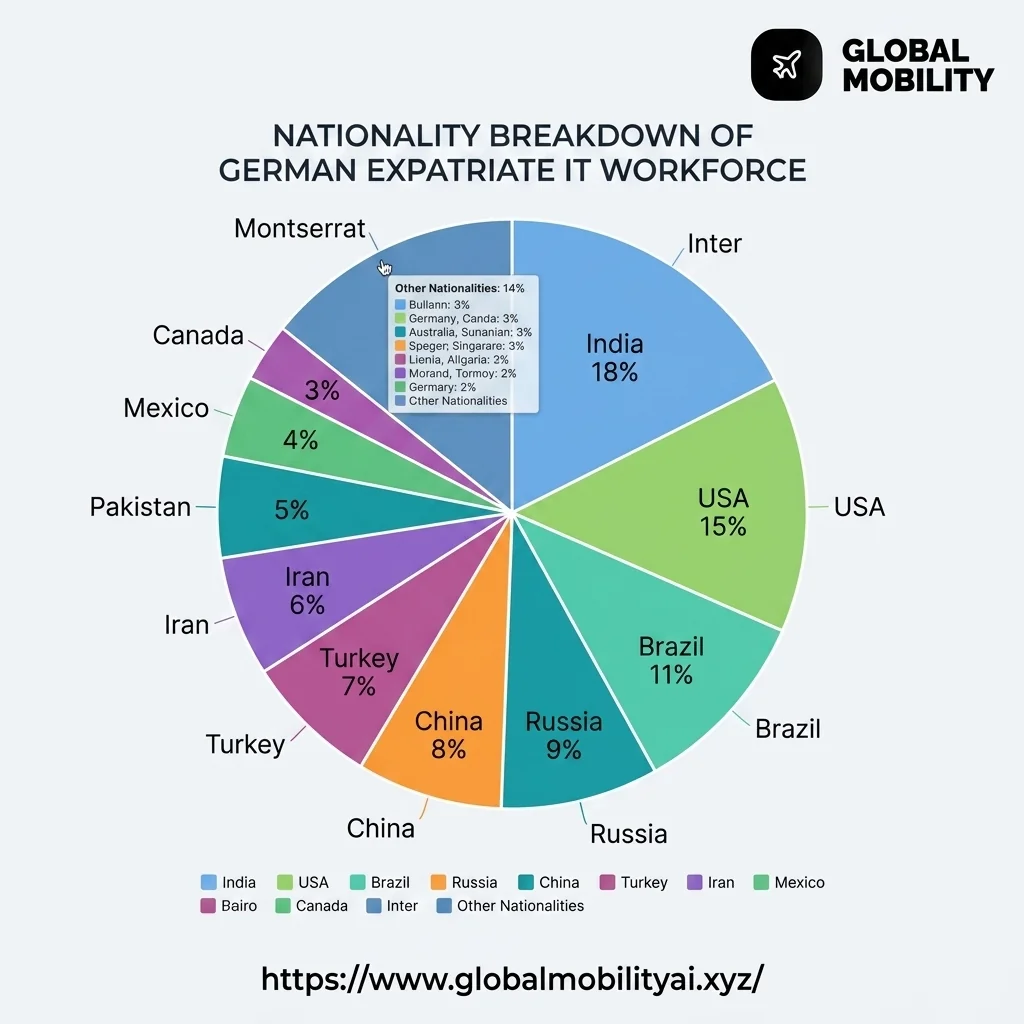
Pie chart showing the diverse nationality breakdown of the German expatriate IT workforce
Predict your mobility score.
Use our AI engine to get your personalized visa pathway, salary prediction, and relocation roadmap.
More Insights
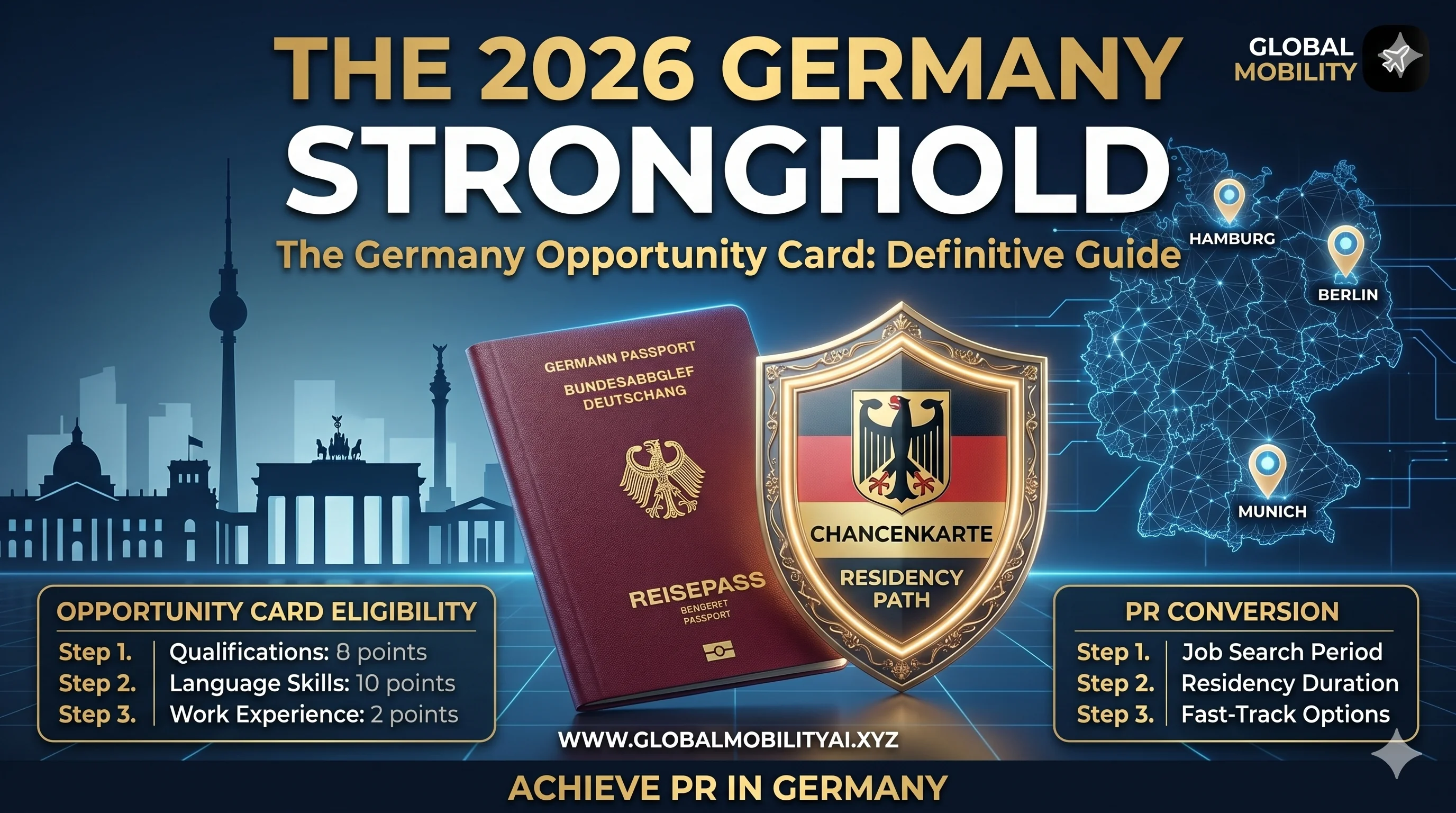
Germany Opportunity Card 2026: Points, How to Apply & Fastest Jobs

The Ultimate Golden Visa Masterclass 2026: The Strategic Wealth & Mobility Blueprint